
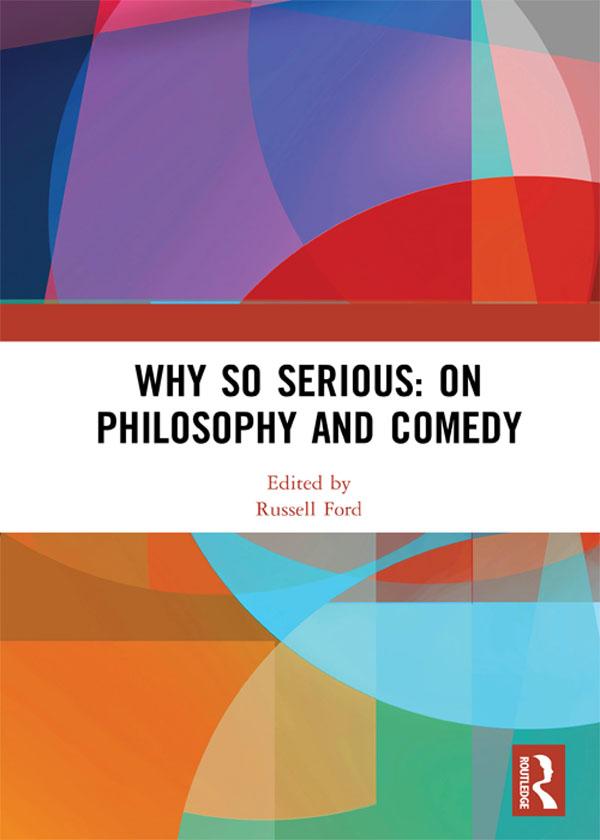
The Western philosophical tradition shows a marked fondness for tragedy. From Plato and Aristotle, through German idealism, to contemporary reflections on the murderous violence of the twentieth century, philosophy has often looked to tragedy for resources to make suffering, grief, and death thinkable. But what if showing a preference for tragedy, philosophical thought has unwittingly and unknowingly aligned itself with a form of thinking that accepts injustice without protest?
This collection explores possibilities for philosophical thinking that refuses the tragic model of thought, and turns instead to its often-overlooked companion: comedy. Comprising of a series of experiments ranging across the philosophical tradition, the essays in this volume propose to break, or at least suspend, the use of tragedy as an index of truth and philosophical worth. Instead, they explore new conceptions of solidarity, sympathy, critique, and justice.
In addition, the essays collected here provide ample reason to believe that philosophical thinking, aligned with comedy, is capable of important and original insights, discoveries, and creations. The prejudicial acceptance of tragic seriousness only impoverishes the life of thought; it can be rejuvenated and renewed by laughter and the comic. This book was originally published as a special issue of Angelaki.
Zahle einfach mit Karte, Klarna, Apple Pay oder Google Pay. Nicht zufrieden? Du hast immer ein 14-tägiges Widerrufsrecht. Lies mehr in unseren AGB. Hast du Fragen, schreib uns eine E-Mail an hello@memmo.org.
Memmo macht das Lernen einfacher – wo auch immer du bist. Bei uns findest du deine Kursbücher und smarte Lerntools an einem Ort: Zusammenfassungen, Quizzes, Podcasts und Lernkarten. Und Ted, dein Lernbuddy, beantwortet alles, was du wissen möchtest. Über 50.000 Studierende lernen bereits hier – gemacht, damit du schneller lernst und weniger Stress hast.