
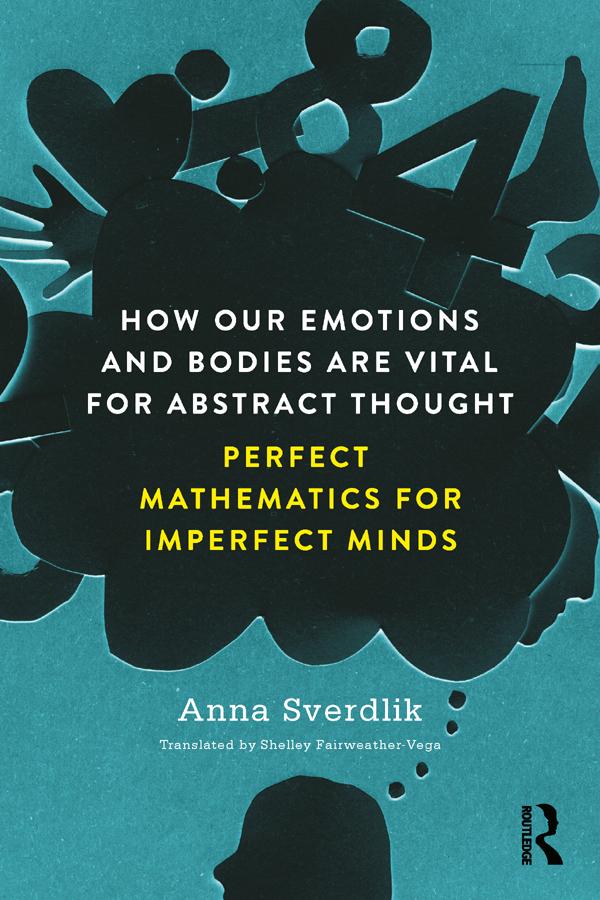
If mathematics is the purest form of knowledge, the perfect foundation of all the hard sciences, and a uniquely precise discipline, then how can the human brain, an imperfect and imprecise organ, process mathematical ideas? Is mathematics made up of eternal, universal truths? Or, as some have claimed, could mathematics simply be a human invention, a kind of tool or metaphor?
These questions are among the greatest enigmas of science and epistemology, discussed at length by mathematicians, physicians, and philosophers. But, curiously enough, neuroscientists have been absent in the debate, even though it is precisely the field of neuroscience—which studies the brain’s mechanisms for thinking and reasoning—that ought to be at the very center of these discussions.
How our Emotions and Bodies are Vital for Abstract Thought explores the unique mechanisms of cooperation between the body, emotions, and the cortex, based on fundamental physical principles. It is these mechanisms that help us to overcome the limitations of our physiology and allow our imperfect, human brains to make transcendent mathematical discoveries.
This book is written for anyone who is interested in the nature of abstract thought, including mathematicians, physicists, computer scientists, psychologists, and psychiatrists.
Zahle einfach mit Karte, Klarna, Apple Pay oder Google Pay. Nicht zufrieden? Du hast immer ein 14-tägiges Widerrufsrecht. Lies mehr in unseren AGB. Hast du Fragen, schreib uns eine E-Mail an hello@memmo.org.
Memmo macht das Lernen einfacher – wo auch immer du bist. Bei uns findest du deine Kursbücher und smarte Lerntools an einem Ort: Zusammenfassungen, Quizzes, Podcasts und Lernkarten. Und Ted, dein Lernbuddy, beantwortet alles, was du wissen möchtest. Über 50.000 Studierende lernen bereits hier – gemacht, damit du schneller lernst und weniger Stress hast.