
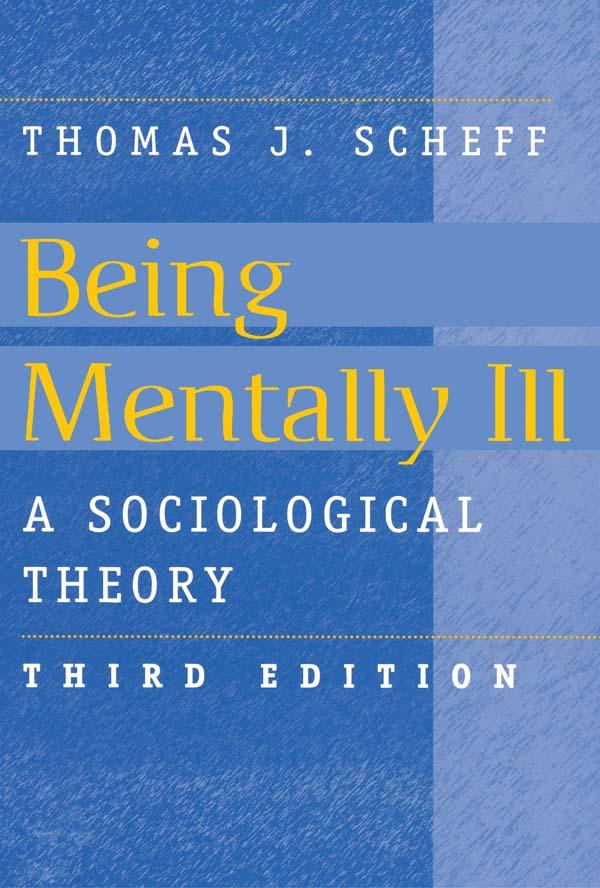
In incorporating social process into a model of the dynamics of mental disorders, this text questions the individualistic model favoured in current psychiatric and psychoanalytic theory. While the conventional psychiatric viewpoint seeks the causes of mental illness, Scheff views "the symptoms of mental illness" as the violation of residual rules - social norms so taken for granted that they are not explicitly verbalized. The sociological theory developed by Scheff to account for such behaviour provides a framework for studies reported in subsequent chapters. Two key assumptions emerge: first, that most chronic mental illness is in part a social role; and second, that societal reaction may in part determine entry into that role. Throughout, the sociological model of mental illness is compared and contrasted with more conventional medical and psychological models in an attempt to delineate significant problems for further analysis and research. This third edition has been revised and expanded to encompass the controversy prompted by the first edition, and also to re-evaluate developments in the field. New to this edition are discussions of the use of psychoactive drugs in the treatment of mental illness, changing mental health laws, new social science and psychiatric studies, and the controversy surrounding the labelling theory of mental illness itself.
Zahle einfach mit Karte, Klarna, Apple Pay oder Google Pay. Nicht zufrieden? Du hast immer ein 14-tägiges Widerrufsrecht. Lies mehr in unseren AGB. Hast du Fragen, schreib uns eine E-Mail an hello@memmo.org.
Memmo macht das Lernen einfacher – wo auch immer du bist. Bei uns findest du deine Kursbücher und smarte Lerntools an einem Ort: Zusammenfassungen, Quizzes, Podcasts und Lernkarten. Und Ted, dein Lernbuddy, beantwortet alles, was du wissen möchtest. Über 50.000 Studierende lernen bereits hier – gemacht, damit du schneller lernst und weniger Stress hast.