
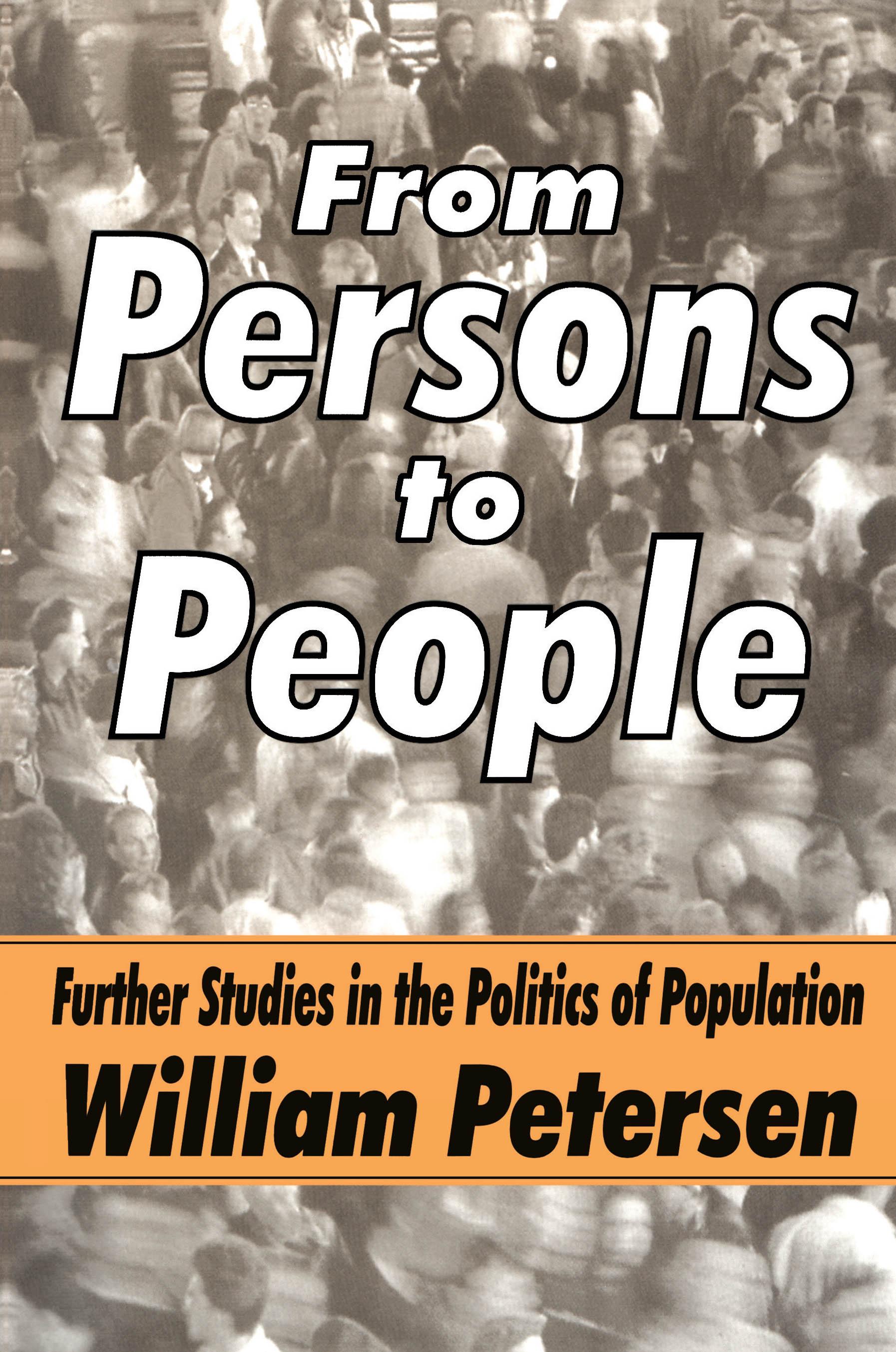
Problems associated with aggregation and classification are the underlying theme of this book. When data assembled from individuals are presented as group characteristics, this process has logical complications. Racial profiling and ethnic discrimination are obvious examples of the problem. Petersen's book analyzes in general how information from "persons" turns into statistics about specific "people." The book is divided into two parts covering population and ethnicity. The first two chapters in part 1, on population statistics and the age-sex structure, are the foundations for any demographic analysis. Chapter 3 is a brief review of the interminable debate over whether the subsistence of mankind is on the point of depletion. The three following chapters are on population theory as expounded by Malthus, Marx, and Communists. Chapters 7 and 8 discuss the competition between parents and the state concerning which of the two shall decide on procreation. Chapter 9 is an account of population at the frontier, using Nevada as a prototype. The last chapter in part 1 is a proposal, to moderate the endless debate about abortion. The first two chapters in the second part of the book concern methods for analyzing ethnicity that are essential for a full understanding of demography: how and by whom ethnic groups are defined. The next chapter discusses some of the many subdivisions of European nations, countering the analyses of European unity with the fact that most of its regions are not themselves homogeneous. In a number of instances American statistical agencies have used surnames to identify nationalities, with invalid results, as the author shows in the next chapter. "Jews as a Race" is an attempt to counter Nazi dogma with a rational analysis of a contentious topic. The subsequent chapters compare Japanese and Chinese Americans as small but fascinating minorities and analyze the social consequences of religion from theoretical and factual viewpoints. The last chapter summarizes the conclusions to be drawn from these topics. Demographers, sociologists, and statisticians, as well as those generally concerned with social policy, will find From Persons to People useful and courageous-the hallmark of the dean of sociological demography. .
Zahle einfach mit Karte, Klarna, Apple Pay oder Google Pay. Nicht zufrieden? Du hast immer ein 14-tägiges Widerrufsrecht. Lies mehr in unseren AGB. Hast du Fragen, schreib uns eine E-Mail an hello@memmo.org.
Memmo macht das Lernen einfacher – wo auch immer du bist. Bei uns findest du deine Kursbücher und smarte Lerntools an einem Ort: Zusammenfassungen, Quizzes, Podcasts und Lernkarten. Und Ted, dein Lernbuddy, beantwortet alles, was du wissen möchtest. Über 50.000 Studierende lernen bereits hier – gemacht, damit du schneller lernst und weniger Stress hast.