
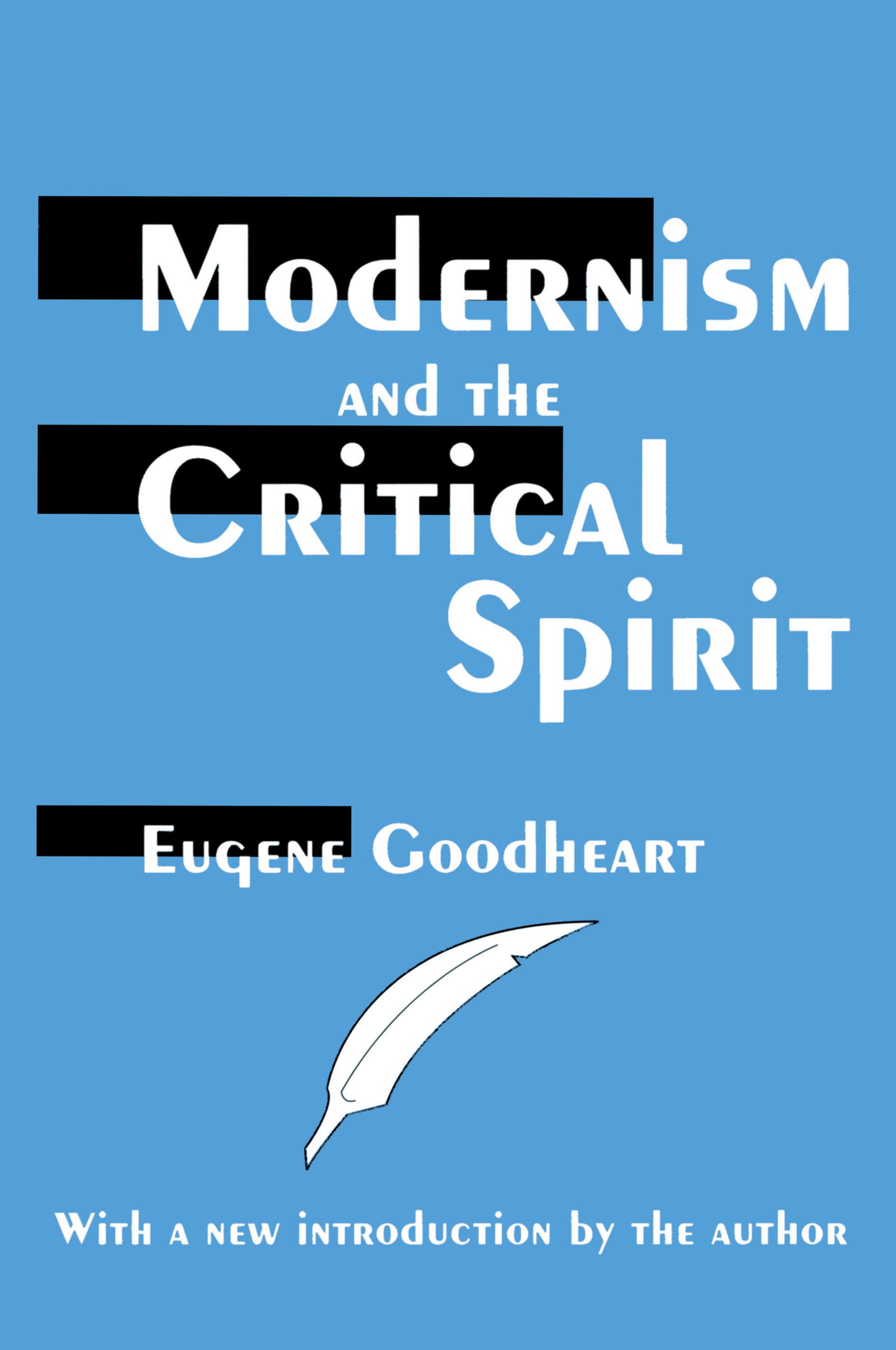
Complaints about the decline of critical standards in literature and culture in general have been voiced for much of the twentieth century. These have extended from F.R. Leavis's laments for a "lost center of intelligence and urbane spirit," to current opposition to the predominance of radical critical theory in contemporary literature departments. Humanist criticism, which has as its object the quality of life as well as works of art, may well lack authority in the contemporary world. Even amid the disruptions of the industrial revolution, nineteenth-century humanists such as Matthew Arnold, John Ruskin, and Thomas Carlyle could assume a positive order of value and shared habits of imaginative perception and understanding between writers and readers. Eugene Goodheart argues that, by contrast, contemporary criticism is infused with the skepticism of modernist aesthetics. It has willfully rejected the very idea of moral authority.Goodheart starts from the premise that questions about the moral authority of literature and criticism often turn upon a prior question of what happens when the sacred disappears or is subjected to the profane. He focuses on contending spiritual views, in particular the dialectic between the Protestant-inspired, largely English humanist tradition of Carlyle, Ruskin, Arnold, and D.H. Lawrence and the decay of Catholicism represented by James Joyce and T.S. Eliot. Goodheart argues that literary modernism, in distancing itself from natural and social vitality, tends to render suspect all privileged positions. It thereby undermines the critical act, which assumes the priority of a particular set of values. Goodheart makes his case by analyzing the work of a variety of novelists, poets, and critics, nineteenth century and contemporary. He blends literary theory and practical criticism.
Seiten: 406
Kategorie: Litteraturvetenskap & Teori
e-ISBN: 9781351309103
Versandgewicht: 1.2 kg
Versand in: 1-2 Tage
Zahle einfach mit Karte, Klarna, Apple Pay oder Google Pay. Nicht zufrieden? Du hast immer ein 14-tägiges Widerrufsrecht. Lies mehr in unseren AGB. Hast du Fragen, schreib uns eine E-Mail an hello@memmo.org.
Memmo macht das Lernen einfacher – wo auch immer du bist. Bei uns findest du deine Kursbücher und smarte Lerntools an einem Ort: Zusammenfassungen, Quizzes, Podcasts und Lernkarten. Und Ted, dein Lernbuddy, beantwortet alles, was du wissen möchtest. Über 50.000 Studierende lernen bereits hier – gemacht, damit du schneller lernst und weniger Stress hast.
Das könnte dir auch gefallen
Buch kaufen0