
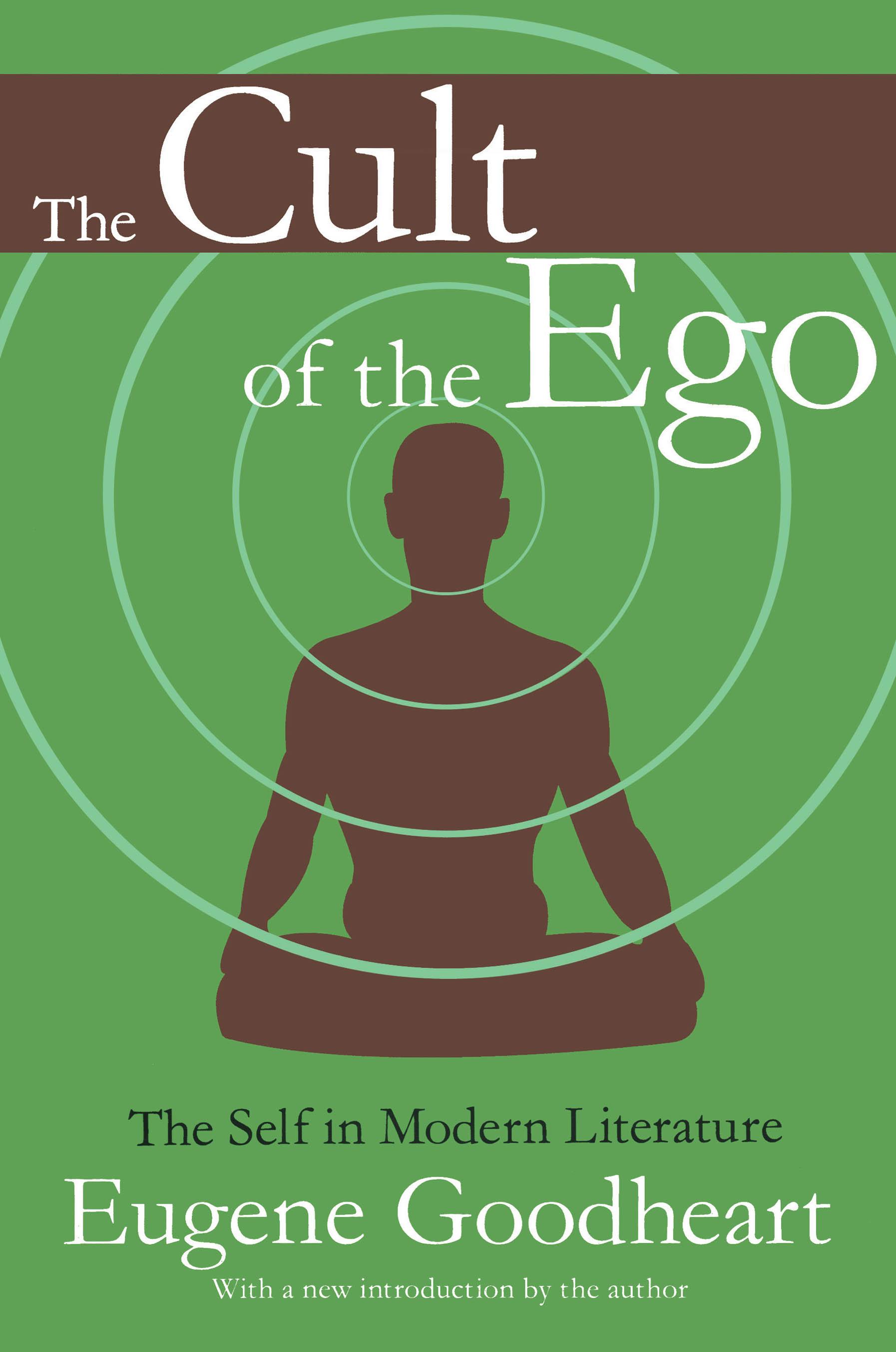
Goethe once remarked that "every emancipation of the spirit is pernicious unless there is a corresponding growth of control." This remark may be taken as a motto for Eugene Goodheart's study of an aspect of the cultural history of the past two hundred years. In separate chapters on Rousseau, Stendhal, Goethe and Carlyle, Dostoevsky, Whitman, Lawrence, and Joyce, Goodheart discovers a community of concern which he calls the cult of the ego. All these writers examined here in one way or another deal with "the emancipation of the spirit" with all its promise and danger. The characteristic attempt is to "extend the boundaries of the self by going beyond the area of safety" and. thereby risking even the destruction of the self. They advance the claims of the self at the same time seeking the controls that will secure these claims. The artist-hero becomes the central figure in Goodheart's volume, since it is he who comes to exemplify the possibilities of the cult of the ego. Their efforts, Goodheart argues, have ambiguous results. The seeds of contemporary nihilism are in the failures of these writers to master the chaos of egoism, which they helped engender. But their heroism was partly in the effort of resistance: moral, religious, aesthetic. In a large portion of modern literature, resistance has been abandoned either out of exhaustion or out of fascination with the destructive tendency of modern life: in Beckett's phrase, "a world endlessly collapsing." In his introduction to this first paperback edition, Goodheart discusses the book's origin in relation to the counter-cultural unrest of 1968 when it was first published and weighs its theme of the emancipated self against current postmodern assertions of the "death of the author." The Cult of the Ego is written with admirable clarity and economy. Its interests are literary, moral and political. Moving freely and knowledgeably among various national literatures, Goodheart has made an original and valuable contribution to the field of comparative literature. Eugene Goodheart is Edytha Macy Gross Professor of Humanities Emeritus at Brandeis University. Among his books are Novel Practices: Classic Modern Fiction, Modernism and the Critical Spirit, Culture and the Radical Conscience, and Confessions of a Secular Jew: A Memoir, all available from Transaction.
Seiten: 225
Kategorie: Litteraturvetenskap & Teori
e-ISBN: 9781351305020
Versandgewicht: 1.2 kg
Versand in: 1-2 Tage
Zahle einfach mit Karte, Klarna, Apple Pay oder Google Pay. Nicht zufrieden? Du hast immer ein 14-tägiges Widerrufsrecht. Lies mehr in unseren AGB. Hast du Fragen, schreib uns eine E-Mail an hello@memmo.org.
Memmo macht das Lernen einfacher – wo auch immer du bist. Bei uns findest du deine Kursbücher und smarte Lerntools an einem Ort: Zusammenfassungen, Quizzes, Podcasts und Lernkarten. Und Ted, dein Lernbuddy, beantwortet alles, was du wissen möchtest. Über 50.000 Studierende lernen bereits hier – gemacht, damit du schneller lernst und weniger Stress hast.
Das könnte dir auch gefallen
Buch kaufen0