
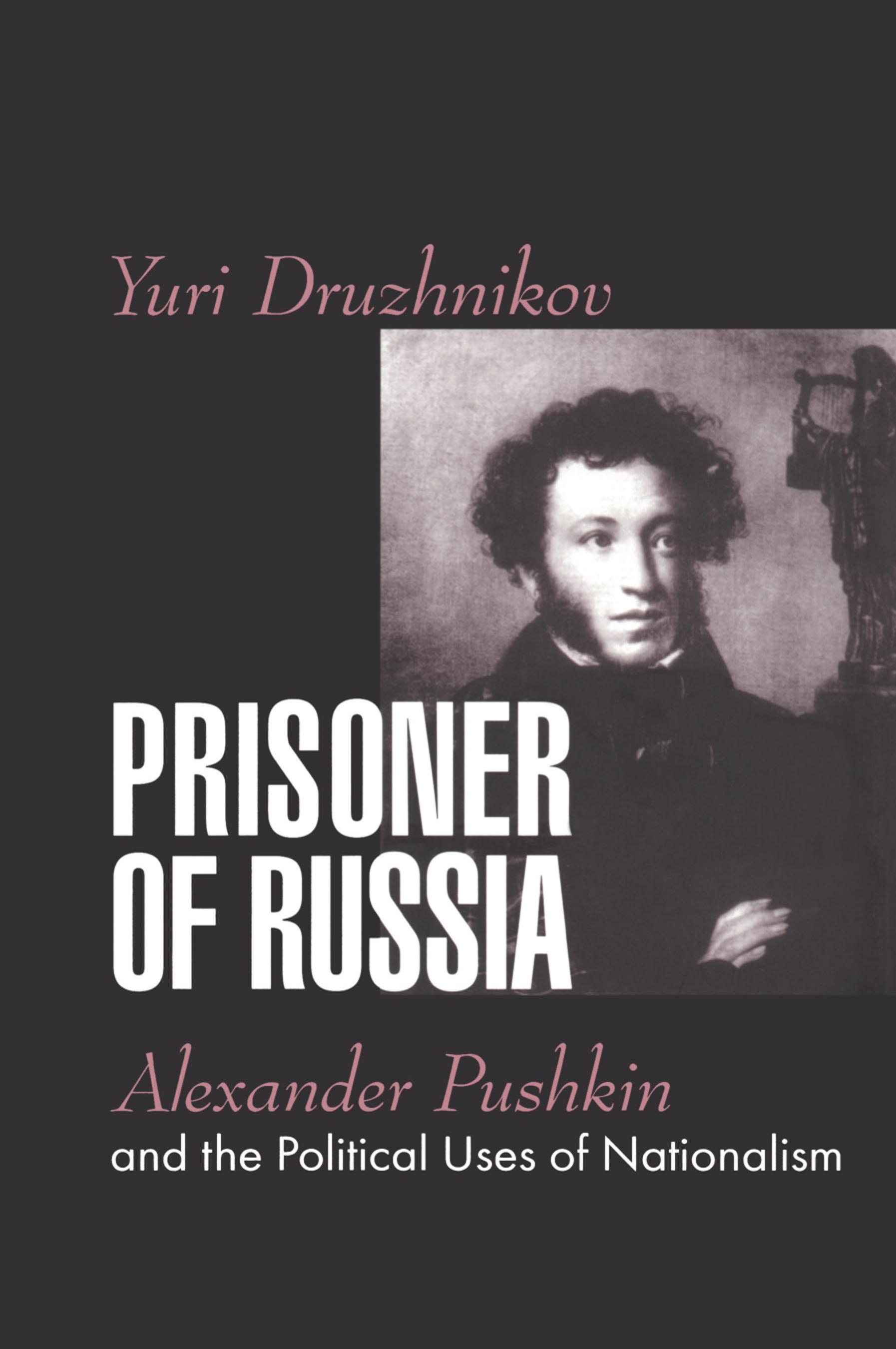
As the central figure in Russian literature, Alexander Pushkin (1799u1837) has been claimed by nearly every political faction, right and left, in Russian cultural politics over the past two centuries, culminating in his official canonization under the Soviet regime. In Prisoner of Russia, Yuri Druzhnikov analyzes the distortions and misrepresentations of Pushkin's cultural appropriation by focusing on Pushkin's attempts at emigration and his attitudes toward Russia and Western Europe.Druzhnikov's semi-biographical narrative concentrates on Pushkin's attempts to leave Russia after his graduation from the Lyceum, through his period of exile, until his early death in a duel in 1837. The matter of emigration from Russia was a politically charged issue well before 1917; witness the hostile reception of all of Turgenev's novels from Fathers and Sons on. The emigrU artist's cultural context is often used to assess his authenticity and stature as seen in the Western examples of Henry James, T.S. Eliot, or James Joyce. Druzhnikov sharply criticizes the omnipresent and reductive tendency in Russia (and the West) to define Russian cultural figures in terms of absolute essences and ideologies and to ignore the ambivalences that in fact help to define a writer's singularity. In the larger view, he argues, it is these that explain the variety and complexity of Russian culture.Druzhnikov's multidisciplinary approach combines literary and political history, with critical commentary arranged in chronological sequence. His interpretive apparatus ranges widely through nineteenth- and twentieth-century history, and provides the necessary intellectual context for nonspecialist readers. He also avoids the massive accumulation of trivial detail characteristic of so much Pushkinology. This accessible, valuable exercise in cultural history will be of interest to Slavic scholars and students, cultural historians, and general readers interested in Russian literature and culture.
Zahle einfach mit Karte, Klarna, Apple Pay oder Google Pay. Nicht zufrieden? Du hast immer ein 14-tägiges Widerrufsrecht. Lies mehr in unseren AGB. Hast du Fragen, schreib uns eine E-Mail an hello@memmo.org.
Memmo macht das Lernen einfacher – wo auch immer du bist. Bei uns findest du deine Kursbücher und smarte Lerntools an einem Ort: Zusammenfassungen, Quizzes, Podcasts und Lernkarten. Und Ted, dein Lernbuddy, beantwortet alles, was du wissen möchtest. Über 50.000 Studierende lernen bereits hier – gemacht, damit du schneller lernst und weniger Stress hast.