
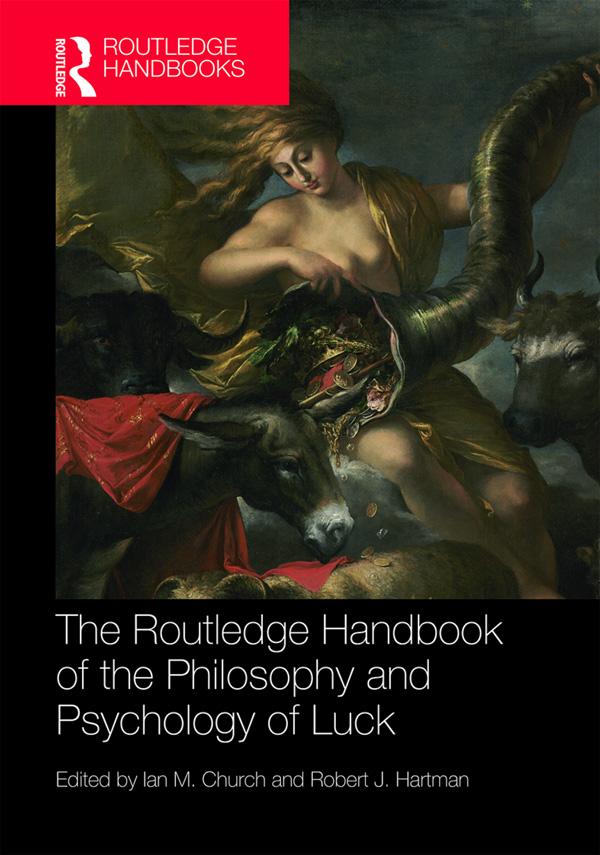
Luck permeates our lives, and this raises a number of pressing questions: What is luck? When we attribute luck to people, circumstances, or events, what are we attributing? Do we have any obligations to mitigate the harms done to people who are less fortunate? And to what extent is deserving praise or blame affected by good or bad luck? Although acquiring a true belief by an uneducated guess involves a kind of luck that precludes knowledge, does all luck undermine knowledge? The academic literature has seen growing, interdisciplinary interest in luck, and this volume brings together and explains the most important areas of this research. It consists of 39 newly commissioned chapters, written by an internationally acclaimed team of philosophers and psychologists, for a readership of students and researchers. Its coverage is divided into six sections:
I: The History of Luck
II: The Nature of Luck
III: Moral Luck
IV: Epistemic Luck
V: The Psychology of Luck
VI: Future Research.
The chapters cover a wide range of topics, from the problem of moral luck, to anti-luck epistemology, to the relationship between luck attributions and cognitive biases, to meta-questions regarding the nature of luck itself, to a range of other theoretical and empirical questions. By bringing this research together, the Handbook serves as both a touchstone for understanding the relevant issues and a first port of call for future research on luck.
Zahle einfach mit Karte, Klarna, Apple Pay oder Google Pay. Nicht zufrieden? Du hast immer ein 14-tägiges Widerrufsrecht. Lies mehr in unseren AGB. Hast du Fragen, schreib uns eine E-Mail an hello@memmo.org.
Memmo macht das Lernen einfacher – wo auch immer du bist. Bei uns findest du deine Kursbücher und smarte Lerntools an einem Ort: Zusammenfassungen, Quizzes, Podcasts und Lernkarten. Und Ted, dein Lernbuddy, beantwortet alles, was du wissen möchtest. Über 50.000 Studierende lernen bereits hier – gemacht, damit du schneller lernst und weniger Stress hast.