
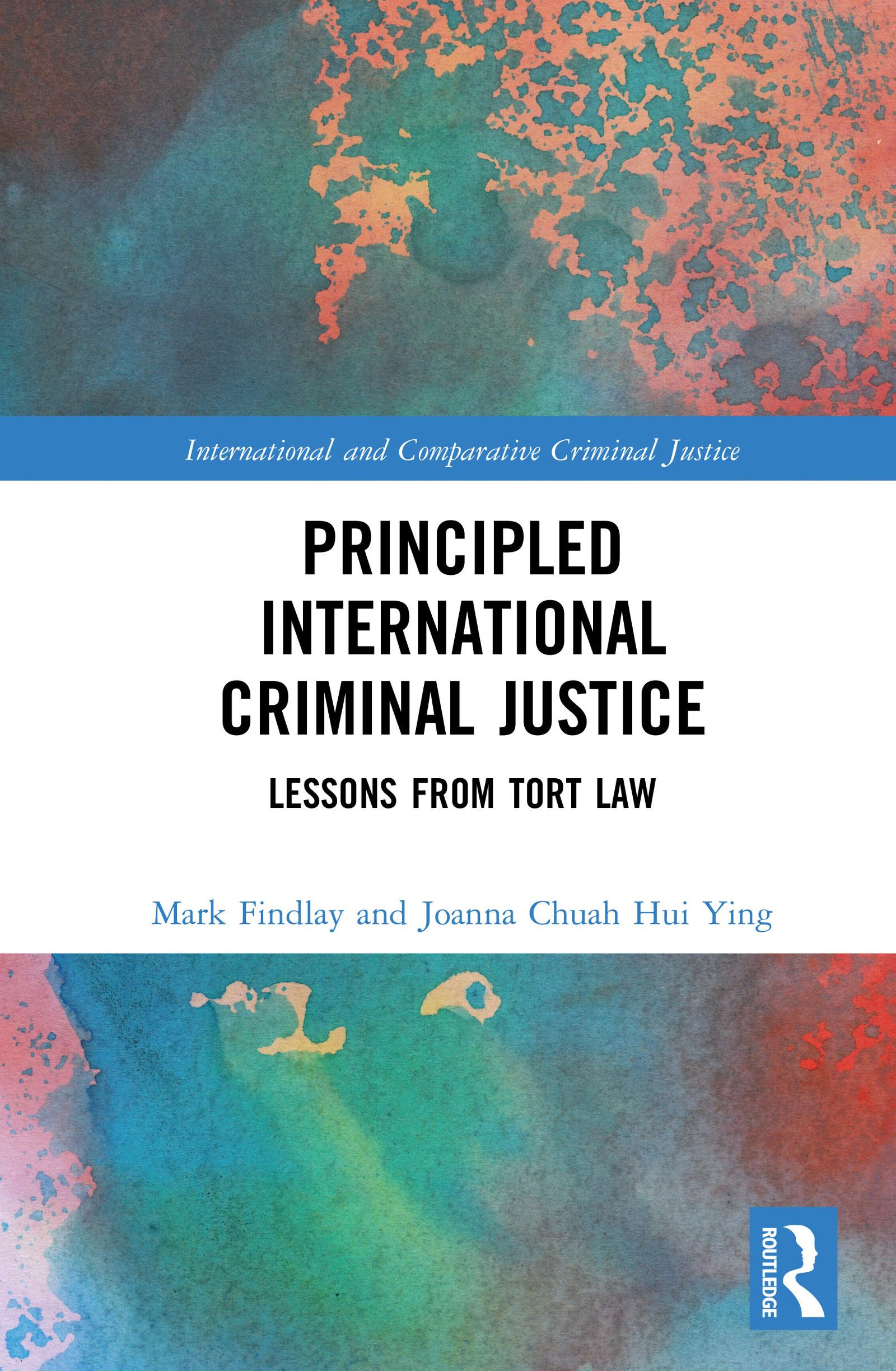
Commencing its search for a principled international criminal justice, this book argues that the Preamble to the Rome Statute requires a very different notion of justice than that which would be expected in domestic jurisdictions. This thinking necessitates theorising what international criminal justice requires in terms of its legitimacy much more than normative invocations, which in their unreality can endanger the satisfaction of two central concerns – the punitive and the harm-minimisation dimensions. The authors suggest that because of the unique nature and form of the four global crimes, pre-existing proof technologies are failing prosecutors and judges, forcing the development of an often unsustainable line of judicial reasoning. The empirical focus of the book is to look at JCE (joint criminal enterprise) and aiding and abetting as case-studies in the distortion of proof tests. The substantial harm focus of ICJ (international criminal justice) invites applying compatible proof technologies from tort (causation, aggregation, and participation). The book concludes by examining recent developments in corporate criminal liability and criminalising associations, radically asserting that even in harmonising/hybridising international criminal law there resides a new and rational vision for the juridical project of international criminal justice.
Zahle einfach mit Karte, Klarna, Apple Pay oder Google Pay. Nicht zufrieden? Du hast immer ein 14-tägiges Widerrufsrecht. Lies mehr in unseren AGB. Hast du Fragen, schreib uns eine E-Mail an hello@memmo.org.
Memmo macht das Lernen einfacher – wo auch immer du bist. Bei uns findest du deine Kursbücher und smarte Lerntools an einem Ort: Zusammenfassungen, Quizzes, Podcasts und Lernkarten. Und Ted, dein Lernbuddy, beantwortet alles, was du wissen möchtest. Über 50.000 Studierende lernen bereits hier – gemacht, damit du schneller lernst und weniger Stress hast.