
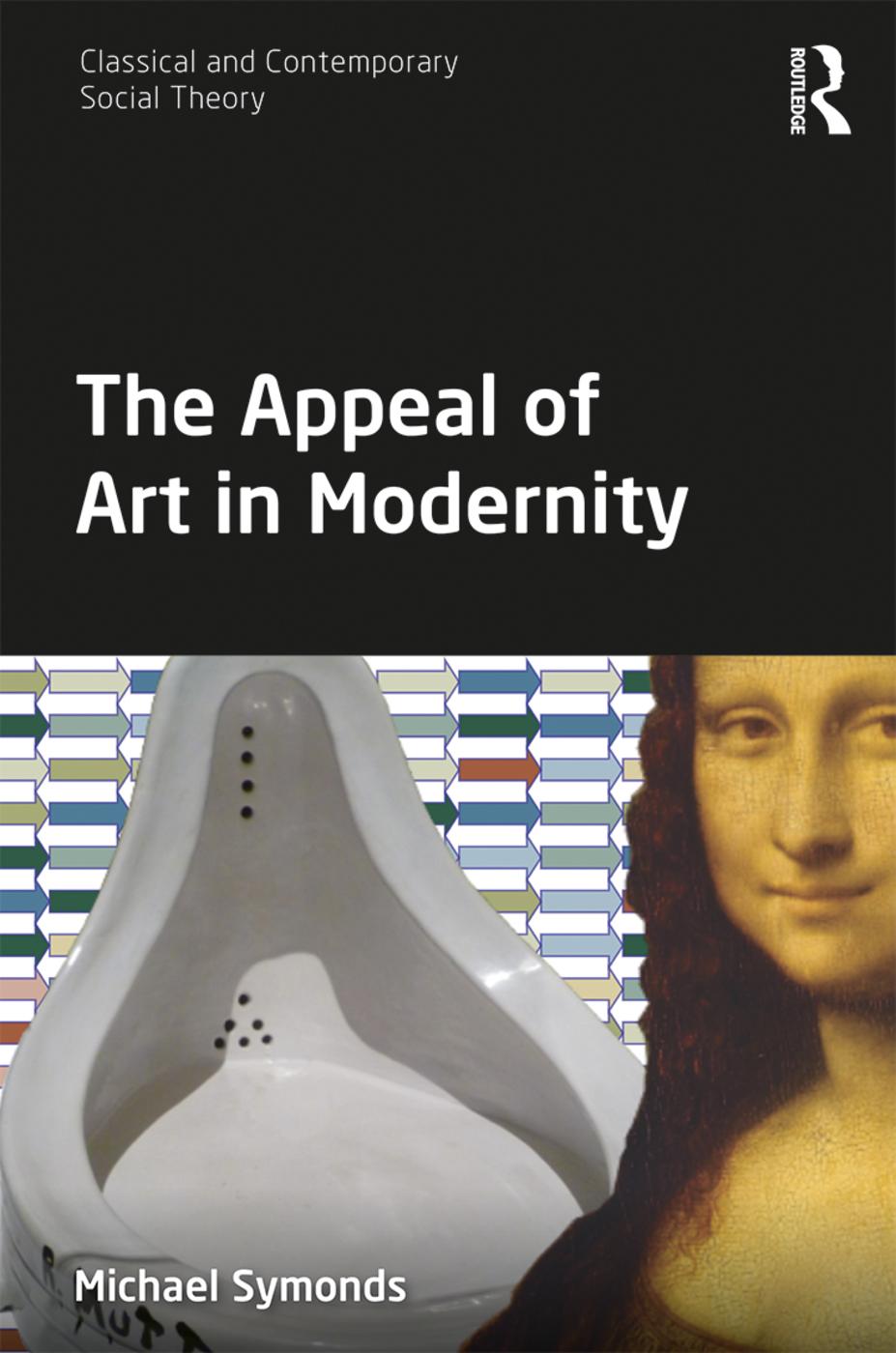
This book explores the place of art in the modern world, but instead of asking what art is, it begins with the question of art’s appeal in modernity. Why is the appellation ‘art’ so desired for movies, food, and fashion, for example? Why is there the assumption of esteem when someone calls themselves an ‘artist’? On the other hand, why is modern art so often seen as, at best, difficult and, at worst, not, in fact, art? Engaging with a broad range of theory, the author draws on the thought of Max Weber to offer an account of art’s widespread appeal in terms of its constituting a self-contained value-sphere of meaning, which provides a feeling of tremendous salvation from the senseless routines of modern life. In this way, major theories on aesthetics in philosophy and sociology – including those of Kant, Hegel, Adorno and Bourdieu – are critically recast and incorporated into an overall explanation, and fundamental questions concerning the relation of art to politics and ethics are given innovative answers. A fresh examination of the development of the aesthetic sphere that shows how art came to be regarded as one of the last bastions of freedom and the highest human achievement, and, also, how it became increasingly isolated from the rest of society, The Appeal of Art in Modernity will appeal to scholars of philosophy, social theory, and sociology with interests in art, modernity, and Weber.
Zahle einfach mit Karte, Klarna, Apple Pay oder Google Pay. Nicht zufrieden? Du hast immer ein 14-tägiges Widerrufsrecht. Lies mehr in unseren AGB. Hast du Fragen, schreib uns eine E-Mail an hello@memmo.org.
Memmo macht das Lernen einfacher – wo auch immer du bist. Bei uns findest du deine Kursbücher und smarte Lerntools an einem Ort: Zusammenfassungen, Quizzes, Podcasts und Lernkarten. Und Ted, dein Lernbuddy, beantwortet alles, was du wissen möchtest. Über 50.000 Studierende lernen bereits hier – gemacht, damit du schneller lernst und weniger Stress hast.