
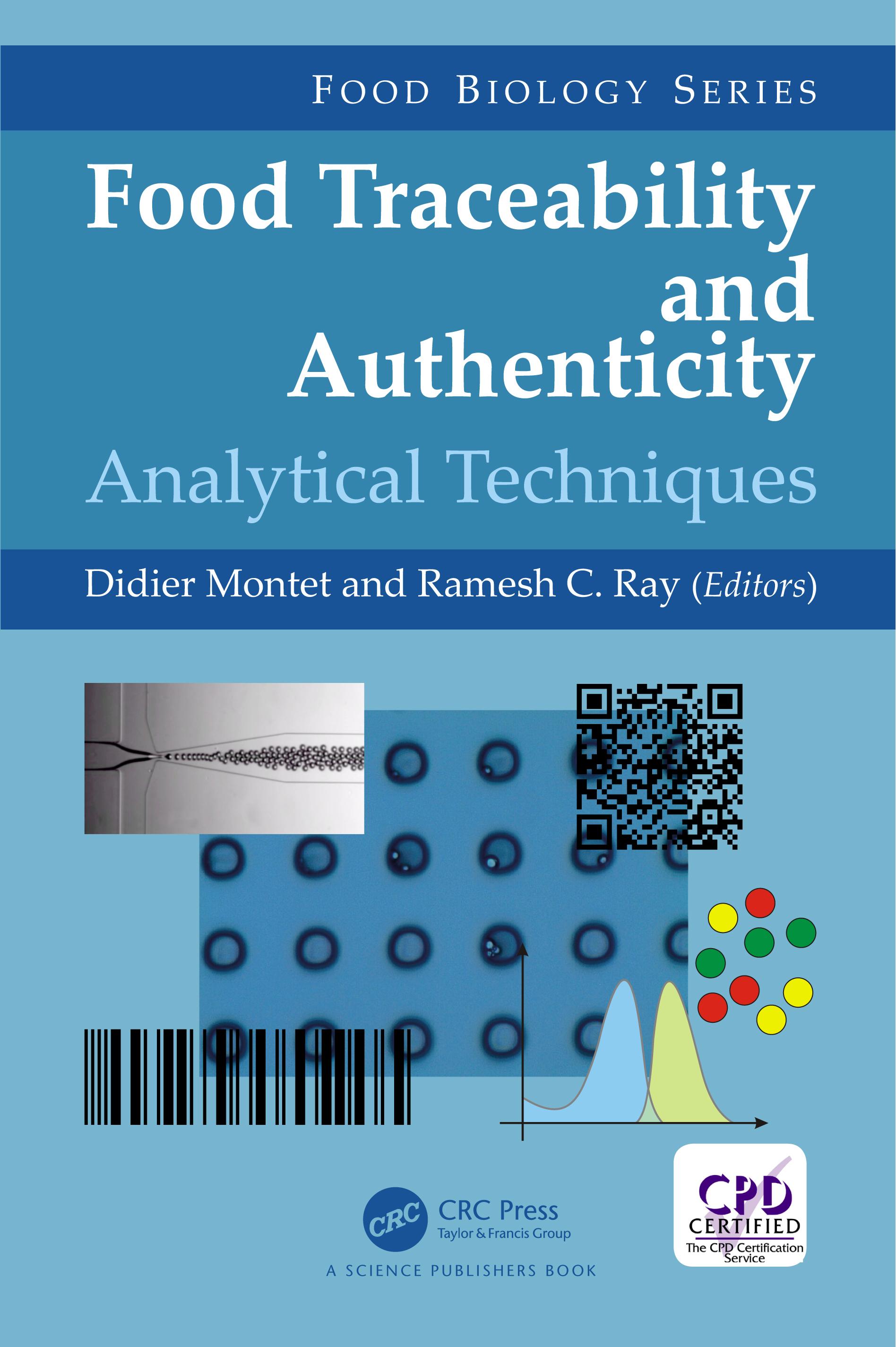
Food traceability is a growing consumer concern worldwide. Traceability is undertaken primarily at the administrative level, where the use of advanced analytical tools is not available. Nevertheless, the determination of geographical origin is a requirement of the traceability system for the import and export of foodstuffs (EU regulation 178/2002).
The topics covered in this book include the history of traceability; legislations and rules; the actual traceability techniques and the potential analytical techniques for food traceability such as molecular methods (e.g. DGGE, SSCP), next generation sequencers (NGS), bio-captors, chromatographic techniques, isotopic analysis that are used for discrimination of organic food, fish, oils. The chromatographic techniques help in the use of volatile compounds analysis. The isotope analysis helps in distinguishing between chicken meat and vegetable oils. Ambient mass spectrometry is used for studying mycotoxines and alkaloids in foodstuffs and their management, food and feed authentication in olive and other plant oils, and wine. Vibrational methods (e.g. NMR and NIRS) are used to trace food by global spectrum. The book reviews the current and future techniques including metabolomic techniques.
Zahle einfach mit Karte, Klarna, Apple Pay oder Google Pay. Nicht zufrieden? Du hast immer ein 14-tägiges Widerrufsrecht. Lies mehr in unseren AGB. Hast du Fragen, schreib uns eine E-Mail an hello@memmo.org.
Memmo macht das Lernen einfacher – wo auch immer du bist. Bei uns findest du deine Kursbücher und smarte Lerntools an einem Ort: Zusammenfassungen, Quizzes, Podcasts und Lernkarten. Und Ted, dein Lernbuddy, beantwortet alles, was du wissen möchtest. Über 50.000 Studierende lernen bereits hier – gemacht, damit du schneller lernst und weniger Stress hast.