
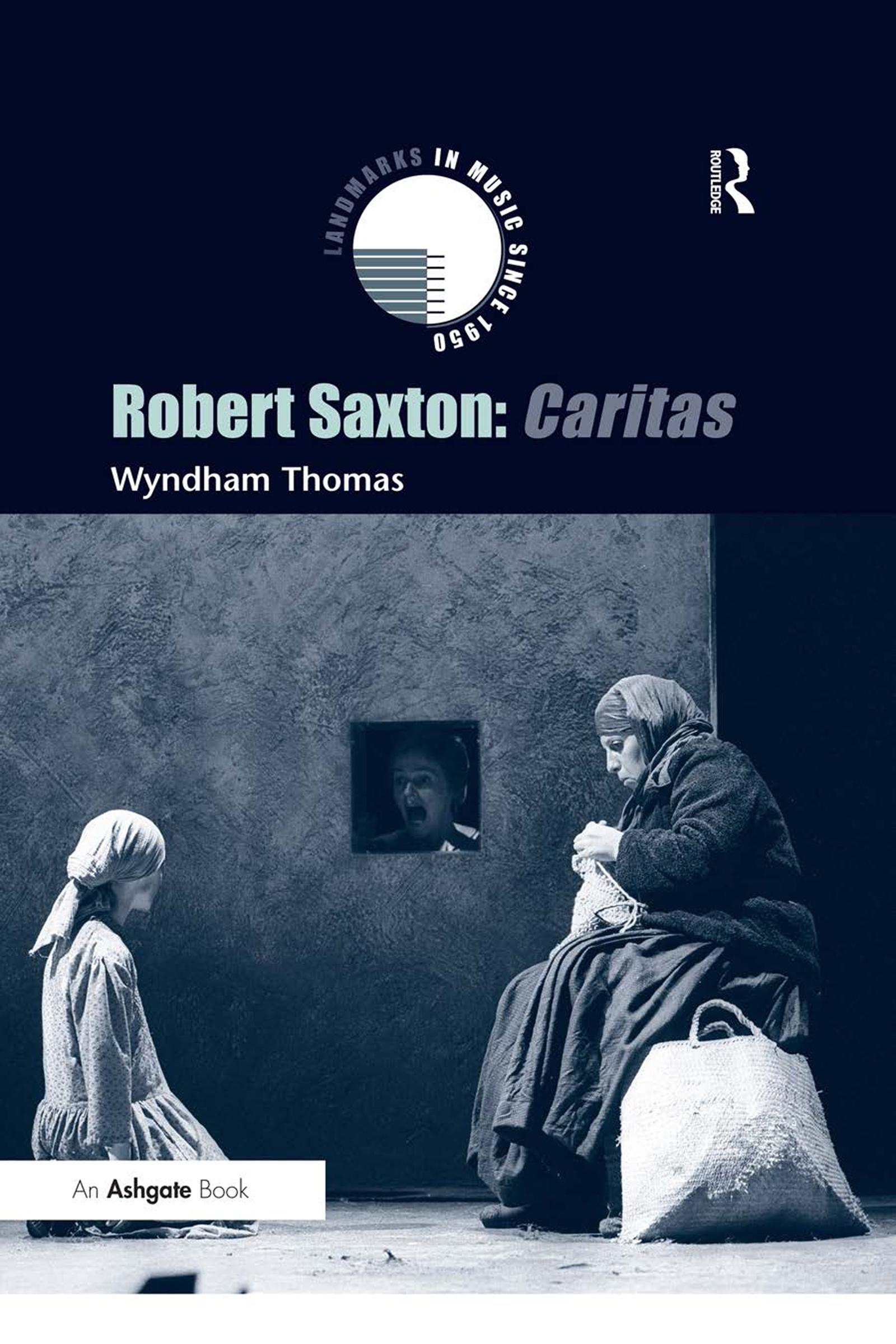
Caritas relates the 'true', yet largely undocumented story of Christine Carpenter, a 14th-century anchoress who moves towards insanity as her desire for a divine revelation continues to be unfulfilled after a period of three years locked in her cell. Although physically isolated, she is aware of the worldly life and love that she has abandoned. The very essence of the drama is the dogmatic refusal of her Bishop to release her from her vows. Set against the backcloth of the Peasants' Uprising (1381), the libretto/play juxtaposes sacred and secular worlds, the relative power and servitude of rulers and serfs, and the terrifying ordeal of Christine who is caught between the inflexibility of the established church and her personal religious expectations. Such a narrative was to offer rich opportunities for musical characterization and evocation of the historical context of the action, as well as substantial challenges in pacing and integrating the sequence of dramatic 'snap-shots' that culminate in a scene of total despair. The colourful juxtaposition of secular life and that of a recluse in Act One culminates in a Second Act finale of immense dramatic power in which Saxton's vocal and instrumental writing reaches new heights - a landmark both in his output and in late 20th century opera. Caritas - first performed in 1991 - occupies an important position in Robert Saxton's output and, as Thomas argues, in British opera during the closing decades of the 20th century. Thomas provides a detailed contextual setting in which to evaluate Caritas, as well as presenting an analytical commentary on the structure, musical language, instrumentation, staging and production of the opera. Thomas concludes with a reflection on the reception of Caritas as well as looking forward to Saxton's later and future works. A downloadable resource of the first performance is included.
Zahle einfach mit Karte, Klarna, Apple Pay oder Google Pay. Nicht zufrieden? Du hast immer ein 14-tägiges Widerrufsrecht. Lies mehr in unseren AGB. Hast du Fragen, schreib uns eine E-Mail an hello@memmo.org.
Memmo macht das Lernen einfacher – wo auch immer du bist. Bei uns findest du deine Kursbücher und smarte Lerntools an einem Ort: Zusammenfassungen, Quizzes, Podcasts und Lernkarten. Und Ted, dein Lernbuddy, beantwortet alles, was du wissen möchtest. Über 50.000 Studierende lernen bereits hier – gemacht, damit du schneller lernst und weniger Stress hast.
Das könnte dir auch gefallen
Buch kaufen0