
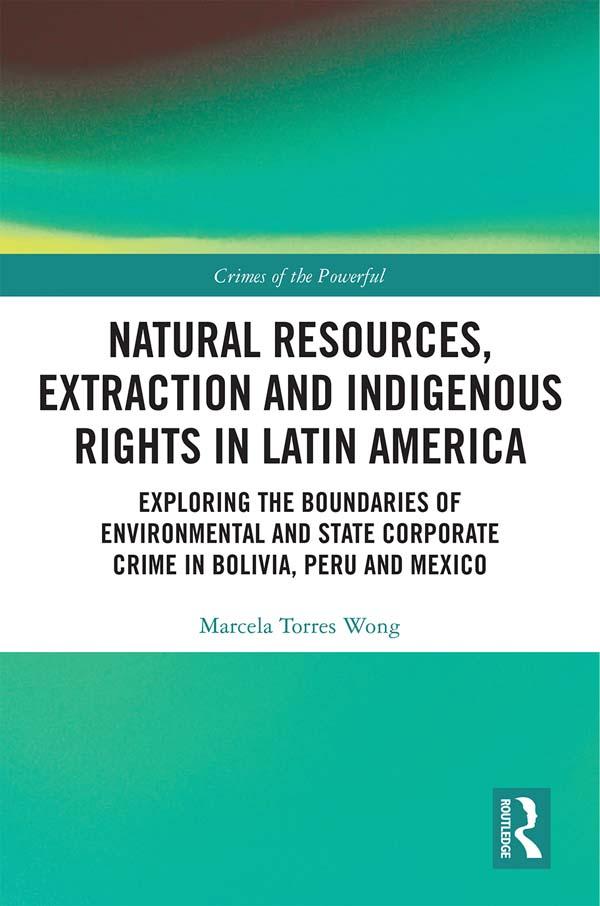
In 1989, the International Labor Organization stated that all indigenous peoples living in the postcolonial world were entitled to the right to prior consultation, over activities that could potentially impact their territories and traditional livelihoods. However, in many cases the economic importance of industries such as mining and oil condition the way that governments implement the right to prior consultation.
This book explores extractive conflicts between indigenous populations, the government and oil and mining companies in Latin America, namely Mexico, Peru and Bolivia. Building on two years of research and drawing on the state-corporate and environmental crime literatures, this book examines the legal, extralegal, illegal as well as political strategies used by the state and extractive companies to avoid undesired results produced by the legalization of the right to prior consultation. It examines the ways in which prior consultation is utilized by powerful indigenous actors to negotiate economic resources with the state and extractive companies, while also showing the ways in which weaker indigenous groups are incapable of engaging in prior consultations in a meaningful way and are therefore left at the mercy of negative ecological impacts. It demonstrates how social mobilization—not prior consultation—is the most effective strategy in preventing extraction from moving forward within ecologically fragile indigenous territories.
Zahle einfach mit Karte, Klarna, Apple Pay oder Google Pay. Nicht zufrieden? Du hast immer ein 14-tägiges Widerrufsrecht. Lies mehr in unseren AGB. Hast du Fragen, schreib uns eine E-Mail an hello@memmo.org.
Memmo macht das Lernen einfacher – wo auch immer du bist. Bei uns findest du deine Kursbücher und smarte Lerntools an einem Ort: Zusammenfassungen, Quizzes, Podcasts und Lernkarten. Und Ted, dein Lernbuddy, beantwortet alles, was du wissen möchtest. Über 50.000 Studierende lernen bereits hier – gemacht, damit du schneller lernst und weniger Stress hast.