
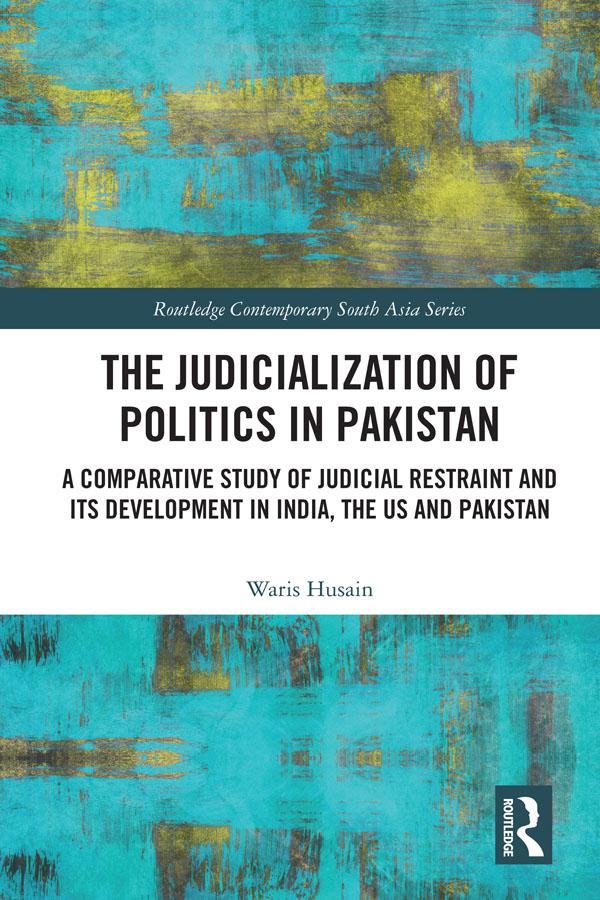
Since 2007, the Supreme Court of Pakistan has emerged as a dominant force in Pakistani politics through its hyper-active use of judicial review, or the power to overrule Parliament’s laws and the Prime Minister’s acts. This hyper-activism was on display during the Supreme Court’s unilateral disqualification of Prime Minister Yousef Raza Gilani in 2012 under the leadership of Chief Justice Iftikhar Chaudhry. Despite the Supreme Court’s practical adoption of restraint subsequent to the retirement of Chief Justice Chaudhry in 2013, the Court has once again disqualified a prime minister, Nawaz Sharif, due to allegations of corruption in 2017.
While many critics have focused on the substance of the Court’s decisions in these cases, sufficient focus is not paid to the amorphous case-selection process of the Supreme Court of Pakistan. In order to compare the relatively unregulated process of case-selection in Pakistan to the more structured processes utilized by the Supreme Courts of the United States’ and India, this book aims to understand the historical roots of judicial review in each country dating back to the colonial era extending through the foundational period of each nation impacting present-day jurisprudence. As a first in its kind, this study comparatively examines these periods of history in order to contextualize a practical prescription to standardize the case-selection process in the Supreme Court of Pakistan in a way that retains the Court’s overall power while limiting its involvement in purely political issues.
This publication offers a critical and comparative view of the Supreme Court of Pakistan’s recent involvement in political disputes due to the lack of a discerning case-selection system that has otherwise been adopted by the Supreme Courts of India and the United States’ to varying degrees. It will be of interest to academics in the fields of Asian Law, South Asian Politics and Law and Comparative Law.
Zahle einfach mit Karte, Klarna, Apple Pay oder Google Pay. Nicht zufrieden? Du hast immer ein 14-tägiges Widerrufsrecht. Lies mehr in unseren AGB. Hast du Fragen, schreib uns eine E-Mail an hello@memmo.org.
Memmo macht das Lernen einfacher – wo auch immer du bist. Bei uns findest du deine Kursbücher und smarte Lerntools an einem Ort: Zusammenfassungen, Quizzes, Podcasts und Lernkarten. Und Ted, dein Lernbuddy, beantwortet alles, was du wissen möchtest. Über 50.000 Studierende lernen bereits hier – gemacht, damit du schneller lernst und weniger Stress hast.