
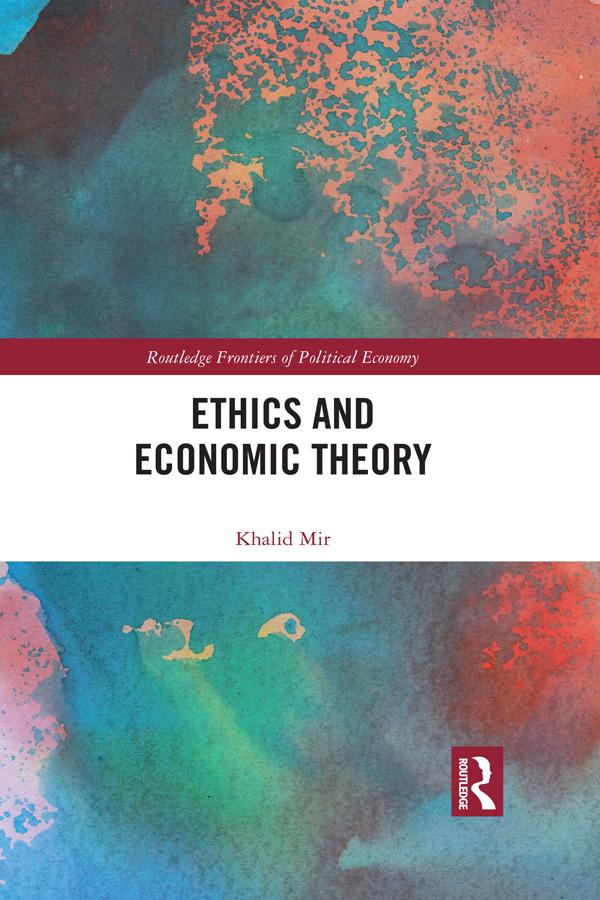
This book takes a multi-disciplinary critique of economics’ first principles: the fundamental and inter-related structuring assumptions that underlie the neo-classical paradigm. These assumptions, that economic agents are rational, self-interested individuals, continue to influence the teaching of economics, research agendas and policy analyses. The book argues that both the theoretical understanding of the economy and the actual working of real-world market economies diminish the scope for thinking about the relation between ethics, economics, and the economy. It highlights how market economies may "crowd out" ethical behavior and our evaluation of them elides ethical reflection.
The book calls for a more pluralistic and richer approach to economic theory, one that allows ample room for ethical considerations. It provides insight into understanding human motivations and human flourishing and how a good economy requires reflection on the ethical relations between the self, world, and time.
Zahle einfach mit Karte, Klarna, Apple Pay oder Google Pay. Nicht zufrieden? Du hast immer ein 14-tägiges Widerrufsrecht. Lies mehr in unseren AGB. Hast du Fragen, schreib uns eine E-Mail an hello@memmo.org.
Memmo macht das Lernen einfacher – wo auch immer du bist. Bei uns findest du deine Kursbücher und smarte Lerntools an einem Ort: Zusammenfassungen, Quizzes, Podcasts und Lernkarten. Und Ted, dein Lernbuddy, beantwortet alles, was du wissen möchtest. Über 50.000 Studierende lernen bereits hier – gemacht, damit du schneller lernst und weniger Stress hast.