
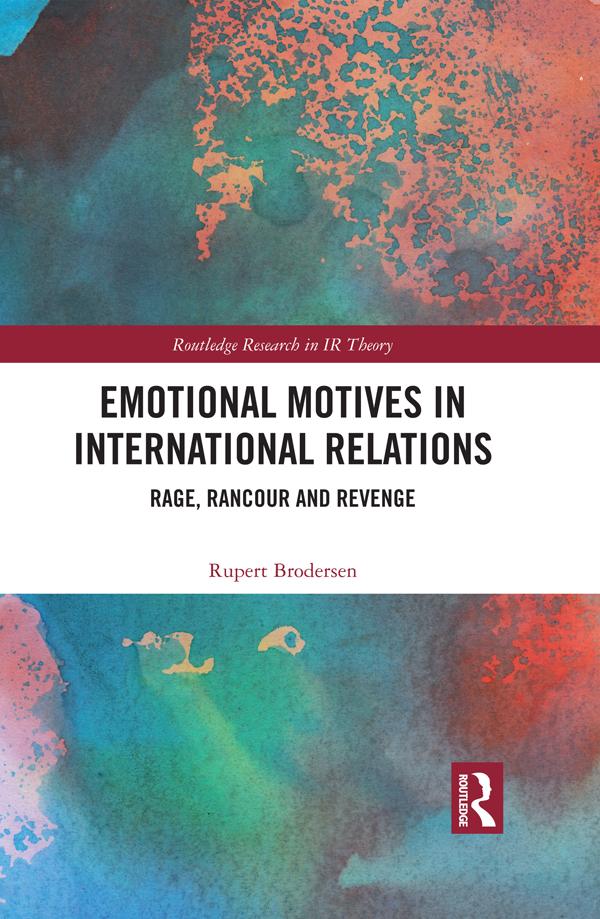
The study of emotions in International Relations is gaining wide-spread attention. Within the "emotional turn" in IR the emotion of rage however has not been given sufficient attention, instead being used as short-hand for irrationality and excess.
Rage is arguably one of the oldest and most destructive emotions in human affairs. This book offers an innovative approach that seeks to split rage into its traditional manifestation of aggression and violence, and into a less visible, passive manifestation of Nietzschean Ressentiment. This model facilitates a comprehensive understanding of revisionist motivation, from the violence of ISIS to the oppositionism of Putin’s Russia. The aim is to illustrate how a lack of violence can belie vengeful impulses and a silent rage, and how acts of violence, regardless of brutality, are often framed as a type of justice and "moral imperative" in the mind of the aggressor. This book raises serious questions and concerns about legitimacy and order in global affairs, and offers a firm theoretical basis for the exploration of present day conflicts.
Zahle einfach mit Karte, Klarna, Apple Pay oder Google Pay. Nicht zufrieden? Du hast immer ein 14-tägiges Widerrufsrecht. Lies mehr in unseren AGB. Hast du Fragen, schreib uns eine E-Mail an hello@memmo.org.
Memmo macht das Lernen einfacher – wo auch immer du bist. Bei uns findest du deine Kursbücher und smarte Lerntools an einem Ort: Zusammenfassungen, Quizzes, Podcasts und Lernkarten. Und Ted, dein Lernbuddy, beantwortet alles, was du wissen möchtest. Über 50.000 Studierende lernen bereits hier – gemacht, damit du schneller lernst und weniger Stress hast.