
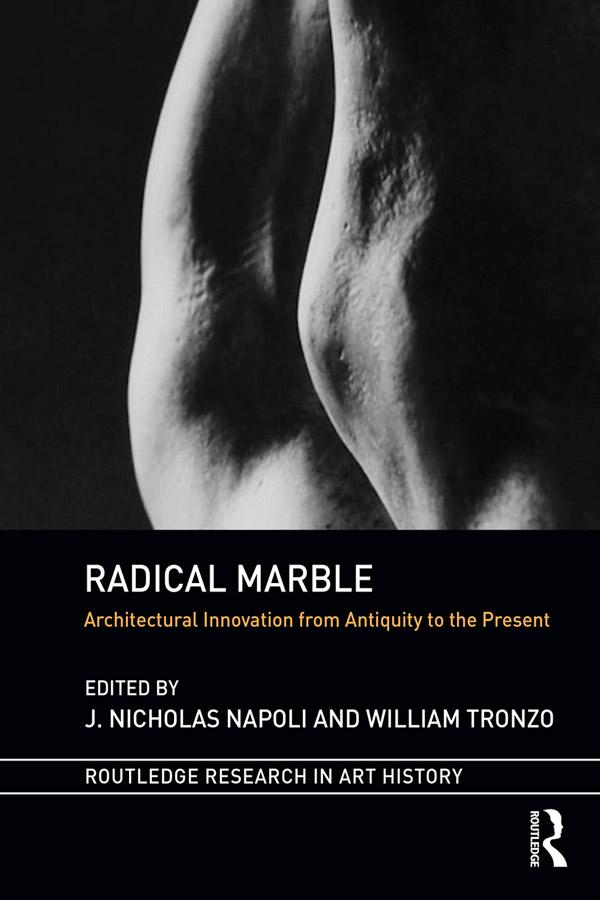
Marble is one of the great veins through the architectural tradition and fundamental building block of the Mediterranean world, from the Parthenon of mid-fifth century Athens, which was constructed of pentelic marble, to Justinian’s Hagia Sophia in Constantinople and the Renaissance and Baroque basilica of St. Peter’s in the Vatican. Scholarship has done much in recent years to reveal the ways and means of marble. The use of colored marbles in Roman imperial architecture has recently been the subject of a major exhibition and the medieval traditions of marble working have been studied in the context of family genealogies and social networks. In addition, architectural historians have revealed the meanings evoked by marble revetted and paved surfaces, from Heavenly Jerusalem to frozen water. The present volume builds upon the body of recent and emerging research - from antiquity to the present day - to embrace a global focus and address the more unusual (or at least unexpected) uses, meanings, and aesthetic appeal of marble. It presents instances where the use of marble has revolutionized architectural practice, suggested new meaning for the built environment, or defined a new aesthetic - moments where this well-known material has been put to radical use.
Zahle einfach mit Karte, Klarna, Apple Pay oder Google Pay. Nicht zufrieden? Du hast immer ein 14-tägiges Widerrufsrecht. Lies mehr in unseren AGB. Hast du Fragen, schreib uns eine E-Mail an hello@memmo.org.
Memmo macht das Lernen einfacher – wo auch immer du bist. Bei uns findest du deine Kursbücher und smarte Lerntools an einem Ort: Zusammenfassungen, Quizzes, Podcasts und Lernkarten. Und Ted, dein Lernbuddy, beantwortet alles, was du wissen möchtest. Über 50.000 Studierende lernen bereits hier – gemacht, damit du schneller lernst und weniger Stress hast.
Das könnte dir auch gefallen
Buch kaufen0