
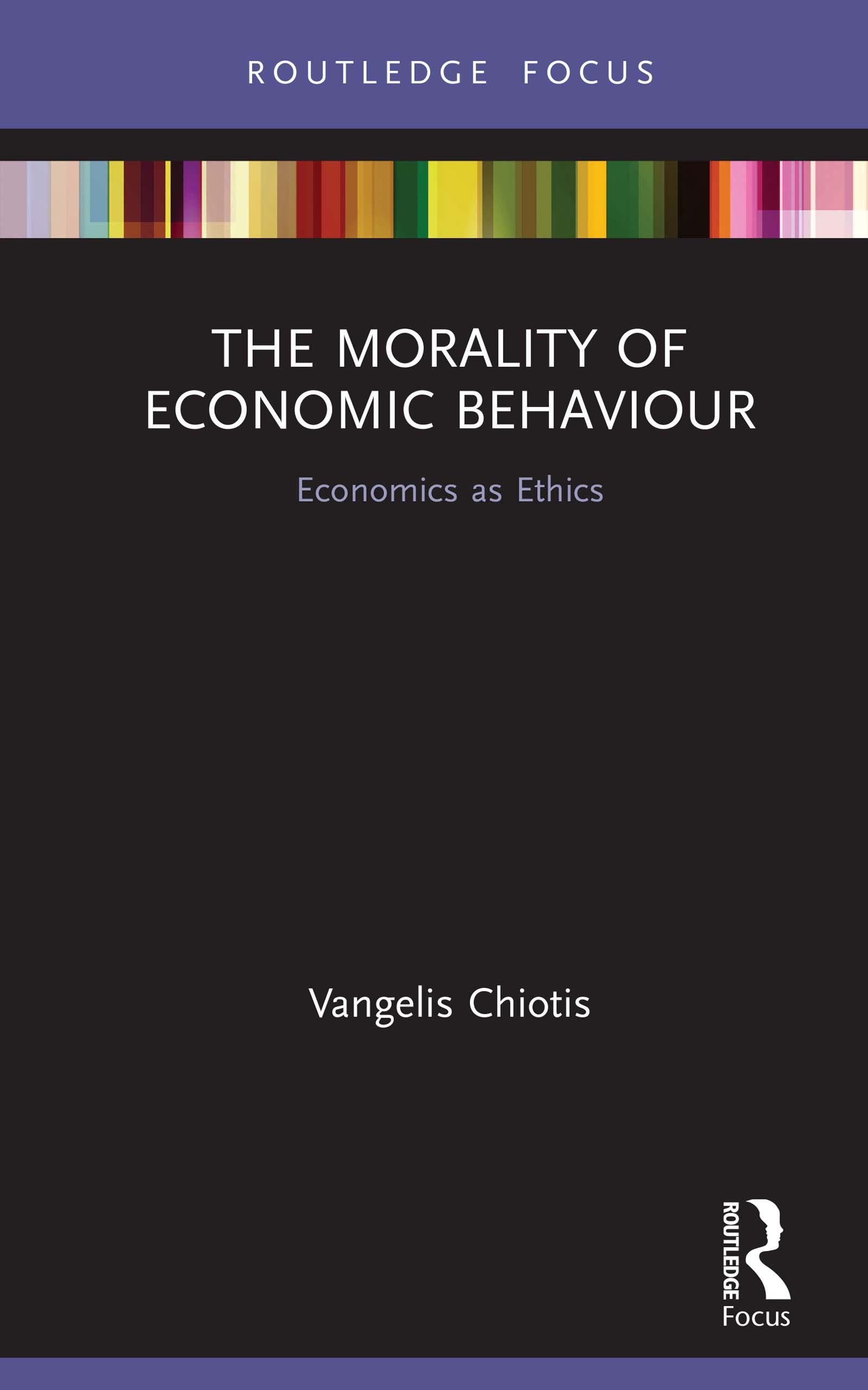
The links between self-interest and morality have been examined in moral philosophy since Plato. Economics is a mostly value-free discipline, having lost its original ethical dimension as described by Adam Smith. Examining moral philosophy through the framework provided by economics offers new insights into both disciplines and the discussion on the origins and nature of morality.
The Morality of Economic Behaviour: Economics as Ethics argues that moral behaviour does not need to be exogenously encouraged or enforced because morality is a side effect of interactions between self-interested agents. The argument relies on two important parameters: behaviour in a social environment and the effects of intertemporal choice on rational behaviour. Considering social structures and repeated interactions on rational maximisation allows an argument for the morality of economic behaviour. Amoral agents interacting within society can reach moral outcomes. Thus, economics becomes a synthesis of moral and rational choice theory bypassing the problems of ethics in economic behaviour whilst promoting moral behaviour and ethical outcomes. This approach sheds new light on practical issues such as economic policy, business ethics and social responsibility.
This book is of interest primarily to students of politics, economics and philosophy but will also appeal to anyone who is interested in morality and ethics, and their relationship with self-interest.
Zahle einfach mit Karte, Klarna, Apple Pay oder Google Pay. Nicht zufrieden? Du hast immer ein 14-tägiges Widerrufsrecht. Lies mehr in unseren AGB. Hast du Fragen, schreib uns eine E-Mail an hello@memmo.org.
Memmo macht das Lernen einfacher – wo auch immer du bist. Bei uns findest du deine Kursbücher und smarte Lerntools an einem Ort: Zusammenfassungen, Quizzes, Podcasts und Lernkarten. Und Ted, dein Lernbuddy, beantwortet alles, was du wissen möchtest. Über 50.000 Studierende lernen bereits hier – gemacht, damit du schneller lernst und weniger Stress hast.