
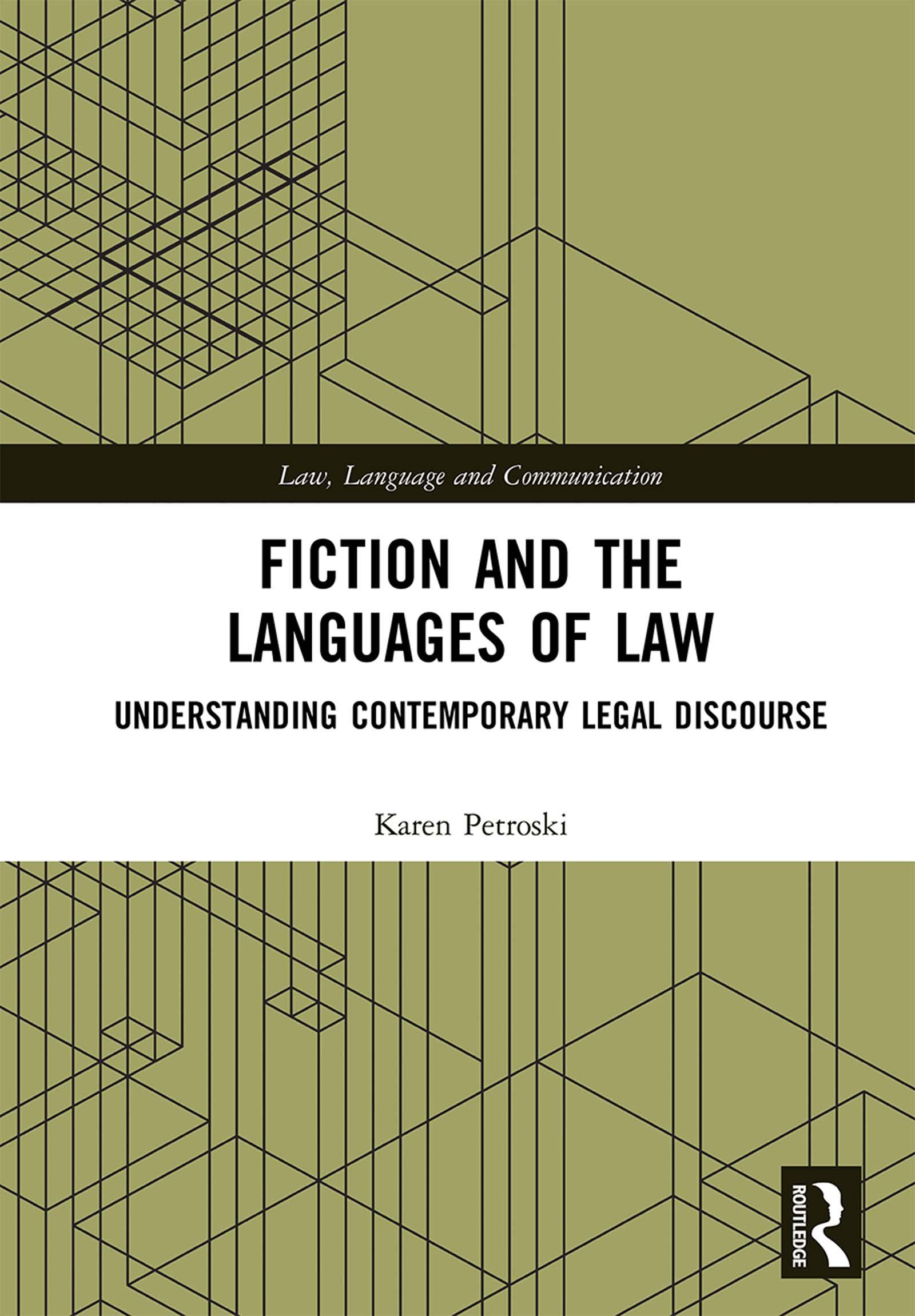
Contemporary legal reasoning has more in common with fictional discourse than we tend to realize. Through an examination of the U.S. Supreme Court’s written output during a recent landmark term, this book exposes many of the parallels between these two special kinds of language use. Focusing on linguistic and rhetorical patterns in the dozens of reasoned opinions issued by the Court between October 2014 and June 2015, the book takes nonlawyer readers on a lively tour of contemporary American legal reasoning and acquaints legal readers with some surprising features of their own thinking and writing habits. It analyzes cases addressing a huge variety of issues, ranging from the rights of drivers stopped by the police to the decision-making processes of the Environmental Protection Agency—as well as the term’s best-known case, which recognized a constitutional right to marriage for same-sex as well as different-sex couples. Fiction and the Languages of Law reframes a number of long-running legal debates, identifies other related paradoxes within legal discourse, and traces them all to common sources: judges’ and lawyers’ habit of alternating unselfconsciously between two different attitudes toward the language they use, and a set of professional biases that tends to prevent scrutiny of that habit.
Zahle einfach mit Karte, Klarna, Apple Pay oder Google Pay. Nicht zufrieden? Du hast immer ein 14-tägiges Widerrufsrecht. Lies mehr in unseren AGB. Hast du Fragen, schreib uns eine E-Mail an hello@memmo.org.
Memmo macht das Lernen einfacher – wo auch immer du bist. Bei uns findest du deine Kursbücher und smarte Lerntools an einem Ort: Zusammenfassungen, Quizzes, Podcasts und Lernkarten. Und Ted, dein Lernbuddy, beantwortet alles, was du wissen möchtest. Über 50.000 Studierende lernen bereits hier – gemacht, damit du schneller lernst und weniger Stress hast.