
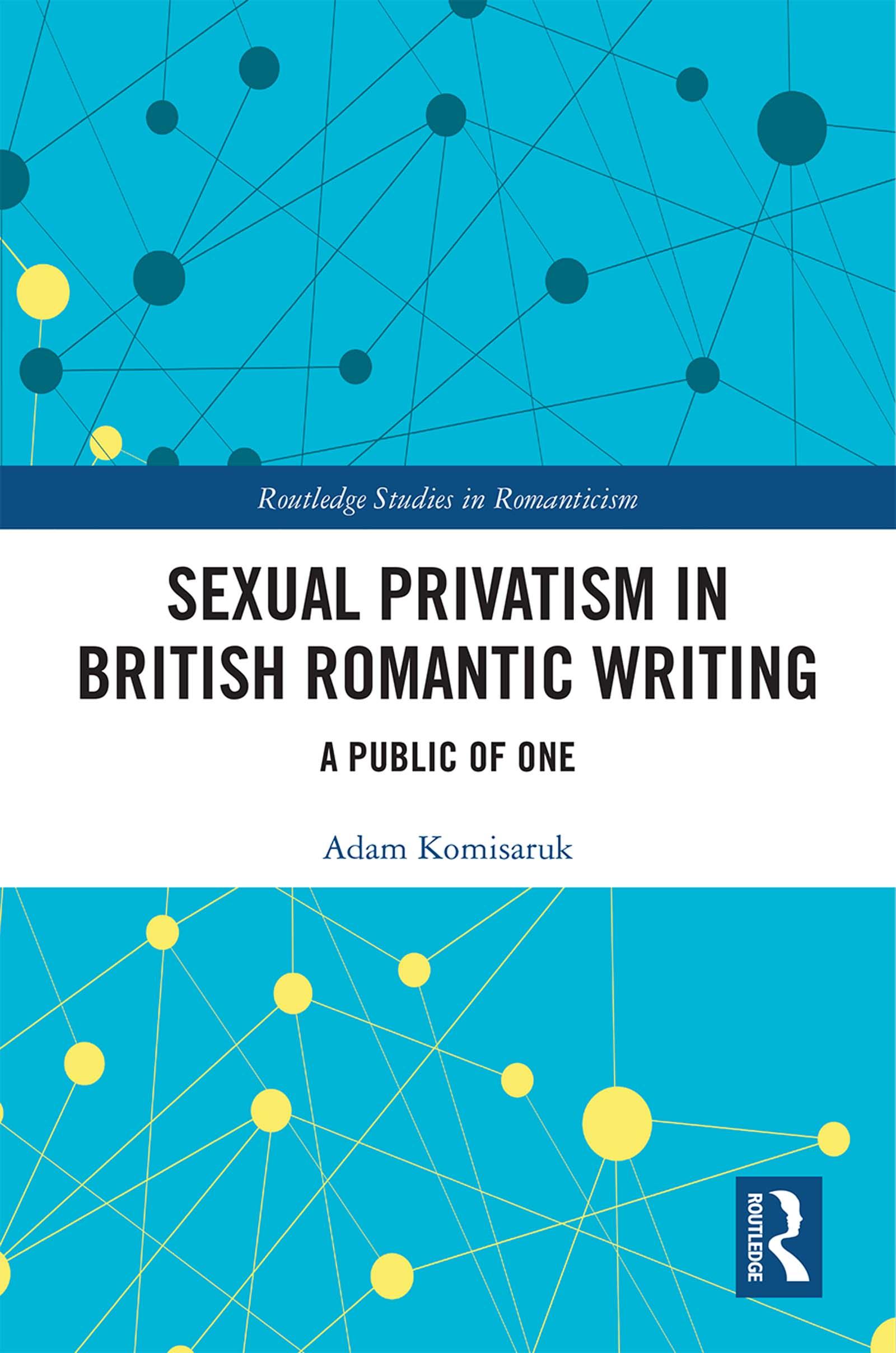
The Romantic age, though often associated with free erotic expression, was ambivalent about what if anything sex had to do with the public sphere. Late-eighteenth- and early-nineteenth-century British texts often repressed the very sexual energies they claimed to be bringing into the open. The delineation of what could and could not be said and done in the name of physical pleasure was of a piece with the capitalist consecration of the social trust to the individual profit-motive. Both these practices, moreover, presupposed a determinate self with sovereignty over its own interests. Writings from and about some nominally public institutions were thus characterized by privatism—a sexual, economic and ontological withdrawal from otherness.
Sexual Privatism in British Romantic Writing: A Public of One explores how this threefold ideology was both propagated and resisted, wittingly and unwittingly, successfully and unsuccessfully, in such Romantic "publics" as rape-law, sodomy-law, adultery-law, high-profile scandals, the population debates, and club-culture. It includes readings of imaginative literature by William Beckford, William Blake, Erasmus Darwin, Mary Hays, Percy Shelley and Mary Wollstonecraft; works of political economy by Jeremy Bentham, William Cobbett, William Godwin, William Hazlitt and Thomas Robert Malthus; as well as contemporary legal treatises, popular journalism and satirical pamphlets.
Zahle einfach mit Karte, Klarna, Apple Pay oder Google Pay. Nicht zufrieden? Du hast immer ein 14-tägiges Widerrufsrecht. Lies mehr in unseren AGB. Hast du Fragen, schreib uns eine E-Mail an hello@memmo.org.
Memmo macht das Lernen einfacher – wo auch immer du bist. Bei uns findest du deine Kursbücher und smarte Lerntools an einem Ort: Zusammenfassungen, Quizzes, Podcasts und Lernkarten. Und Ted, dein Lernbuddy, beantwortet alles, was du wissen möchtest. Über 50.000 Studierende lernen bereits hier – gemacht, damit du schneller lernst und weniger Stress hast.