
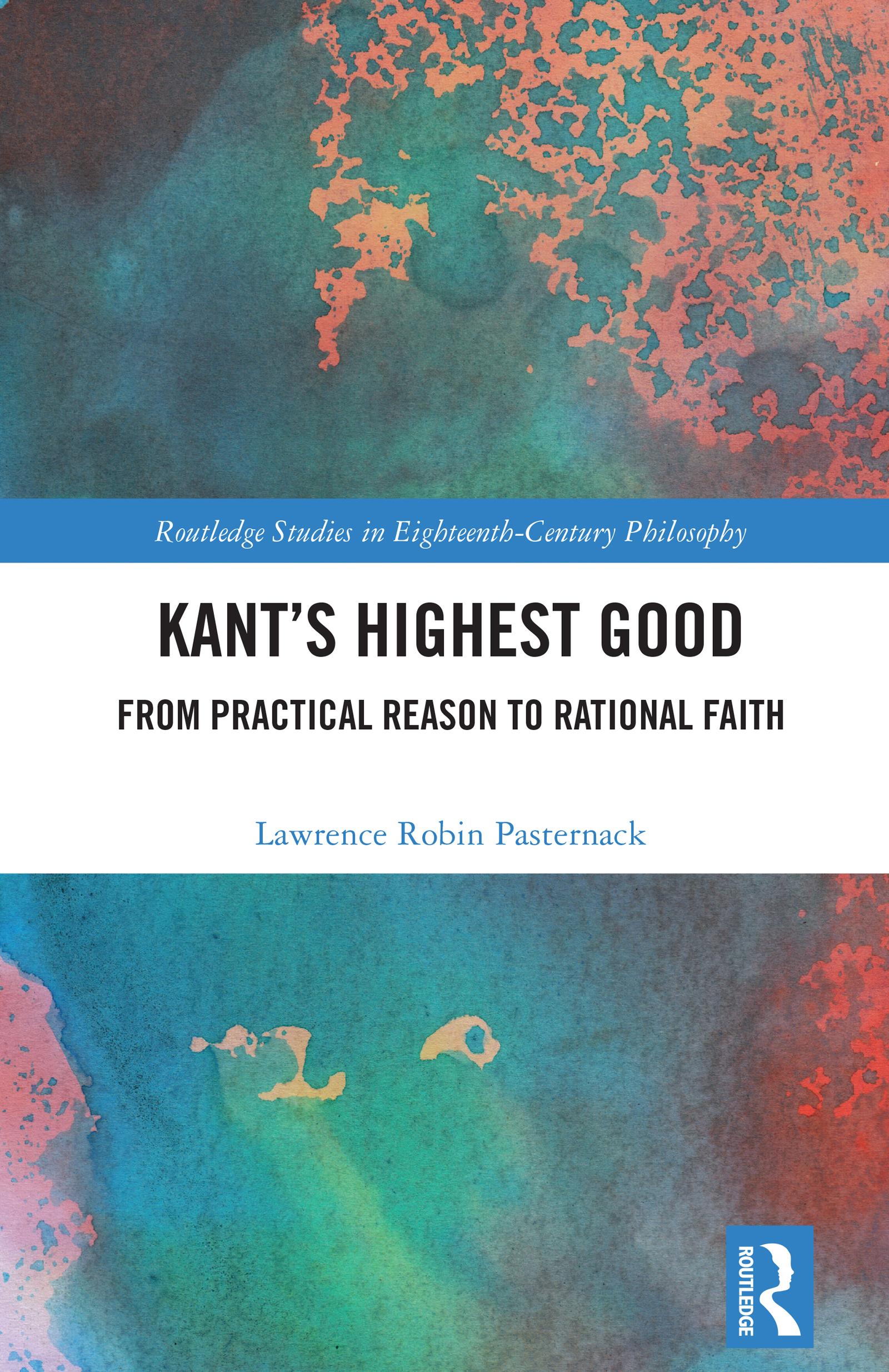
Kant’s doctrine of the Highest Good is among the most perplexing and controversial aspects of his practical philosophy. There is widespread disagreement about exactly what the Highest Good is, how Kant argues for it, and what function it is supposed to fulfill. The Highest Good is also situated at the nexus of some of the most acrimonious disputes within Kant scholarship.
This book is the first comprehensive, English-language interpretation of the Highest Good’s internal structure, its development, and its place within Kant’s broader philosophical system. Pasternack offers sustained engagement with the contemporary secondary literature on these issues, and discusses key texts of the German Enlightenment which helped to shape Kant’s conception of the Highest Good. He argues that prevailing interpretations rely upon a faulty understanding of the Highest Good, one which has its roots in a number of early interpretive missteps. Pasternack proceeds to discuss how the Highest Good relates to other elements of Kant’s philosophical system, including the conflicting interpretations of his moral psychology, the epistemic strictures of Transcendental Idealism, and how to reconcile his positive philosophy of religion with these strictures.
Zahle einfach mit Karte, Klarna, Apple Pay oder Google Pay. Nicht zufrieden? Du hast immer ein 14-tägiges Widerrufsrecht. Lies mehr in unseren AGB. Hast du Fragen, schreib uns eine E-Mail an hello@memmo.org.
Memmo macht das Lernen einfacher – wo auch immer du bist. Bei uns findest du deine Kursbücher und smarte Lerntools an einem Ort: Zusammenfassungen, Quizzes, Podcasts und Lernkarten. Und Ted, dein Lernbuddy, beantwortet alles, was du wissen möchtest. Über 50.000 Studierende lernen bereits hier – gemacht, damit du schneller lernst und weniger Stress hast.