
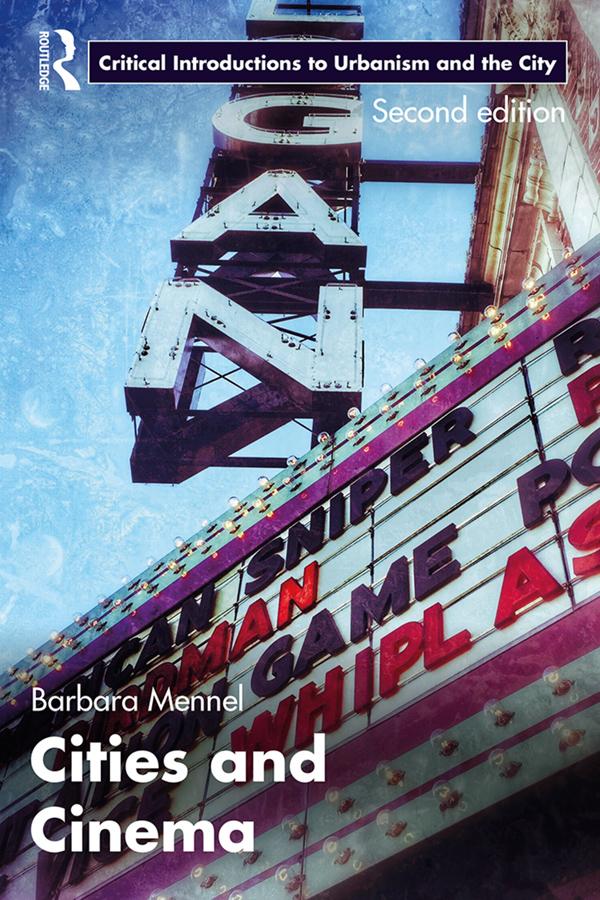
The second edition of Cities and Cinema provides an updated survey of films about cities, from their significance for modernity at the beginning of the twentieth century to the contemporary relationship between virtual reality and urban space. The book demonstrates the importance of the filmic depiction of capitals for national cinemas in the twentieth century and analyzes the transnational transfer of cinematic images surrounding global cities in the twenty-first century.
Cities and Cinema covers the different facets of the cinematic depiction of cities. It rehearses distinct methodologies and offers a survey of the history of the cinematic city. The book also deepens our understanding of tropes and narrative conventions that shape films about urban settings and that reflect the transformation of cities throughout the twentieth and twenty-first centuries. Beginning with a discussion of the Weimar “street film,” it analyzes how the city film defined modernity. The book outlines the sociological context and the aesthetic features of so-called film noir, made in 1940s Hollywood and depicting Los Angeles. Paris became the site for the development of auteur cinema, which repeatedly depicts characters moving through the city. Tokyo took up noir to signal modern crime. The volume delineates how filmic genres, such as science fiction, comment on the present by imagining future forms of urban living. After analyzing how cinema captures the relationship between sexual identity and urban anonymity, migration and urban space, and marginalized ethnic and sexual identity in ghetto films, the book emphasizes transnational dynamics and global cities in the twenty-first century. Its conclusion points to the increasing virtual mediation of cities with new media.
Cities and Cinema offers a historical overview of the development of films about cities and a theoretical approach to the intersection of urban studies and film studies. This title is designed as a textbook primarily for second-year undergraduate students in Film/Media studies, Urban studies, as well as Geography and Planning.
Zahle einfach mit Karte, Klarna, Apple Pay oder Google Pay. Nicht zufrieden? Du hast immer ein 14-tägiges Widerrufsrecht. Lies mehr in unseren AGB. Hast du Fragen, schreib uns eine E-Mail an hello@memmo.org.
Memmo macht das Lernen einfacher – wo auch immer du bist. Bei uns findest du deine Kursbücher und smarte Lerntools an einem Ort: Zusammenfassungen, Quizzes, Podcasts und Lernkarten. Und Ted, dein Lernbuddy, beantwortet alles, was du wissen möchtest. Über 50.000 Studierende lernen bereits hier – gemacht, damit du schneller lernst und weniger Stress hast.