
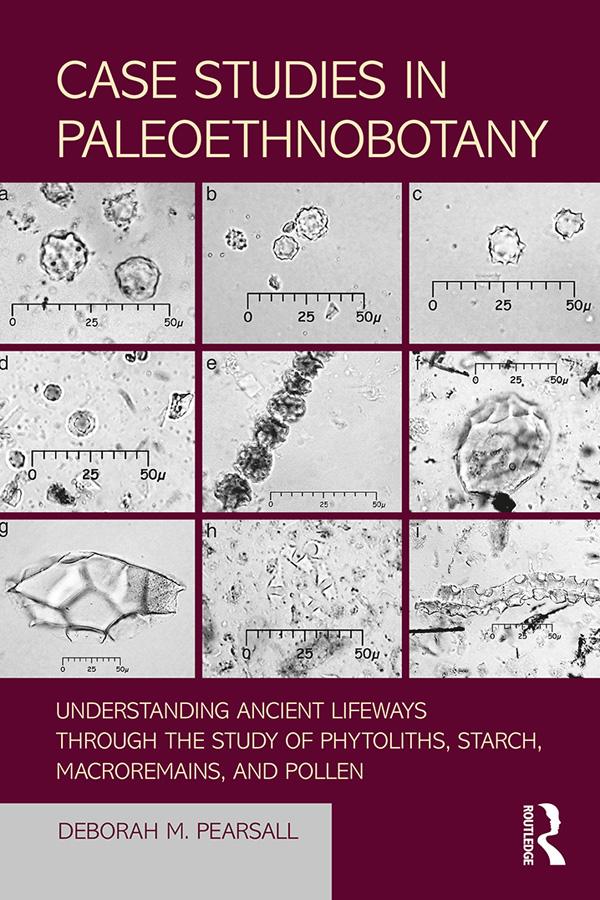
Case Studies in Paleoethnobotany focuses on interpretation in paleoethnobotany. In it the reader is guided through the process of analyzing archaeobotanical data and of using that data to address research questions. Part I introduces archaeobotanical remains and how they are deposited, preserved, sampled, recovered, and analyzed. Five issue-oriented case studies make up Part II and illustrate paleoethnobotanical inference and applications. A recurrent theme is the strength of using multiple lines of evidence to address issues of significance.
This book is unique in its explicit focus on interpretation for "consumers" of paleoethnobotanical knowledge. Paleoethnobotanical inference is increasingly sophisticated and contributes to our understanding of the past in ways that may not be apparent outside the field or to all practitioners. The case study format allows in-depth exploration of the process of interpretation in the context of significant issues that will engage readers. No other work introduces paleoethnobotany and illustrates its application in this way.
This book will appeal to students interested in ancient plant–people interrelationships, as well as archaeologists, paleoethnobotanists, and paleoecologists. The short methods chapters and topical case studies are ideal for instructors of classes in archaeological methods, environmental archaeology, and ethnobiology.
Zahle einfach mit Karte, Klarna, Apple Pay oder Google Pay. Nicht zufrieden? Du hast immer ein 14-tägiges Widerrufsrecht. Lies mehr in unseren AGB. Hast du Fragen, schreib uns eine E-Mail an hello@memmo.org.
Memmo macht das Lernen einfacher – wo auch immer du bist. Bei uns findest du deine Kursbücher und smarte Lerntools an einem Ort: Zusammenfassungen, Quizzes, Podcasts und Lernkarten. Und Ted, dein Lernbuddy, beantwortet alles, was du wissen möchtest. Über 50.000 Studierende lernen bereits hier – gemacht, damit du schneller lernst und weniger Stress hast.