
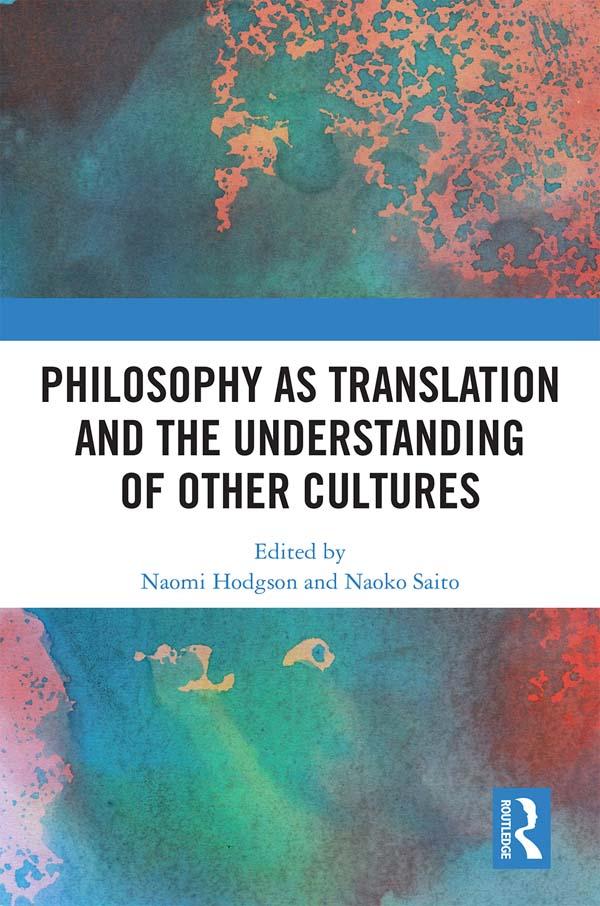
The existential crises involved in translation are part of our political life, especially in times when the closing of borders symbolized by Brexit and the triumph of Donald Trump, present new challenges to those living lives of immigrancy and those waiting at the borders. How to resist the emotive tide of populism and, in particular, the language that legitimates exclusion? How to confront the anxieties of inclusion? These challenges are increasingly pressing. The 2016 Conference of the International Network of Philosophers of Education sought to address such concerns through the theme ‘Philosophy as translation and the understanding of other cultures’. The chapters included here represent the breadth and richness of that conference, addressing questions of ethics, desire, religious understanding, intercultural philosophy, and practices of higher education and teacher education. The processes of translation they discuss are not limited to linguistic translation as conventionally understood. Instead translation is taken to be a window through which to understand how we, as linguistic beings, are constantly in a process of transformation, and how our personal and cultural identities are, hence, also already involved in processes of translation. This book was originally published as a special issue of Ethics & Education.
Zahle einfach mit Karte, Klarna, Apple Pay oder Google Pay. Nicht zufrieden? Du hast immer ein 14-tägiges Widerrufsrecht. Lies mehr in unseren AGB. Hast du Fragen, schreib uns eine E-Mail an hello@memmo.org.
Memmo macht das Lernen einfacher – wo auch immer du bist. Bei uns findest du deine Kursbücher und smarte Lerntools an einem Ort: Zusammenfassungen, Quizzes, Podcasts und Lernkarten. Und Ted, dein Lernbuddy, beantwortet alles, was du wissen möchtest. Über 50.000 Studierende lernen bereits hier – gemacht, damit du schneller lernst und weniger Stress hast.