
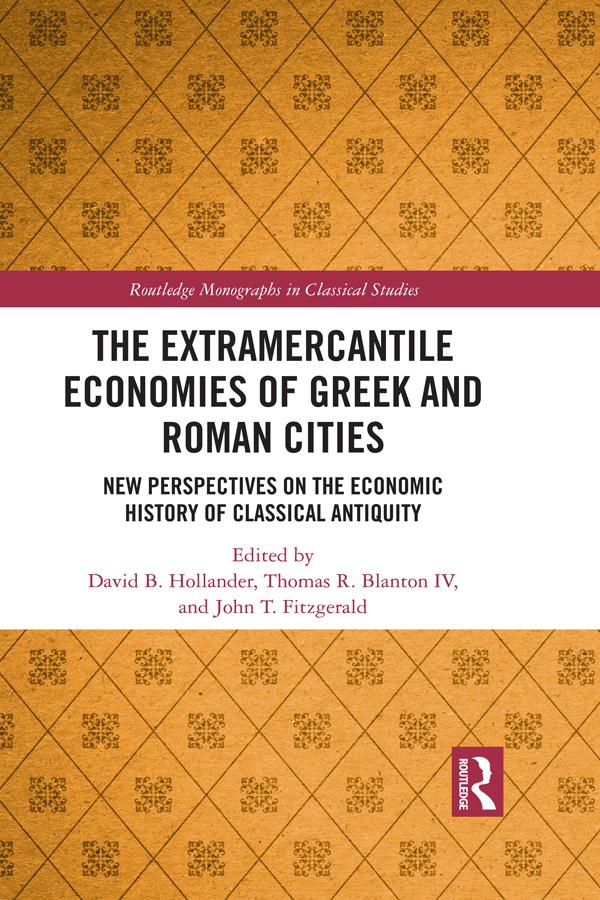
Recent work on the ancient economy has tended to concentrate on market exchange, but other forces also caused goods to change hands. Such nonmarket transfers ranged from small private gifts to the wholesale confiscation of cities, lands, and their peoples. The papers presented in this volume examine aspects of this extramercantile economy, particularly benefaction and the role of associations, as well as their impact on the market economy.
This volume brings together ancient historians, New Testament scholars, and classicists to assess critically the New Institutional Economics framework. Combining theoretical approaches with detailed investigations of particular regions and topics, its chapters examine Greek economic thought, the benefits of membership in private associations, and the economic role of civic euergetism from classical Athens to the municipalities of Roman Spain.
The Extramercantile Economies of Greek and Roman Cities will be of use to those interested in the economic context of ancient religions, the role of associations in the economy, theoretical approaches to the study of the ancient economy, labor and politics in the ancient city, as well as how Greek philosophers, from Xenophon to Philodemus, developed ethical ideas about economic behavior.
Zahle einfach mit Karte, Klarna, Apple Pay oder Google Pay. Nicht zufrieden? Du hast immer ein 14-tägiges Widerrufsrecht. Lies mehr in unseren AGB. Hast du Fragen, schreib uns eine E-Mail an hello@memmo.org.
Memmo macht das Lernen einfacher – wo auch immer du bist. Bei uns findest du deine Kursbücher und smarte Lerntools an einem Ort: Zusammenfassungen, Quizzes, Podcasts und Lernkarten. Und Ted, dein Lernbuddy, beantwortet alles, was du wissen möchtest. Über 50.000 Studierende lernen bereits hier – gemacht, damit du schneller lernst und weniger Stress hast.