
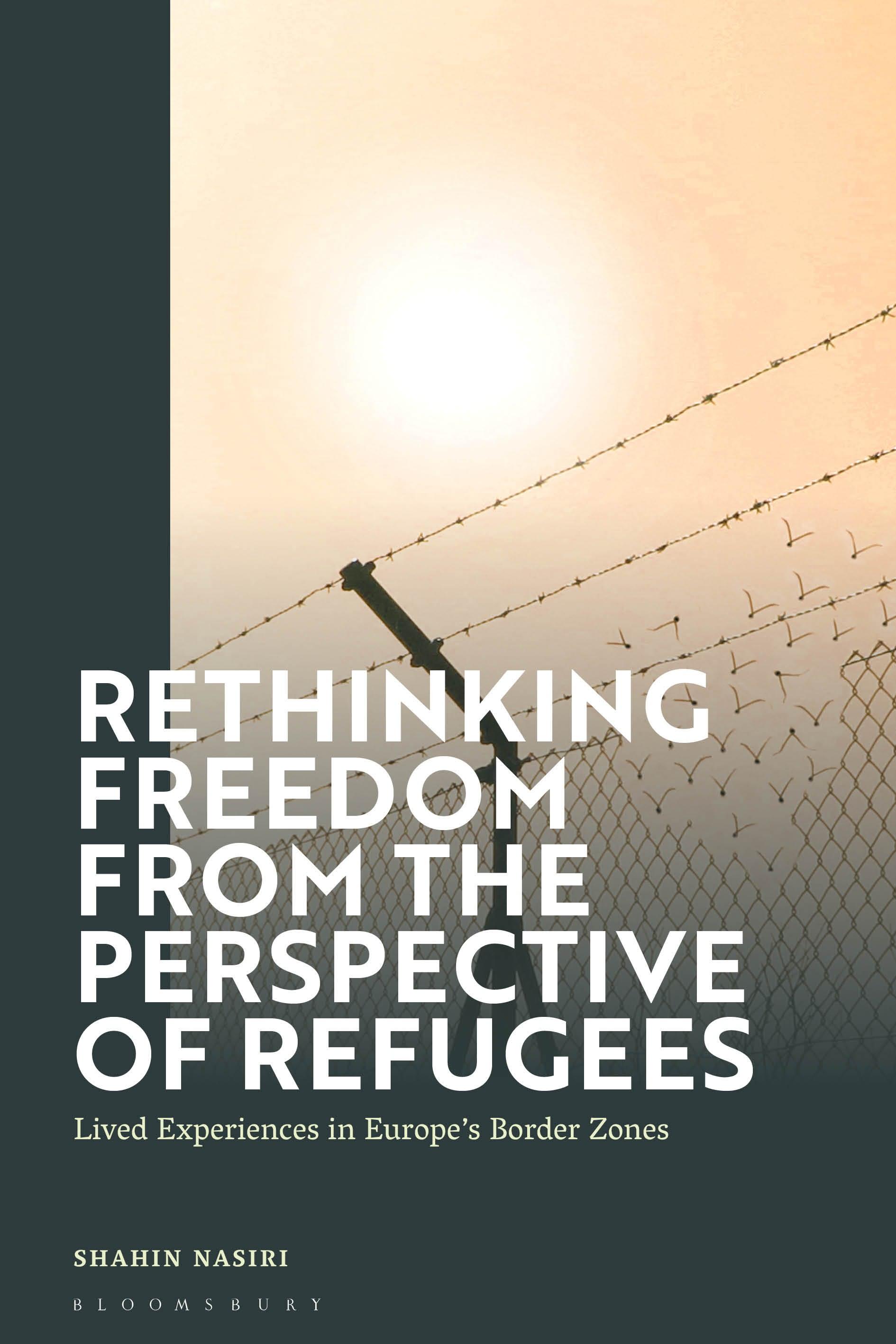
Over the last decades, the experience of mass flight has come to constitute the normalised mode of existence for a growing number of people who do not fit within the boundaries of nation-states.
In mainstream political discourse, refugees are viewed either as voiceless victims who should be offered protection and assistance on humanitarian grounds, or as enemy-like strangers who pose a threat to the borders, stability, citizens of nation states. Both views however fundamentally disregard the political subjectivity of refugees, as well as the emancipatory phenomena and practices of freedom that are embedded and expressed in their migratory movements.
A philosophical examination of freedom and refugeehood, this book aims to make up for this under-theorisation of the emancipatory dimensions of refugeehood and fugitivity – exploring the political significance of (un)freedom through lived experiences, cultural narratives, and epistemic resources of contemporary refugees. Including chapters exploring racial-colonial structures of abandonment and violence, and autonomous relations and arrangements by which refugees enact freedom in receiving states, Rethinking Freedom from the Perspective of Refugees offers a novel theoretical and methodological approach for reconceptualizing (un)freedom. In doing so, it contributes to emerging discussions in the field of political philosophy, critical migration theory, critical race theory, and abolitionist perspectives in border studies.
In mainstream political discourse, refugees are viewed either as voiceless victims who should be offered protection and assistance on humanitarian grounds, or as enemy-like strangers who pose a threat to the borders, stability, citizens of nation states. Both views however fundamentally disregard the political subjectivity of refugees, as well as the emancipatory phenomena and practices of freedom that are embedded and expressed in their migratory movements.
A philosophical examination of freedom and refugeehood, this book aims to make up for this under-theorisation of the emancipatory dimensions of refugeehood and fugitivity – exploring the political significance of (un)freedom through lived experiences, cultural narratives, and epistemic resources of contemporary refugees. Including chapters exploring racial-colonial structures of abandonment and violence, and autonomous relations and arrangements by which refugees enact freedom in receiving states, Rethinking Freedom from the Perspective of Refugees offers a novel theoretical and methodological approach for reconceptualizing (un)freedom. In doing so, it contributes to emerging discussions in the field of political philosophy, critical migration theory, critical race theory, and abolitionist perspectives in border studies.
Zahle einfach mit Karte, Klarna, Apple Pay oder Google Pay. Nicht zufrieden? Du hast immer ein 14-tägiges Widerrufsrecht. Lies mehr in unseren AGB. Hast du Fragen, schreib uns eine E-Mail an hello@memmo.org.
Memmo macht das Lernen einfacher – wo auch immer du bist. Bei uns findest du deine Kursbücher und smarte Lerntools an einem Ort: Zusammenfassungen, Quizzes, Podcasts und Lernkarten. Und Ted, dein Lernbuddy, beantwortet alles, was du wissen möchtest. Über 50.000 Studierende lernen bereits hier – gemacht, damit du schneller lernst und weniger Stress hast.