
Crises abound.
The 'end of history' in the form of the triumph of liberalism has given way to a proliferation of crises internal to liberal, and especially neoliberal democracies: our economies and ecosystems, democracies, social and labour relations, constitutions, cultures, identities, and bodies are subjected to repeated and increasingly severe shocks.
Unsurprisingly, the vocabulary of crisis is ubiquitous. Ours, we are told, is an age of chronic, multiple, and mutually reinforcing cataclysms. But what exactly do we mean when we speak of crisis? Deceptively simple, the term has become a repository for a mass of fears, hopes and assumptions, bound up with the very institutions and techniques of government it so often claims to address. Overused and emptied out, it leads to either indecision and paralysis, or, at the other extreme, its cynical instrumentalization. To counter this, we need a philosophy, specifically a critique, of crisis.
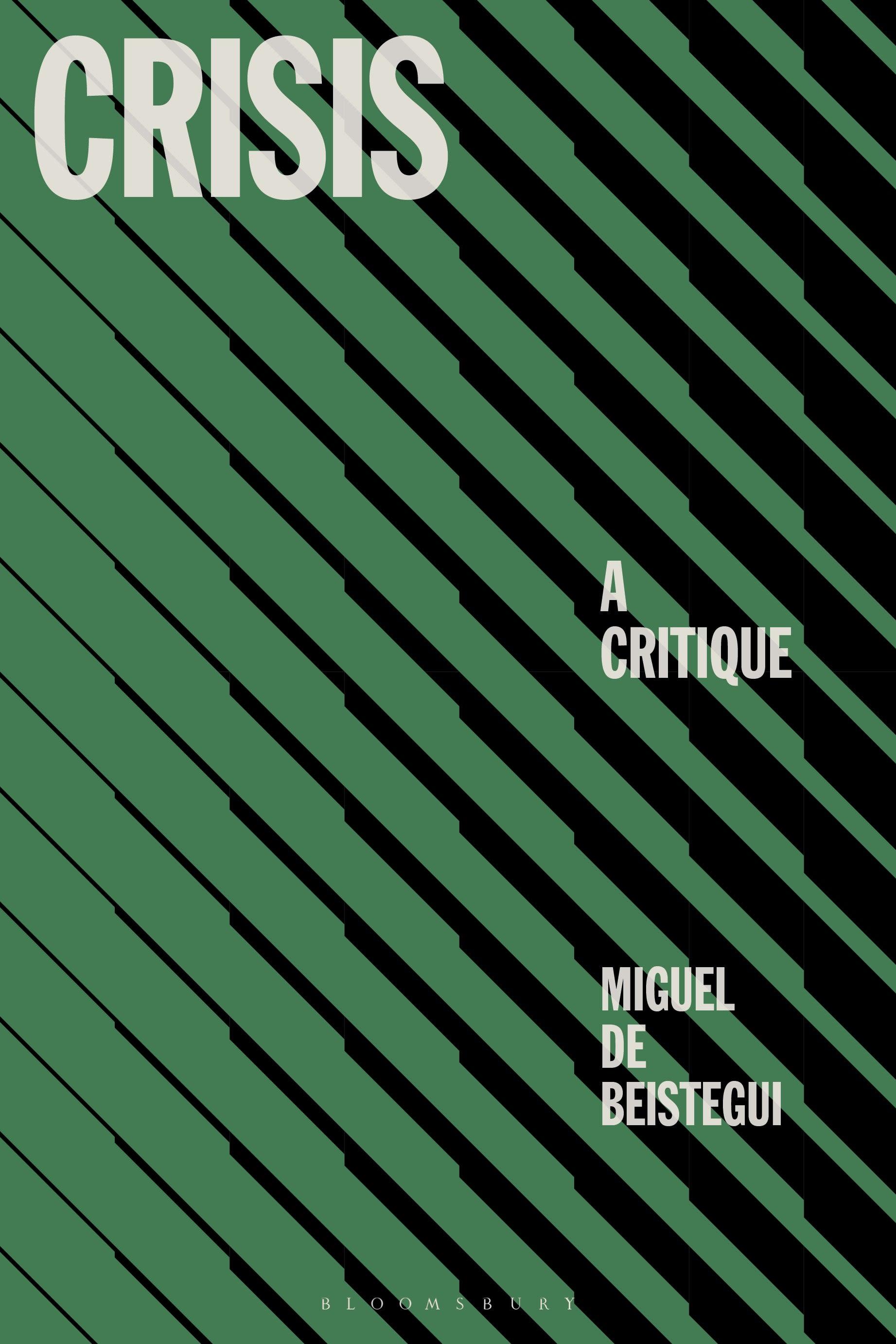
Crisis: A Critique presents crisis as a construction through which we understand, experience and order the world; as a discursive event, producing a range of effects. Drawing on a range of examples (from economic crises to social uprisings, pandemics, genocides, and ecological devastation) and discourses (from ancient medicine to legal theory, political economy, philosophy, the earth sciences, and eco-criticism), this ambitious work of conceptual archaeology and typology engages with a range of authors who have questioned the nature of the connection between crisis and critique. If our time “out of joint” presents a crisis of critique itself, Miguel de Beistegui takes a vital step towards re-calibrating our language and thought for an age of seemingly unrelenting catastrophe.
The 'end of history' in the form of the triumph of liberalism has given way to a proliferation of crises internal to liberal, and especially neoliberal democracies: our economies and ecosystems, democracies, social and labour relations, constitutions, cultures, identities, and bodies are subjected to repeated and increasingly severe shocks.
Unsurprisingly, the vocabulary of crisis is ubiquitous. Ours, we are told, is an age of chronic, multiple, and mutually reinforcing cataclysms. But what exactly do we mean when we speak of crisis? Deceptively simple, the term has become a repository for a mass of fears, hopes and assumptions, bound up with the very institutions and techniques of government it so often claims to address. Overused and emptied out, it leads to either indecision and paralysis, or, at the other extreme, its cynical instrumentalization. To counter this, we need a philosophy, specifically a critique, of crisis.
Crisis: A Critique presents crisis as a construction through which we understand, experience and order the world; as a discursive event, producing a range of effects. Drawing on a range of examples (from economic crises to social uprisings, pandemics, genocides, and ecological devastation) and discourses (from ancient medicine to legal theory, political economy, philosophy, the earth sciences, and eco-criticism), this ambitious work of conceptual archaeology and typology engages with a range of authors who have questioned the nature of the connection between crisis and critique. If our time “out of joint” presents a crisis of critique itself, Miguel de Beistegui takes a vital step towards re-calibrating our language and thought for an age of seemingly unrelenting catastrophe.
Zahle einfach mit Karte, Klarna, Apple Pay oder Google Pay. Nicht zufrieden? Du hast immer ein 14-tägiges Widerrufsrecht. Lies mehr in unseren AGB. Hast du Fragen, schreib uns eine E-Mail an hello@memmo.org.
Memmo macht das Lernen einfacher – wo auch immer du bist. Bei uns findest du deine Kursbücher und smarte Lerntools an einem Ort: Zusammenfassungen, Quizzes, Podcasts und Lernkarten. Und Ted, dein Lernbuddy, beantwortet alles, was du wissen möchtest. Über 50.000 Studierende lernen bereits hier – gemacht, damit du schneller lernst und weniger Stress hast.