
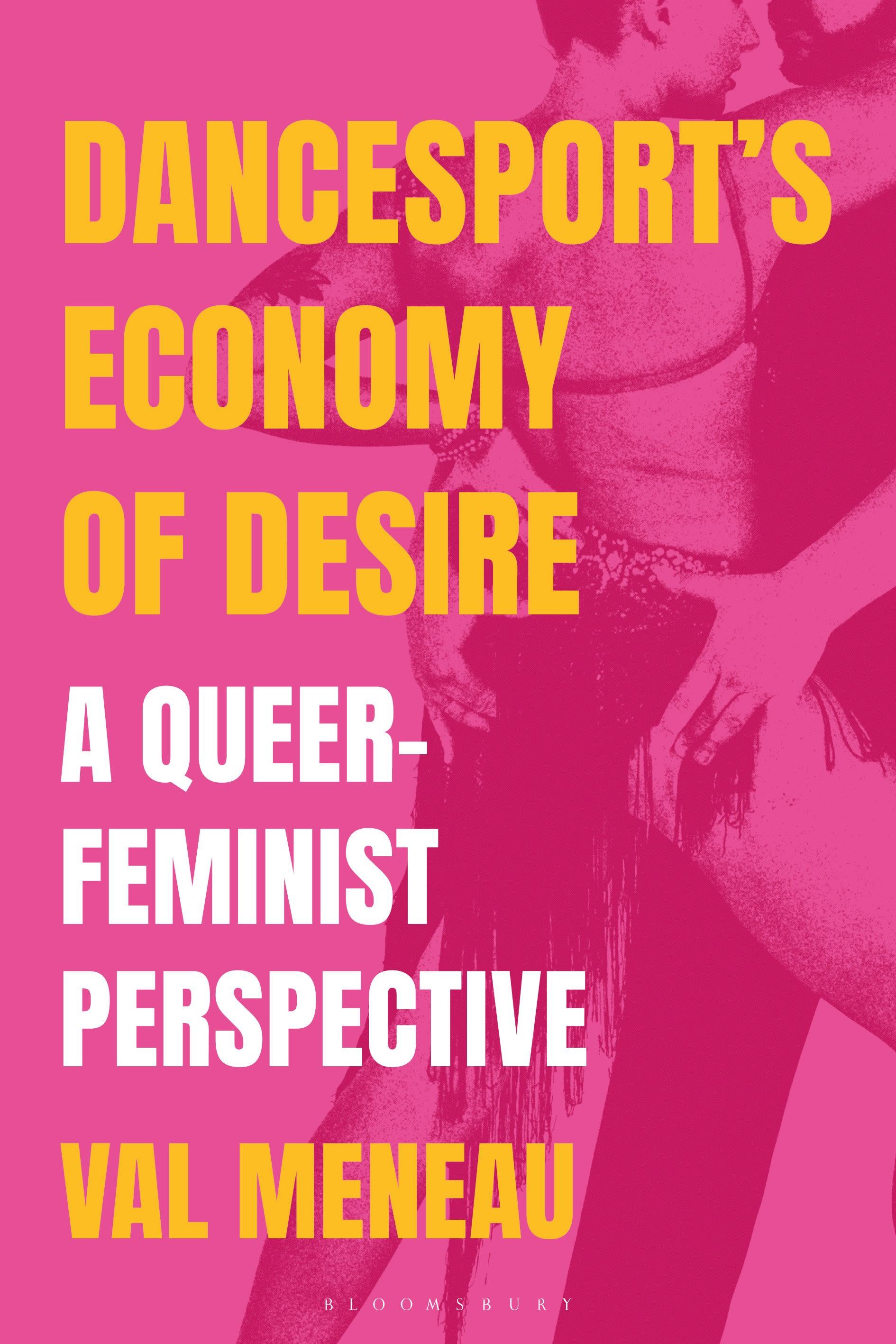
DanceSport's Economy of Desire examines how the DanceSport dispositive shapes its actors' opportunities, desires, and choices to reproduce the heteronormative gender binary, focusing on the DanceSport dispositive, a network of power that spans over and influences objects (such as clothes or competition halls), discourses (such as federations' competition regulations, syllabus books, judging criteria), and practices (dancing or choreographing).
Meneau argues that the DanceSport dispositive constrains what Latin dance can look like, despite resistance and counter-movements, by excluding or invisibilising queerness and objectifying and sexualising female dancers. This shows in all elements that affect or constitute dancers' performances on the (competition) dance floor; that includes registration, clothing, coupling, partnering, moving, judging.
This book helps readers understand how the heteronormative gender binary works, how it plays out in all the elements that influence or make up dance, and how it manages to remain hegemonic. It demonstrates how the DanceSport dispositive affects and influences all its actors, all the time – how we think, decide, move, perceive others, or incorporate knowledge that shapes our bodies according to norms and productive power. Finally, by looking for the heteronormative gender binary in the dance and in the regulations, DanceSport's Economy of Desire unravels the underlying mechanisms that secure the oppressive systems and allows society at large to better understand them.
Meneau argues that the DanceSport dispositive constrains what Latin dance can look like, despite resistance and counter-movements, by excluding or invisibilising queerness and objectifying and sexualising female dancers. This shows in all elements that affect or constitute dancers' performances on the (competition) dance floor; that includes registration, clothing, coupling, partnering, moving, judging.
This book helps readers understand how the heteronormative gender binary works, how it plays out in all the elements that influence or make up dance, and how it manages to remain hegemonic. It demonstrates how the DanceSport dispositive affects and influences all its actors, all the time – how we think, decide, move, perceive others, or incorporate knowledge that shapes our bodies according to norms and productive power. Finally, by looking for the heteronormative gender binary in the dance and in the regulations, DanceSport's Economy of Desire unravels the underlying mechanisms that secure the oppressive systems and allows society at large to better understand them.
Zahle einfach mit Karte, Klarna, Apple Pay oder Google Pay. Nicht zufrieden? Du hast immer ein 14-tägiges Widerrufsrecht. Lies mehr in unseren AGB. Hast du Fragen, schreib uns eine E-Mail an hello@memmo.org.
Memmo macht das Lernen einfacher – wo auch immer du bist. Bei uns findest du deine Kursbücher und smarte Lerntools an einem Ort: Zusammenfassungen, Quizzes, Podcasts und Lernkarten. Und Ted, dein Lernbuddy, beantwortet alles, was du wissen möchtest. Über 50.000 Studierende lernen bereits hier – gemacht, damit du schneller lernst und weniger Stress hast.