
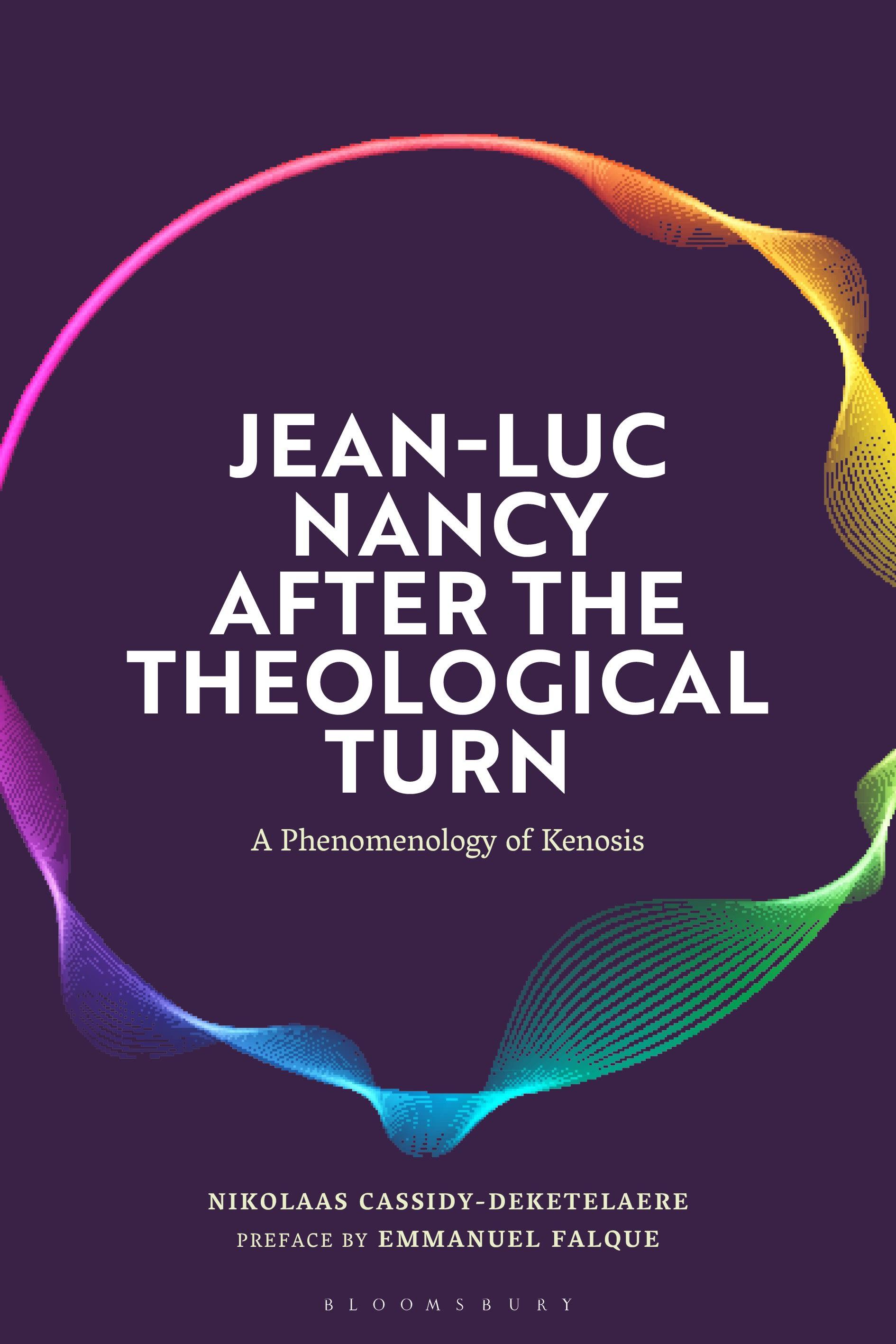
Nikolaas Cassidy-Deketelaere provides a novel and profound reading of Jean-Luc Nancy's deconstruction of Christianity in the context of French phenomenology's 'theological turn'.
Deftly exploring Nancy's work alongside major contemporary phenomenologists including Jean-Luc Marion, Michel Henry, Jean-Louis Chrétien and Emmanuel Falque, Jean-Luc Nancy after the Theological Turn argues that only by turning to theology can phenomenology come into its own as philosophy. Following Derrida's treatment of Nancy, Cassidy-Deketelaere thinks 'after' the theological turn by deconstructing phenomenology's inherent theological structure which made that turn possible; starting from the theological turn, this book seeks to move beyond it, that is, to 'de-theologise' phenomenology. This approach parallels Nancy's engagement with Christianity: drawing on Paul's kenosis – according to which God empties himself of his divinity in the Incarnation – Nancy understands Christianity as deconstructing or de-theologising itself.
Written in elegant and clear prose, this volume clarifies the phenomenological and theological consequences of one the most influential modern thinkers' philosophy.
Deftly exploring Nancy's work alongside major contemporary phenomenologists including Jean-Luc Marion, Michel Henry, Jean-Louis Chrétien and Emmanuel Falque, Jean-Luc Nancy after the Theological Turn argues that only by turning to theology can phenomenology come into its own as philosophy. Following Derrida's treatment of Nancy, Cassidy-Deketelaere thinks 'after' the theological turn by deconstructing phenomenology's inherent theological structure which made that turn possible; starting from the theological turn, this book seeks to move beyond it, that is, to 'de-theologise' phenomenology. This approach parallels Nancy's engagement with Christianity: drawing on Paul's kenosis – according to which God empties himself of his divinity in the Incarnation – Nancy understands Christianity as deconstructing or de-theologising itself.
Written in elegant and clear prose, this volume clarifies the phenomenological and theological consequences of one the most influential modern thinkers' philosophy.
Zahle einfach mit Karte, Klarna, Apple Pay oder Google Pay. Nicht zufrieden? Du hast immer ein 14-tägiges Widerrufsrecht. Lies mehr in unseren AGB. Hast du Fragen, schreib uns eine E-Mail an hello@memmo.org.
Memmo macht das Lernen einfacher – wo auch immer du bist. Bei uns findest du deine Kursbücher und smarte Lerntools an einem Ort: Zusammenfassungen, Quizzes, Podcasts und Lernkarten. Und Ted, dein Lernbuddy, beantwortet alles, was du wissen möchtest. Über 50.000 Studierende lernen bereits hier – gemacht, damit du schneller lernst und weniger Stress hast.