
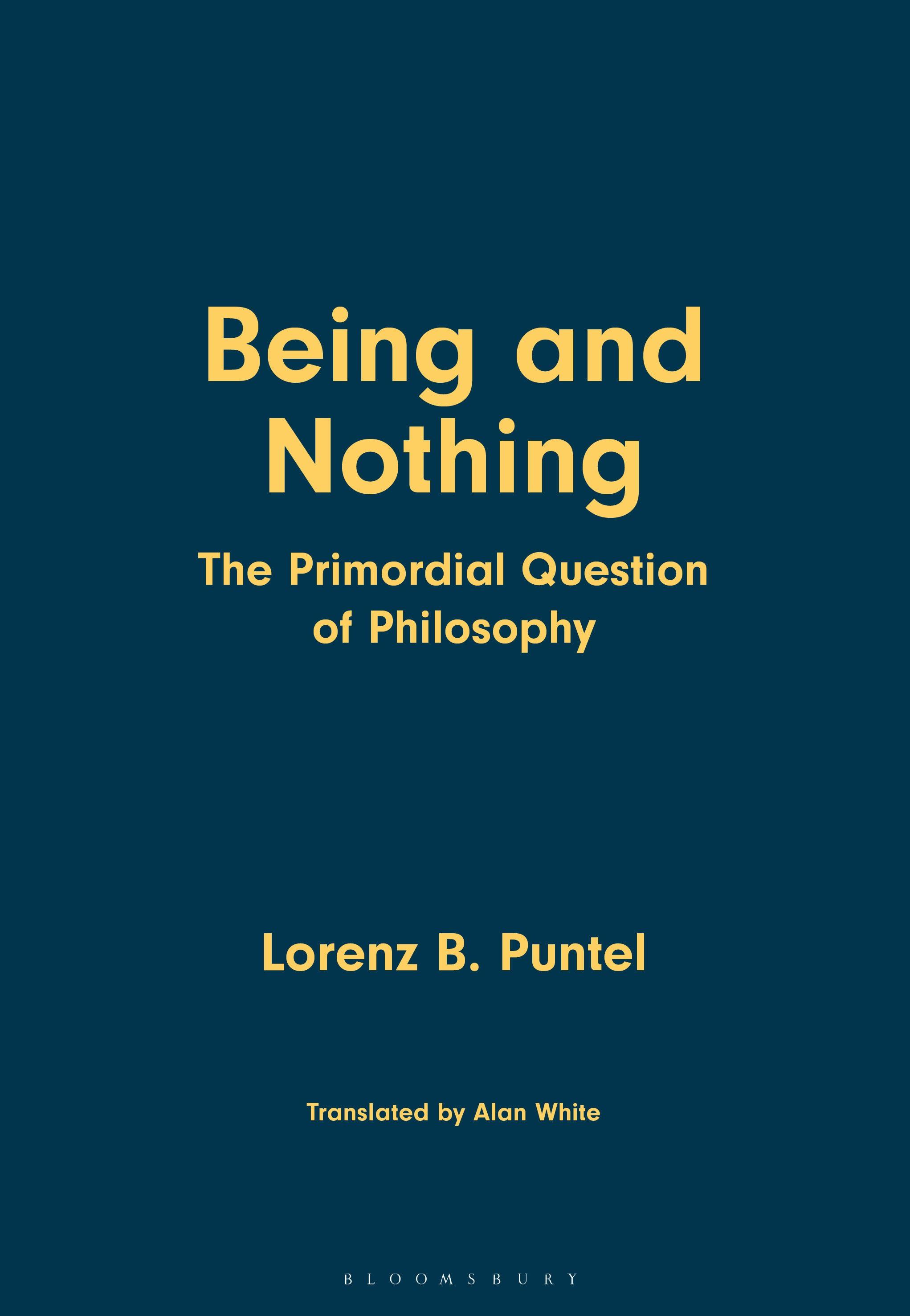
In this masterful work, leading German philosopher Lorenz B. Puntel answers the primordial question of philosophy: "Why is there Being at all and not absolutely nothing?"
Considering the history of philosophy from Parmenides through to Heidegger and beyond, Puntel charges philosophy with persistently failing to adequately confront the question of Being. In response, Puntel sets out a systematic philosophy to rival Hegel's Science of Logic and Whitehead's Process and Reality.
In two parts, the book first surveys the history of Western philosophy through the theoretical framework of Structural-Systematic Philosophy (SSP), which unites continental philosophy's comprehensiveness with the precision and linguistic rigor of the analytic tradition. Analysing all of the major stages in the “forgetfulness of Being” in Western philosophy, Puntel establishes a dialogue with a vast number of thinkers and movements in the history of philosophy, including Plato, Aquinas, Duns Scotus, Francisco Suarez, Christian Wolff, Leibniz, Hegel, Nietzsche, Heidegger, Sartre, W.O. Quine, Peter van Inwagen, Kit Fine, Alexius Meinong, and Jean-Luc Marion. The second part develops the methodical question of a systematic theory of Being. Puntel sets out a universal metaphysics, introducing concepts of world, existence, and types of beings. Moreover, he examines the plurality of possible worlds, the disclosure of Being, and modern philosophies of subjectivity since Kant, including the analytic philosophies of Robert Brandom and Ernst Tugendhat. The book culminates in a theory of Being and explains the relation of Being to the concept of God.
Being and Nothing is the third in Puntel's trilogy comprising Structure and Being (2008) and Being and God (2011), and is a book that will appeal to all those with an interest in the history of philosophy, continental philosophy, theology, and analytic philosophy.
Considering the history of philosophy from Parmenides through to Heidegger and beyond, Puntel charges philosophy with persistently failing to adequately confront the question of Being. In response, Puntel sets out a systematic philosophy to rival Hegel's Science of Logic and Whitehead's Process and Reality.
In two parts, the book first surveys the history of Western philosophy through the theoretical framework of Structural-Systematic Philosophy (SSP), which unites continental philosophy's comprehensiveness with the precision and linguistic rigor of the analytic tradition. Analysing all of the major stages in the “forgetfulness of Being” in Western philosophy, Puntel establishes a dialogue with a vast number of thinkers and movements in the history of philosophy, including Plato, Aquinas, Duns Scotus, Francisco Suarez, Christian Wolff, Leibniz, Hegel, Nietzsche, Heidegger, Sartre, W.O. Quine, Peter van Inwagen, Kit Fine, Alexius Meinong, and Jean-Luc Marion. The second part develops the methodical question of a systematic theory of Being. Puntel sets out a universal metaphysics, introducing concepts of world, existence, and types of beings. Moreover, he examines the plurality of possible worlds, the disclosure of Being, and modern philosophies of subjectivity since Kant, including the analytic philosophies of Robert Brandom and Ernst Tugendhat. The book culminates in a theory of Being and explains the relation of Being to the concept of God.
Being and Nothing is the third in Puntel's trilogy comprising Structure and Being (2008) and Being and God (2011), and is a book that will appeal to all those with an interest in the history of philosophy, continental philosophy, theology, and analytic philosophy.
Zahle einfach mit Karte, Klarna, Apple Pay oder Google Pay. Nicht zufrieden? Du hast immer ein 14-tägiges Widerrufsrecht. Lies mehr in unseren AGB. Hast du Fragen, schreib uns eine E-Mail an hello@memmo.org.
Memmo macht das Lernen einfacher – wo auch immer du bist. Bei uns findest du deine Kursbücher und smarte Lerntools an einem Ort: Zusammenfassungen, Quizzes, Podcasts und Lernkarten. Und Ted, dein Lernbuddy, beantwortet alles, was du wissen möchtest. Über 50.000 Studierende lernen bereits hier – gemacht, damit du schneller lernst und weniger Stress hast.