
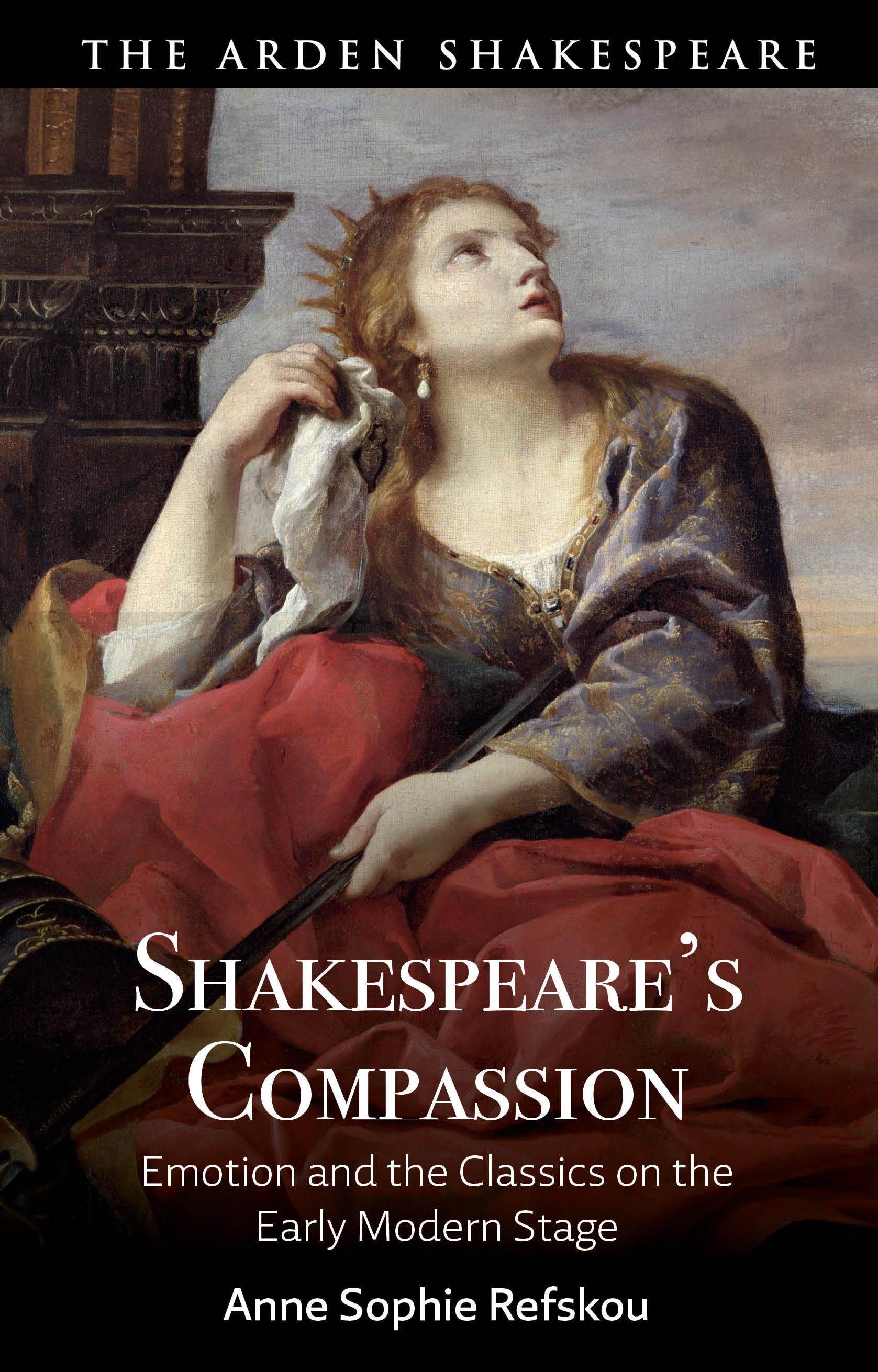
This book shows that Shakespeare's dramatization of compassion, far from expressing a sense of universal empathy, stages a conflicted emotion available to be solicited, manipulated and at times even monopolized as a discursive vehicle for the exclusion of others.
Drawing on the history of emotions and on Shakespearean classical studies, Anne Sophie Refskou argues both that Shakespeare's compassion expresses his own historical and cultural moment and is at the same time the product of his close engagement with literature from the classical past. In so doing, she traces a set of recurrent strands in Shakespeare's engagement with discourses of compassion throughout his playwriting career, situating them in relation to plays written for the early modern stage by contemporaries, including Thomas Kyd, George Peele, Christopher Marlowe, Thomas Nashe, John Fletcher and Philip Massinger. Individual chapters offer readings of Titus Andronicus, Richard III, Hamlet and King Lear by way of comparative analysis of key classical texts – including Euripides' Hecuba and The Trojan Women, Vergil's Aeneid and Ovid's Metamorphoses – from which Shakespeare and his fellow playwrights drew sustained inspiration.
Together, the chapters demonstrate how Shakespeare's engagement with the classical literature, from which he inherited a spacious understanding of the social efficacy of emotion, enables his dramatization of issues that are central to the current critical field, including questions of race, gender, sexuality and the relationship between human beings and nonhuman animals.
Drawing on the history of emotions and on Shakespearean classical studies, Anne Sophie Refskou argues both that Shakespeare's compassion expresses his own historical and cultural moment and is at the same time the product of his close engagement with literature from the classical past. In so doing, she traces a set of recurrent strands in Shakespeare's engagement with discourses of compassion throughout his playwriting career, situating them in relation to plays written for the early modern stage by contemporaries, including Thomas Kyd, George Peele, Christopher Marlowe, Thomas Nashe, John Fletcher and Philip Massinger. Individual chapters offer readings of Titus Andronicus, Richard III, Hamlet and King Lear by way of comparative analysis of key classical texts – including Euripides' Hecuba and The Trojan Women, Vergil's Aeneid and Ovid's Metamorphoses – from which Shakespeare and his fellow playwrights drew sustained inspiration.
Together, the chapters demonstrate how Shakespeare's engagement with the classical literature, from which he inherited a spacious understanding of the social efficacy of emotion, enables his dramatization of issues that are central to the current critical field, including questions of race, gender, sexuality and the relationship between human beings and nonhuman animals.
Seiten: 208
Kategorie: Litteraturvetenskap & Teori
e-ISBN: 9781350497597
Versandgewicht: 1.2 kg
Versand in: 1-2 Tage
Zahle einfach mit Karte, Klarna, Apple Pay oder Google Pay. Nicht zufrieden? Du hast immer ein 14-tägiges Widerrufsrecht. Lies mehr in unseren AGB. Hast du Fragen, schreib uns eine E-Mail an hello@memmo.org.
Memmo macht das Lernen einfacher – wo auch immer du bist. Bei uns findest du deine Kursbücher und smarte Lerntools an einem Ort: Zusammenfassungen, Quizzes, Podcasts und Lernkarten. Und Ted, dein Lernbuddy, beantwortet alles, was du wissen möchtest. Über 50.000 Studierende lernen bereits hier – gemacht, damit du schneller lernst und weniger Stress hast.