
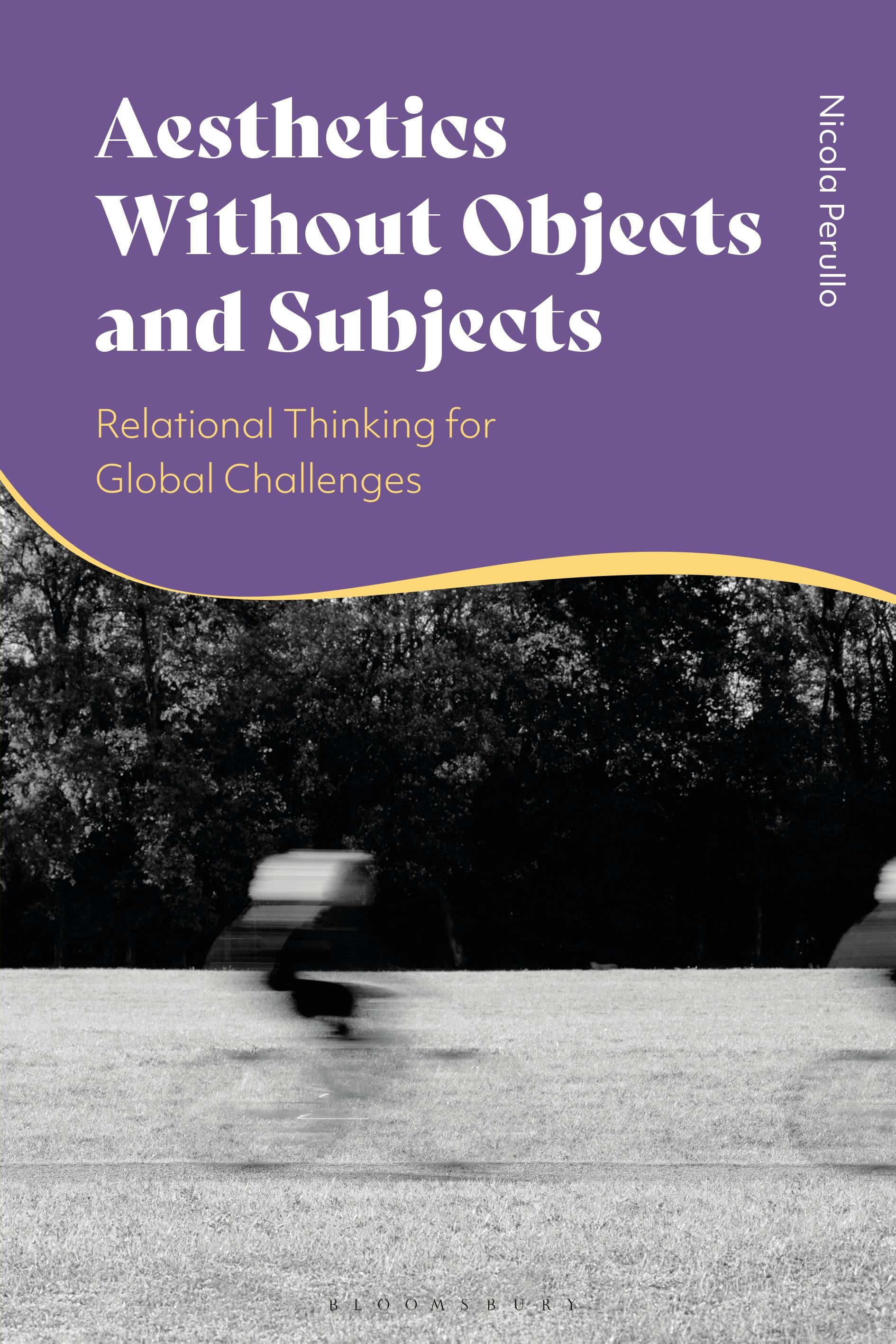
Is there a connection between the environmental, climate, and political crises facing us today and Western dualism? By critically examining the subject/object dualism that has supported Western philosophy and aesthetics since the 17th century, Nicola Perullo presents a relational and co-operative account of aesthetic experience and human existence.
Exploring science, ontology and aesthetics through the perspectives of quantum physics' relational interpretation and non-dualistic philosophies, Perullo draws on Western theories in anthropology and cultural traditions such as Buddhism and Daoism. We see how the ontology supported by dualism renders the world to consist of static, solid, and discrete things, making them vulnerable to be controlled, dominated, and possessed.
In Perullo's ground-breaking analysis an alternative way of perceiving is offered: the “haptic” modality which is guided by cooperation, communication, and correspondence. Such a mode of perception and experience is ecological, precluding the possibility of domination, hierarchy, and exploitation. This challenge to the ramifications of the subject-object model, the very cornerstone of Western thought, is an exciting invitation to rethink the purpose of philosophizing and its impact on life.
Exploring science, ontology and aesthetics through the perspectives of quantum physics' relational interpretation and non-dualistic philosophies, Perullo draws on Western theories in anthropology and cultural traditions such as Buddhism and Daoism. We see how the ontology supported by dualism renders the world to consist of static, solid, and discrete things, making them vulnerable to be controlled, dominated, and possessed.
In Perullo's ground-breaking analysis an alternative way of perceiving is offered: the “haptic” modality which is guided by cooperation, communication, and correspondence. Such a mode of perception and experience is ecological, precluding the possibility of domination, hierarchy, and exploitation. This challenge to the ramifications of the subject-object model, the very cornerstone of Western thought, is an exciting invitation to rethink the purpose of philosophizing and its impact on life.
Zahle einfach mit Karte, Klarna, Apple Pay oder Google Pay. Nicht zufrieden? Du hast immer ein 14-tägiges Widerrufsrecht. Lies mehr in unseren AGB. Hast du Fragen, schreib uns eine E-Mail an hello@memmo.org.
Memmo macht das Lernen einfacher – wo auch immer du bist. Bei uns findest du deine Kursbücher und smarte Lerntools an einem Ort: Zusammenfassungen, Quizzes, Podcasts und Lernkarten. Und Ted, dein Lernbuddy, beantwortet alles, was du wissen möchtest. Über 50.000 Studierende lernen bereits hier – gemacht, damit du schneller lernst und weniger Stress hast.