
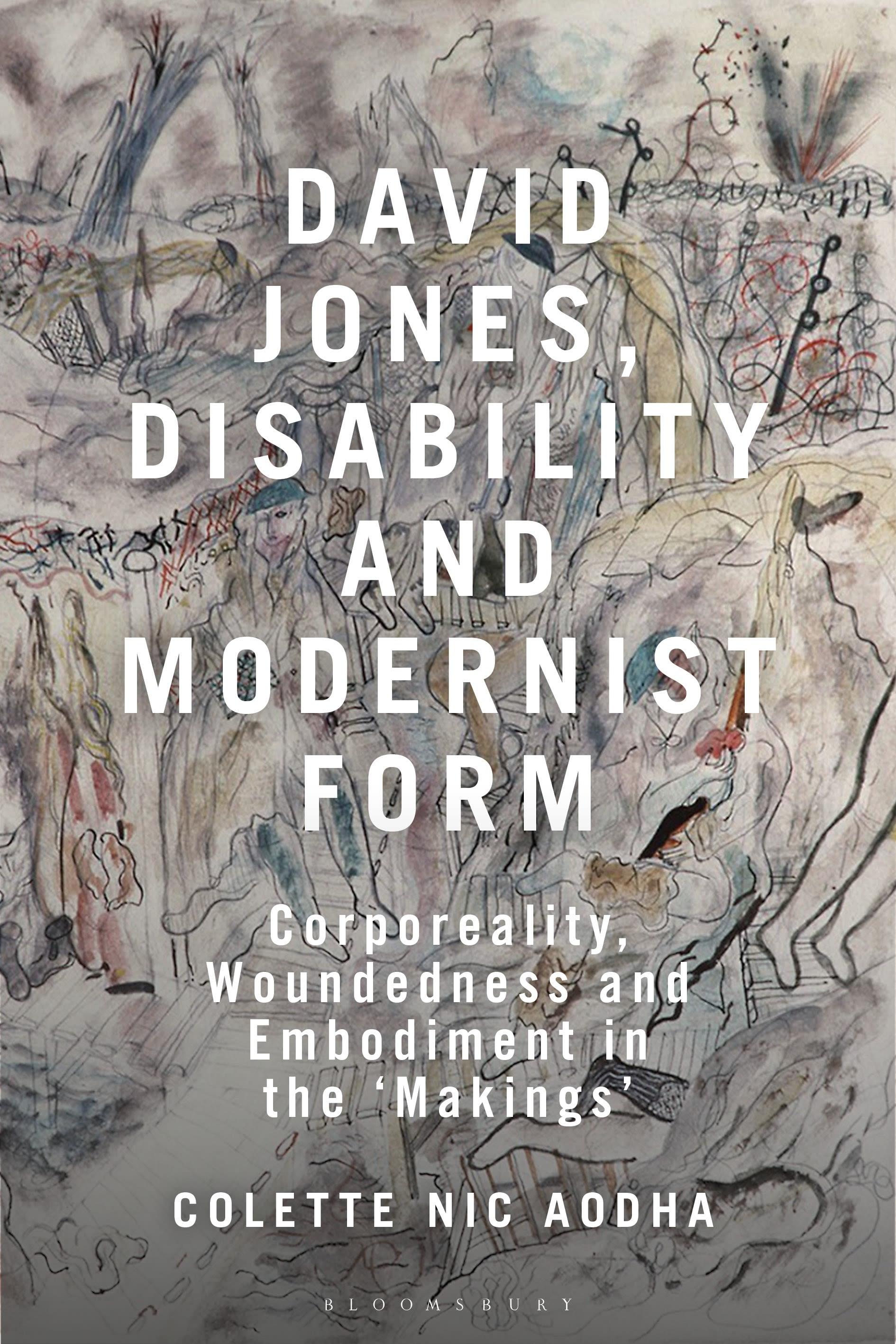
Employing a fresh theoretical approach to David Jones' work, this is the first book to use disability studies as a lens through which to consider his post-war work.
Unpacking the distinct corporeality in the work of Welsh modernist maker, poet, painter, and engraver, David Jones (1895-1974) that emerges from the trauma of Jones's participation in the Great War, this book frames the complex modes of embodiment in his post-war work. In doing so, it relates Jones's pioneering visual art and poetic form to antecedents (William Blake) and modern artists (Sarah Lucas and Damien Hirst) while using materiality to form connections between modernism, disability, and the liturgy of the Eucharist upon which Jones centres his work.
Unpacking the distinct corporeality in the work of Welsh modernist maker, poet, painter, and engraver, David Jones (1895-1974) that emerges from the trauma of Jones's participation in the Great War, this book frames the complex modes of embodiment in his post-war work. In doing so, it relates Jones's pioneering visual art and poetic form to antecedents (William Blake) and modern artists (Sarah Lucas and Damien Hirst) while using materiality to form connections between modernism, disability, and the liturgy of the Eucharist upon which Jones centres his work.
Zahle einfach mit Karte, Klarna, Apple Pay oder Google Pay. Nicht zufrieden? Du hast immer ein 14-tägiges Widerrufsrecht. Lies mehr in unseren AGB. Hast du Fragen, schreib uns eine E-Mail an hello@memmo.org.
Memmo macht das Lernen einfacher – wo auch immer du bist. Bei uns findest du deine Kursbücher und smarte Lerntools an einem Ort: Zusammenfassungen, Quizzes, Podcasts und Lernkarten. Und Ted, dein Lernbuddy, beantwortet alles, was du wissen möchtest. Über 50.000 Studierende lernen bereits hier – gemacht, damit du schneller lernst und weniger Stress hast.