
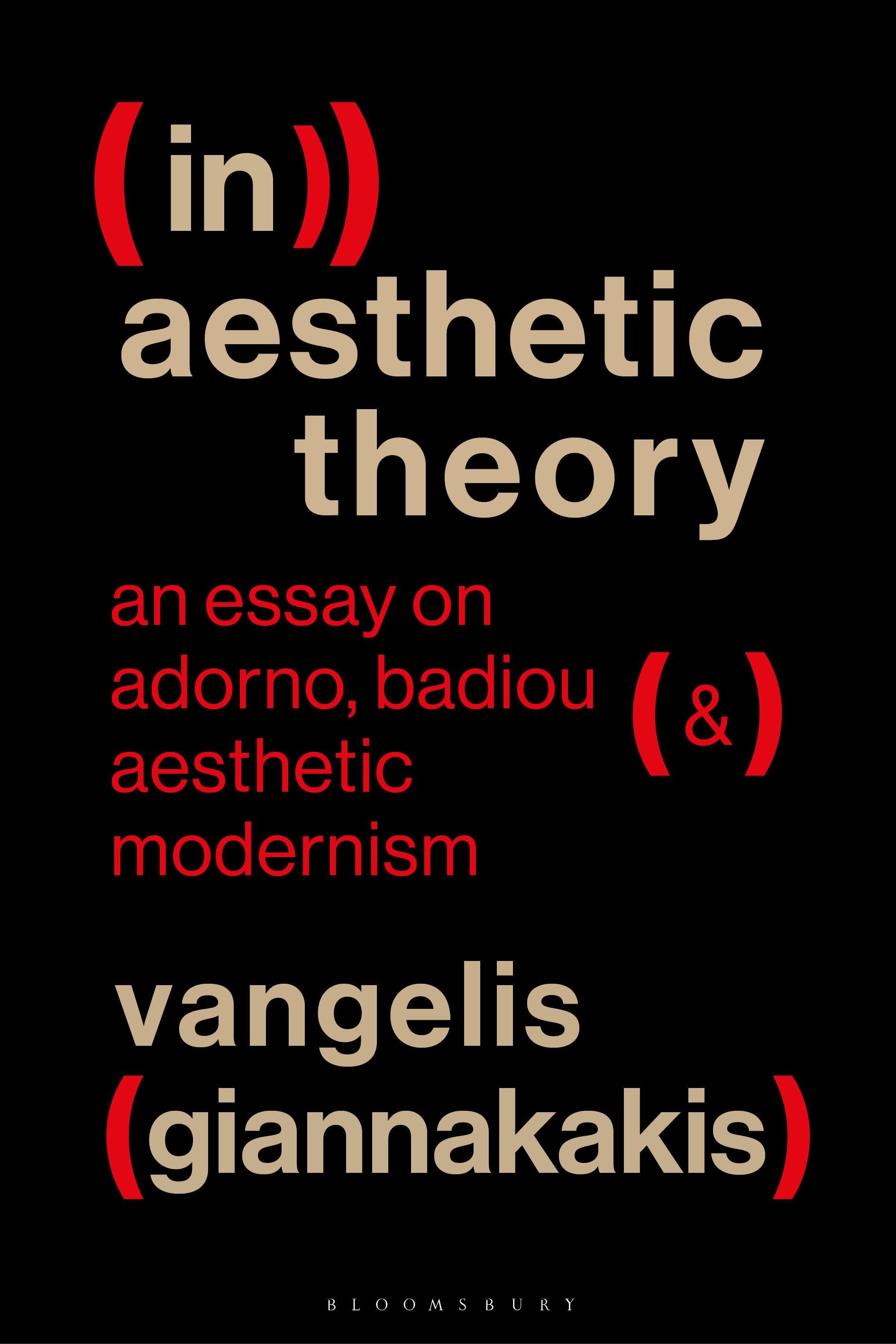
A reckoning with the radicalisation of modernist aesthetics that took hold in the mid-twentieth century, (In)aesthetic Theory illuminates the limits of aesthetic presentation by bringing Theodor Adorno and Alain Badiou's divergent philosophies of art into critical proximity.
Both theorists uncover moments in which art ceases to represent and begins to insist – where its truth is not stated outright but intimated in a gesture beyond the world as given. Their respective frameworks suggest that aesthetic experience can open an affective breach in which the reifying impulse of cognition is negated, and that which otherwise eludes the regime of established appearances is encountered obliquely. This shared structural insight anchors this book's central hypothesis: that art's power to produce truth lies precisely in this zone of interruption, of failure, of withdrawal, and vanishing intensity.
Combining original theory with historically grounded comparative commentary, the text reflects on presence and absence, history and memory, politics and art, entropy and decay. With it, Vangelis Giannakakis offers a vitally current interpretation of aesthetic modernism.
Both theorists uncover moments in which art ceases to represent and begins to insist – where its truth is not stated outright but intimated in a gesture beyond the world as given. Their respective frameworks suggest that aesthetic experience can open an affective breach in which the reifying impulse of cognition is negated, and that which otherwise eludes the regime of established appearances is encountered obliquely. This shared structural insight anchors this book's central hypothesis: that art's power to produce truth lies precisely in this zone of interruption, of failure, of withdrawal, and vanishing intensity.
Combining original theory with historically grounded comparative commentary, the text reflects on presence and absence, history and memory, politics and art, entropy and decay. With it, Vangelis Giannakakis offers a vitally current interpretation of aesthetic modernism.
Zahle einfach mit Karte, Klarna, Apple Pay oder Google Pay. Nicht zufrieden? Du hast immer ein 14-tägiges Widerrufsrecht. Lies mehr in unseren AGB. Hast du Fragen, schreib uns eine E-Mail an hello@memmo.org.
Memmo macht das Lernen einfacher – wo auch immer du bist. Bei uns findest du deine Kursbücher und smarte Lerntools an einem Ort: Zusammenfassungen, Quizzes, Podcasts und Lernkarten. Und Ted, dein Lernbuddy, beantwortet alles, was du wissen möchtest. Über 50.000 Studierende lernen bereits hier – gemacht, damit du schneller lernst und weniger Stress hast.