
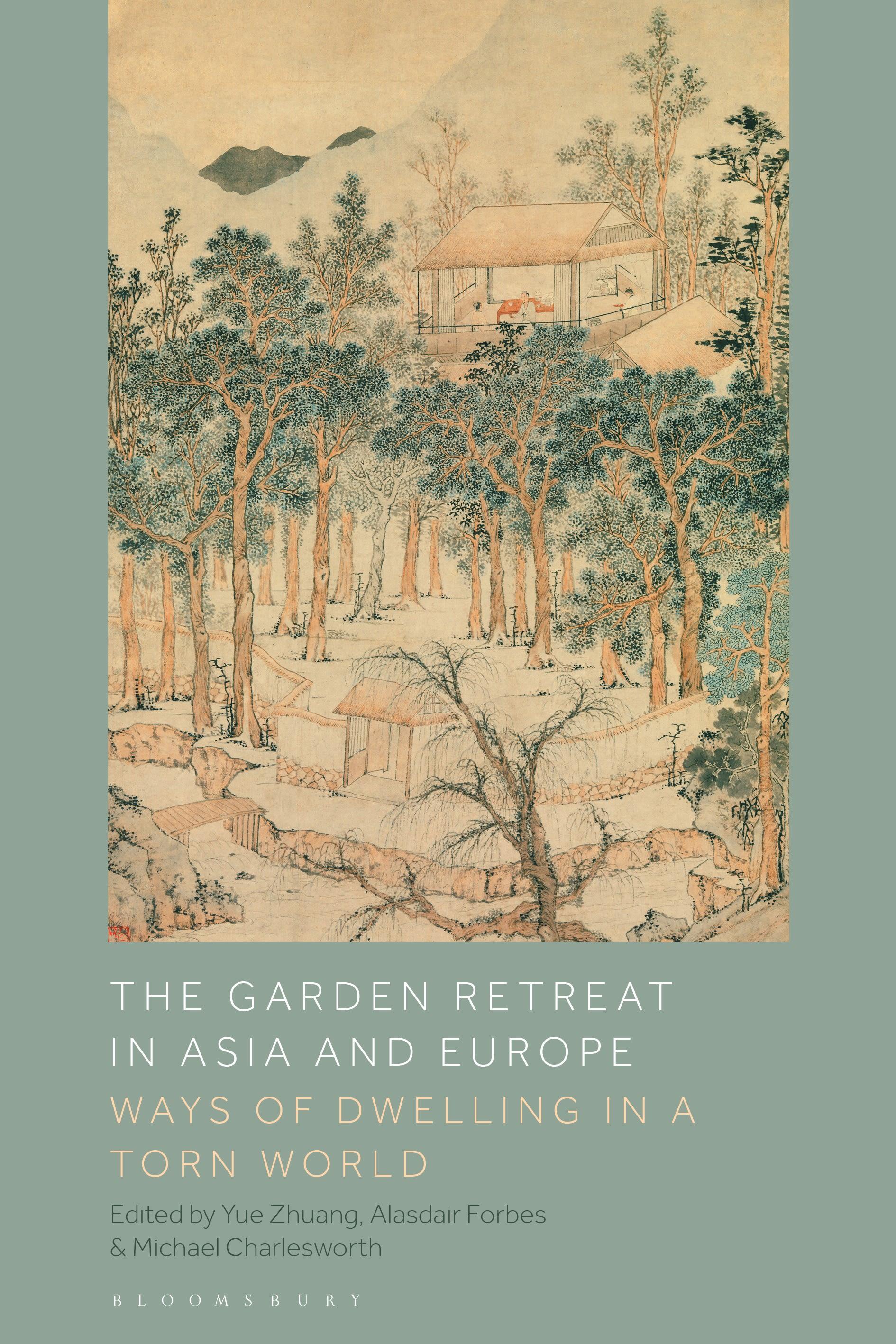
The Garden Retreat in Asia and Europe explores the meaning of gardens and designed landscapes as places of retreat and refuge in times of need or emergency.
In the current times of war, pandemic, climate change, and global anxiety, the value of the garden as a sanctuary, a space where we can find refuge in a natural environment, has taken on new and poignant meanings and has attracted increasing academic interest. Multidisciplinary and multicultural in scope, this book explores the meaning of gardens and designed landscapes as places of retreat and refuge in times of need or emergency. Examining perspectives from scholars including art historians, architects, philosophers, landscape architects and garden practitioners, it reassess the restorative impact of the garden, whether understood from an individual, cultural or environmental point of view.
Ranging widely across Asia and Europe, its chapters examine ideas, narratives and practices from the 4th-century Chinese poet Tao Yuanming, to the 12th century Iranian polymath Omar Khayyam, through to the late 20th-century British artist and film-maker Derek Jarman. Drawing upon traditional Asian philosophies like Buddhism, Daoism and Sufism and combining these with more recent western philosophies, the aim is to question how the unique virtues of gardens and designed landscapes can help to poise, educate, and possibly transform attitudes and behaviours in a time of personal, environmental, or cultural crisis.
At once poetic, scholarly, and rigorous, this book provides insightful reading for students and researchers in landscape architecture, garden history, architectural history, art history, and cultural history.
In the current times of war, pandemic, climate change, and global anxiety, the value of the garden as a sanctuary, a space where we can find refuge in a natural environment, has taken on new and poignant meanings and has attracted increasing academic interest. Multidisciplinary and multicultural in scope, this book explores the meaning of gardens and designed landscapes as places of retreat and refuge in times of need or emergency. Examining perspectives from scholars including art historians, architects, philosophers, landscape architects and garden practitioners, it reassess the restorative impact of the garden, whether understood from an individual, cultural or environmental point of view.
Ranging widely across Asia and Europe, its chapters examine ideas, narratives and practices from the 4th-century Chinese poet Tao Yuanming, to the 12th century Iranian polymath Omar Khayyam, through to the late 20th-century British artist and film-maker Derek Jarman. Drawing upon traditional Asian philosophies like Buddhism, Daoism and Sufism and combining these with more recent western philosophies, the aim is to question how the unique virtues of gardens and designed landscapes can help to poise, educate, and possibly transform attitudes and behaviours in a time of personal, environmental, or cultural crisis.
At once poetic, scholarly, and rigorous, this book provides insightful reading for students and researchers in landscape architecture, garden history, architectural history, art history, and cultural history.
Zahle einfach mit Karte, Klarna, Apple Pay oder Google Pay. Nicht zufrieden? Du hast immer ein 14-tägiges Widerrufsrecht. Lies mehr in unseren AGB. Hast du Fragen, schreib uns eine E-Mail an hello@memmo.org.
Memmo macht das Lernen einfacher – wo auch immer du bist. Bei uns findest du deine Kursbücher und smarte Lerntools an einem Ort: Zusammenfassungen, Quizzes, Podcasts und Lernkarten. Und Ted, dein Lernbuddy, beantwortet alles, was du wissen möchtest. Über 50.000 Studierende lernen bereits hier – gemacht, damit du schneller lernst und weniger Stress hast.