
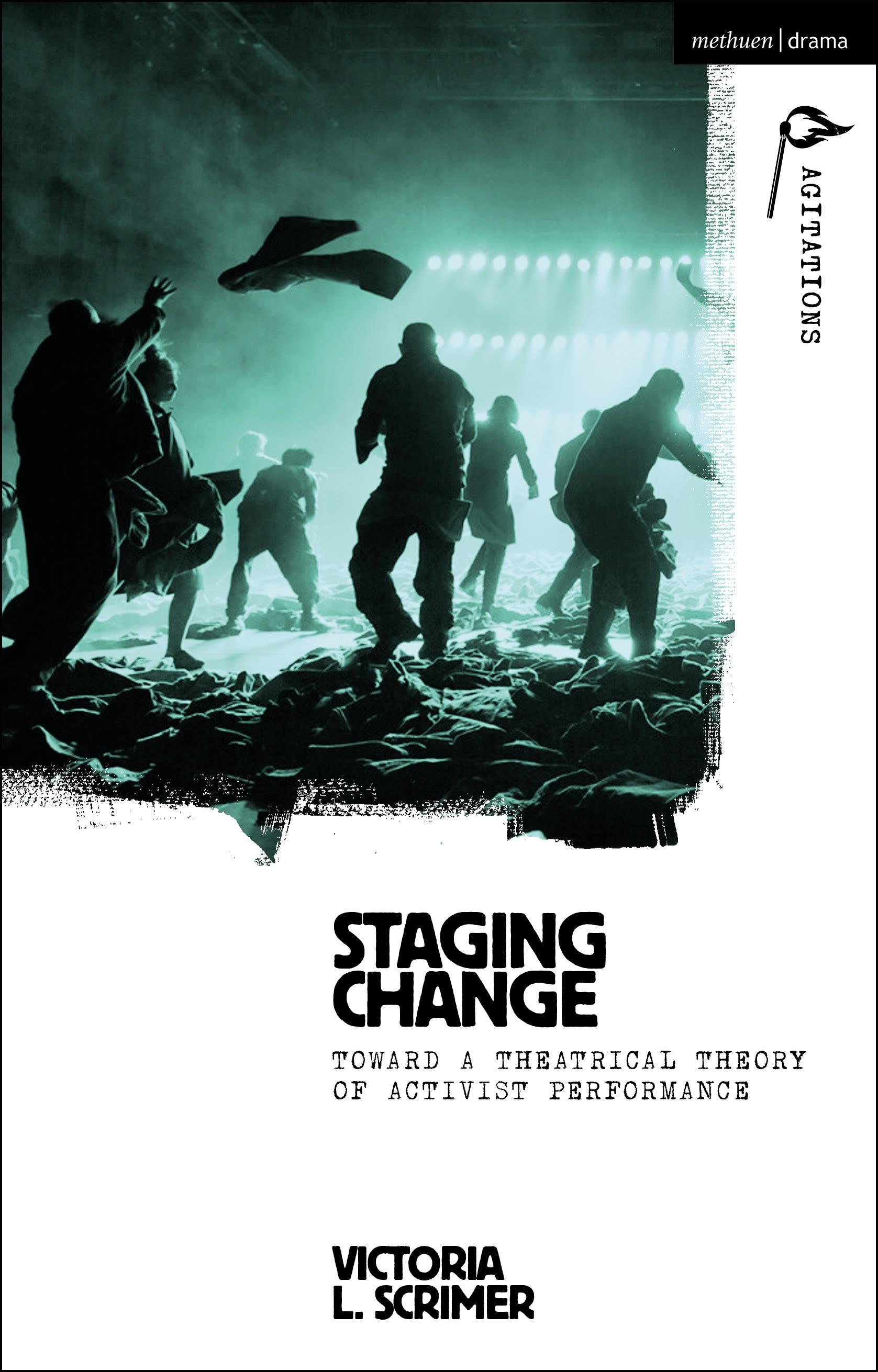
Exploring a wide variety of examples of activist performances, such as David Buckel's self-immolation, and the January 6th capitol insurrection, this book analyses activist performance through the lens of postdramatic theatre theory.
Staging Change poses the provocative question: are activists addicted to drama? Scrimer examines the ways in which the performance and reception of protest is informed by the logic of dramatic theatre, and argues that such performative arrangements are so naturalized that they can limit the ability of activists and their audiences to imagine different ways of precipitating change. By combining performance analysis, interviews with artists and activists, and autoethnographic accounts of the author's own experiences as an environmental activist, the book illustrates the limitations and alternatives to dramatic representation in activist performance.
The last decade has seen an increase in political demonstrations worldwide, particularly following the excitement and disappointments of the Arab Spring uprisings. We have seen several notable movements such as the Occupy movement, the mobilization of Black Lives Matter, and the #MeToo movement. In response, scholars, artists, and activists from diverse disciplines have produced an exciting array of practical and theoretical approaches for talking about and thinking through activism. Utilizing these interdisciplinary approaches, Scrimer offers us a theoretical inquiry into the possible applications of Hans-Thies Lehmann's postdramatic theatre theory in the context of political activism, and subsequently extends an alternative conceptual model for activist performance beyond the dramatic paradigm.
Staging Change poses the provocative question: are activists addicted to drama? Scrimer examines the ways in which the performance and reception of protest is informed by the logic of dramatic theatre, and argues that such performative arrangements are so naturalized that they can limit the ability of activists and their audiences to imagine different ways of precipitating change. By combining performance analysis, interviews with artists and activists, and autoethnographic accounts of the author's own experiences as an environmental activist, the book illustrates the limitations and alternatives to dramatic representation in activist performance.
The last decade has seen an increase in political demonstrations worldwide, particularly following the excitement and disappointments of the Arab Spring uprisings. We have seen several notable movements such as the Occupy movement, the mobilization of Black Lives Matter, and the #MeToo movement. In response, scholars, artists, and activists from diverse disciplines have produced an exciting array of practical and theoretical approaches for talking about and thinking through activism. Utilizing these interdisciplinary approaches, Scrimer offers us a theoretical inquiry into the possible applications of Hans-Thies Lehmann's postdramatic theatre theory in the context of political activism, and subsequently extends an alternative conceptual model for activist performance beyond the dramatic paradigm.
Seiten: 240
Kategorie: Drama, Teater & Scenkonst
e-ISBN: 9781350445642
Versandgewicht: 1.2 kg
Versand in: 1-2 Tage
Zahle einfach mit Karte, Klarna, Apple Pay oder Google Pay. Nicht zufrieden? Du hast immer ein 14-tägiges Widerrufsrecht. Lies mehr in unseren AGB. Hast du Fragen, schreib uns eine E-Mail an hello@memmo.org.
Memmo macht das Lernen einfacher – wo auch immer du bist. Bei uns findest du deine Kursbücher und smarte Lerntools an einem Ort: Zusammenfassungen, Quizzes, Podcasts und Lernkarten. Und Ted, dein Lernbuddy, beantwortet alles, was du wissen möchtest. Über 50.000 Studierende lernen bereits hier – gemacht, damit du schneller lernst und weniger Stress hast.