
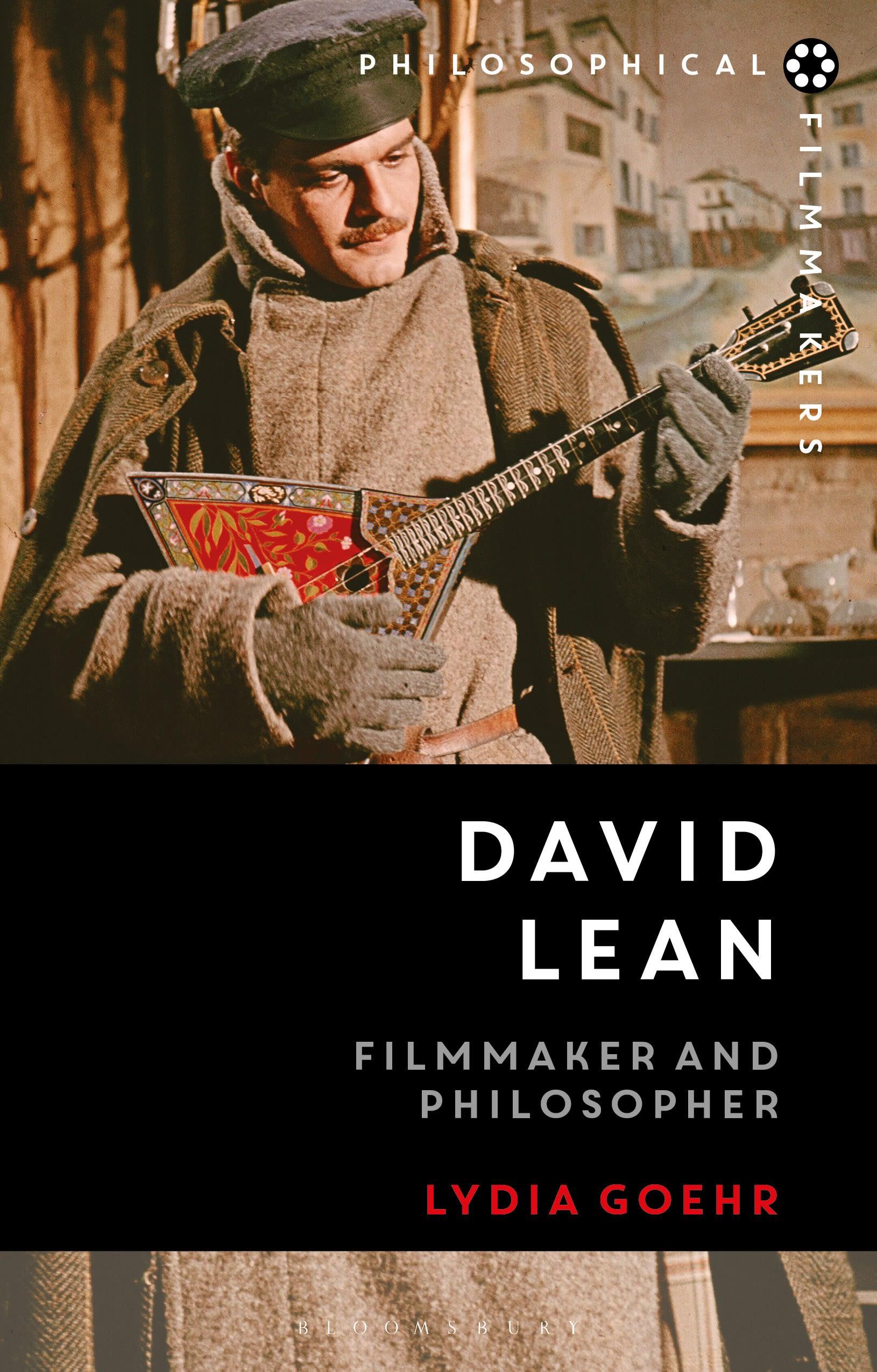
David Lean's extraordinary films work philosophically through the modern reproductive and transportive technologies of sight and sound: through trains, planes, ships, and automobiles, from one perspective, and through the modern technology of the radio and gramophone, from another.
Lean's musical motifs are known worldwide: Lara's theme in Zhivago; the Colonel Bogey March in Kwai; Estella's motif in Great Expectations; Rosy's motif in Ryan's Daughter; Lawrence's motif for his adventure in Arabia, and of course Rachmaninoff's pounding chords in Brief Encounter. When, however, Lean described his cutting of pictures as akin to how music flows through pictures, what sort of music or musicality had he in mind: a classical or popular music, or a way of using musical form to mix up the meaning and material of his films?
Lydia Goehr's new book tracks the soundscape in Lean's films not only through the musical scores composed for the films, but also, and more, through the technology of radio and gramophone that, at the start of Lean's career, were becoming indispensable household items for the home. The book begins and ends with a motif running from the early more domestic films locally situated in the English home to the later more extensive epics of colony, commonwealth, and empire. The fidelity-infidelity relationship defined by marriage extends to the loyalty-betrayal relationship regarding countries of war and peace-after which this relationship is extended to the witty British manner of making film as a perfected and not so perfected symphonic work of a great cutter's art. Here, as few other books on Lean have emphasized, the influence of Noel Coward on Lean cannot be overestimated.
Lean's musical motifs are known worldwide: Lara's theme in Zhivago; the Colonel Bogey March in Kwai; Estella's motif in Great Expectations; Rosy's motif in Ryan's Daughter; Lawrence's motif for his adventure in Arabia, and of course Rachmaninoff's pounding chords in Brief Encounter. When, however, Lean described his cutting of pictures as akin to how music flows through pictures, what sort of music or musicality had he in mind: a classical or popular music, or a way of using musical form to mix up the meaning and material of his films?
Lydia Goehr's new book tracks the soundscape in Lean's films not only through the musical scores composed for the films, but also, and more, through the technology of radio and gramophone that, at the start of Lean's career, were becoming indispensable household items for the home. The book begins and ends with a motif running from the early more domestic films locally situated in the English home to the later more extensive epics of colony, commonwealth, and empire. The fidelity-infidelity relationship defined by marriage extends to the loyalty-betrayal relationship regarding countries of war and peace-after which this relationship is extended to the witty British manner of making film as a perfected and not so perfected symphonic work of a great cutter's art. Here, as few other books on Lean have emphasized, the influence of Noel Coward on Lean cannot be overestimated.
Zahle einfach mit Karte, Klarna, Apple Pay oder Google Pay. Nicht zufrieden? Du hast immer ein 14-tägiges Widerrufsrecht. Lies mehr in unseren AGB. Hast du Fragen, schreib uns eine E-Mail an hello@memmo.org.
Memmo macht das Lernen einfacher – wo auch immer du bist. Bei uns findest du deine Kursbücher und smarte Lerntools an einem Ort: Zusammenfassungen, Quizzes, Podcasts und Lernkarten. Und Ted, dein Lernbuddy, beantwortet alles, was du wissen möchtest. Über 50.000 Studierende lernen bereits hier – gemacht, damit du schneller lernst und weniger Stress hast.