
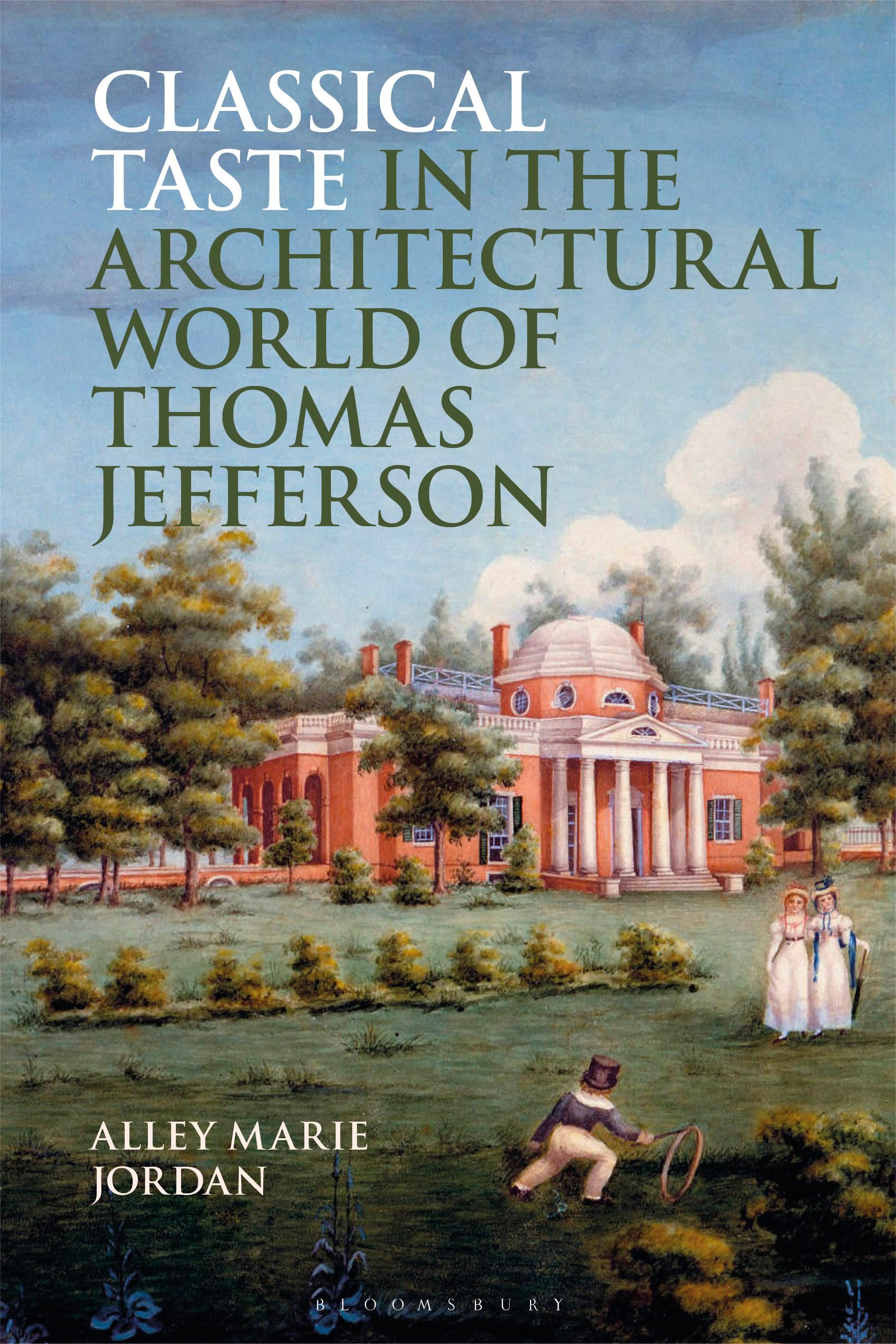
Reaching beyond politics and law, this book focuses on Thomas Jefferson as an aesthetic classicist.
Jefferson embraced the influence of antiquity through his adoption of classical architecture in his Virginia residences, in order to establish Rome as an ancestor to America. In a time of significant political and cultural change, he aligned himself with a Greco-Romano legacy that represented knowledge, power and art. Alley Marie Jordan studies the architectural and landscape spaces of Jefferson's classical taste, which include the villas of Monticello and Poplar Forest, as well as the University of Virginia. An examination of these places exposes his deeply entrenched views of the importance of classics in Virginia, and reveals them as expressions of admiration of classical antiquity.
Seeking to uncover an underexplored side of his character, Jordan deconstructs his identity through a classical lens and illustrates his influence on American culture, as well as his desire to reform it via the classics. By dislodging Jefferson from American politics, this study redefines his worldview and motivations for inventing an American virtue based on Horace's utile dulci. Although his participation in acquiring classical taste was not unique for his time, he did accomplish a unique aim with classicism: the blending of the American landscape with classical culture to create a 'new' American virtue.
Jefferson embraced the influence of antiquity through his adoption of classical architecture in his Virginia residences, in order to establish Rome as an ancestor to America. In a time of significant political and cultural change, he aligned himself with a Greco-Romano legacy that represented knowledge, power and art. Alley Marie Jordan studies the architectural and landscape spaces of Jefferson's classical taste, which include the villas of Monticello and Poplar Forest, as well as the University of Virginia. An examination of these places exposes his deeply entrenched views of the importance of classics in Virginia, and reveals them as expressions of admiration of classical antiquity.
Seeking to uncover an underexplored side of his character, Jordan deconstructs his identity through a classical lens and illustrates his influence on American culture, as well as his desire to reform it via the classics. By dislodging Jefferson from American politics, this study redefines his worldview and motivations for inventing an American virtue based on Horace's utile dulci. Although his participation in acquiring classical taste was not unique for his time, he did accomplish a unique aim with classicism: the blending of the American landscape with classical culture to create a 'new' American virtue.
Seiten: 224
Kategorie: Arkitektur & Stadsplanering
e-ISBN: 9781350428522
Versandgewicht: 1.2 kg
Versand in: 1-2 Tage
Zahle einfach mit Karte, Klarna, Apple Pay oder Google Pay. Nicht zufrieden? Du hast immer ein 14-tägiges Widerrufsrecht. Lies mehr in unseren AGB. Hast du Fragen, schreib uns eine E-Mail an hello@memmo.org.
Memmo macht das Lernen einfacher – wo auch immer du bist. Bei uns findest du deine Kursbücher und smarte Lerntools an einem Ort: Zusammenfassungen, Quizzes, Podcasts und Lernkarten. Und Ted, dein Lernbuddy, beantwortet alles, was du wissen möchtest. Über 50.000 Studierende lernen bereits hier – gemacht, damit du schneller lernst und weniger Stress hast.