
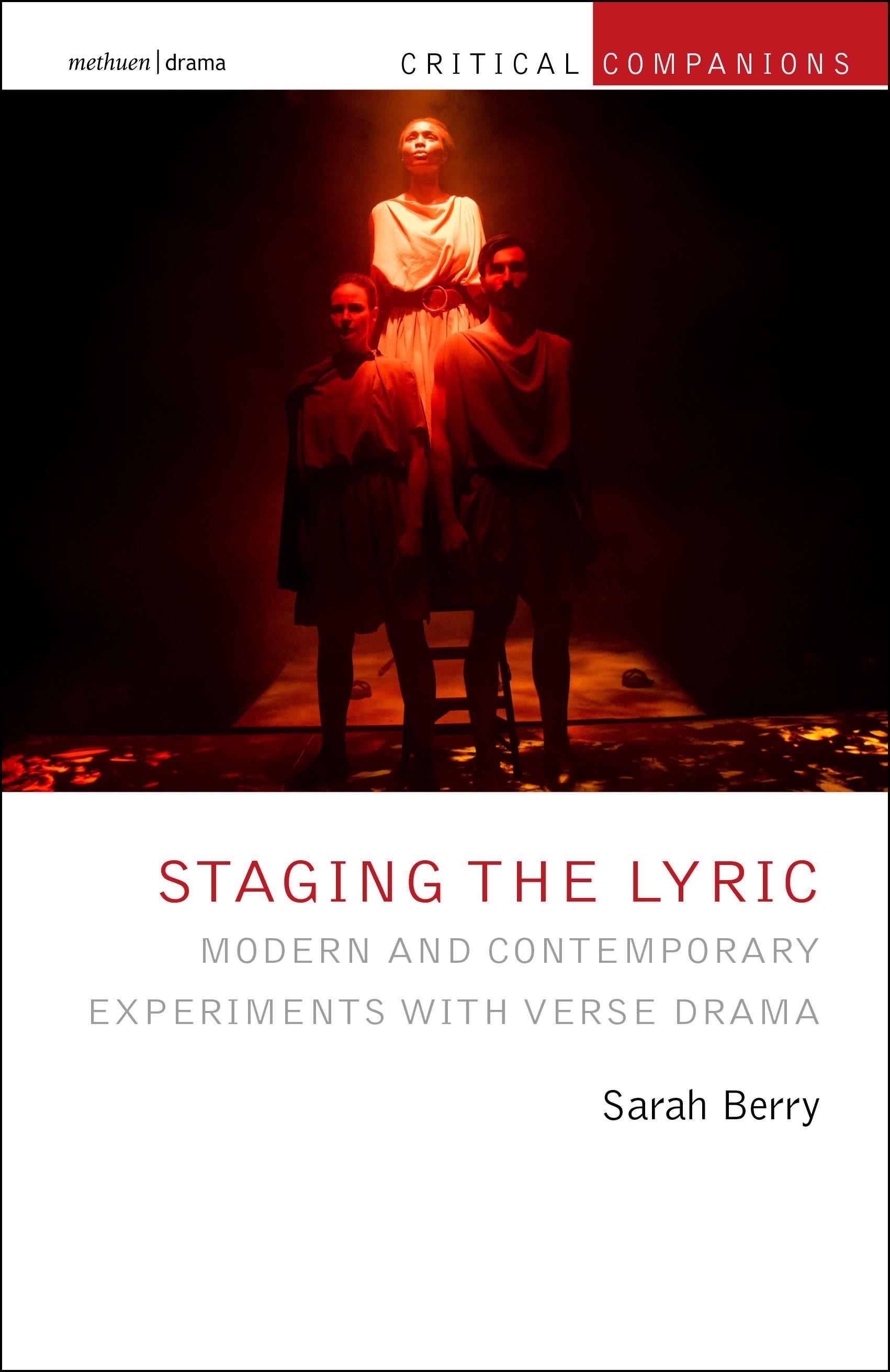
Verse drama is not a dead form, but very much alive on the contemporary stage. Drawing on plays from throughout the English-speaking world, including the United States, United Kingdom, Ireland, and the Caribbean, Staging the Lyric seeks to explain the 21st-century resurgence of Anglophone verse drama, tracing it back to an experimental impulse that is present in the modernist verse drama of a century ago.
Covering major writers including Derek Walcott, Seamus Heaney, Sylvia Plath, Samuel Beckett, Dorothy Sayers, Djuna Barnes, and Ntozake Shange, it also encompasses lesser known and more recent poets and playwrights. This modern verse drama differs from its ancient and Elizabethan antecedents as it is understood not as a genre in its own right, but as a hybrid of the lyric and the dramatic. Both modernist and contemporary writers take advantage of this hybridity as fertile ground for experimentation. While they differ in their ideology and form, this book contends that they are united by exploring the relationship between lyric and dramatic elements on stage and what these two different modes afford. To demonstrate this continuity, it traces a genealogy from contemporary plays by Joanna Laurens, Joyelle McSweeney, and David Grieg back to W.B. Yeats, Gertrude Stein, T.S. Eliot, and W.H. Auden, to reveal that the tensions that animate verse drama have stayed the same, even as the strategies for staging them have evolved.
The book is divided into three sections-'Voice,' 'Words,' and 'Time'-each treating one feature that has been used to define the lyric. Within these sections, the chapters compare contemporary plays with modernist ones that experiment with the same point of tension between the lyric and the dramatic.
Covering major writers including Derek Walcott, Seamus Heaney, Sylvia Plath, Samuel Beckett, Dorothy Sayers, Djuna Barnes, and Ntozake Shange, it also encompasses lesser known and more recent poets and playwrights. This modern verse drama differs from its ancient and Elizabethan antecedents as it is understood not as a genre in its own right, but as a hybrid of the lyric and the dramatic. Both modernist and contemporary writers take advantage of this hybridity as fertile ground for experimentation. While they differ in their ideology and form, this book contends that they are united by exploring the relationship between lyric and dramatic elements on stage and what these two different modes afford. To demonstrate this continuity, it traces a genealogy from contemporary plays by Joanna Laurens, Joyelle McSweeney, and David Grieg back to W.B. Yeats, Gertrude Stein, T.S. Eliot, and W.H. Auden, to reveal that the tensions that animate verse drama have stayed the same, even as the strategies for staging them have evolved.
The book is divided into three sections-'Voice,' 'Words,' and 'Time'-each treating one feature that has been used to define the lyric. Within these sections, the chapters compare contemporary plays with modernist ones that experiment with the same point of tension between the lyric and the dramatic.
Seiten: 240
Kategorie: Drama, Teater & Scenkonst
e-ISBN: 9781350420397
Versandgewicht: 1.2 kg
Versand in: 1-2 Tage
Zahle einfach mit Karte, Klarna, Apple Pay oder Google Pay. Nicht zufrieden? Du hast immer ein 14-tägiges Widerrufsrecht. Lies mehr in unseren AGB. Hast du Fragen, schreib uns eine E-Mail an hello@memmo.org.
Memmo macht das Lernen einfacher – wo auch immer du bist. Bei uns findest du deine Kursbücher und smarte Lerntools an einem Ort: Zusammenfassungen, Quizzes, Podcasts und Lernkarten. Und Ted, dein Lernbuddy, beantwortet alles, was du wissen möchtest. Über 50.000 Studierende lernen bereits hier – gemacht, damit du schneller lernst und weniger Stress hast.