
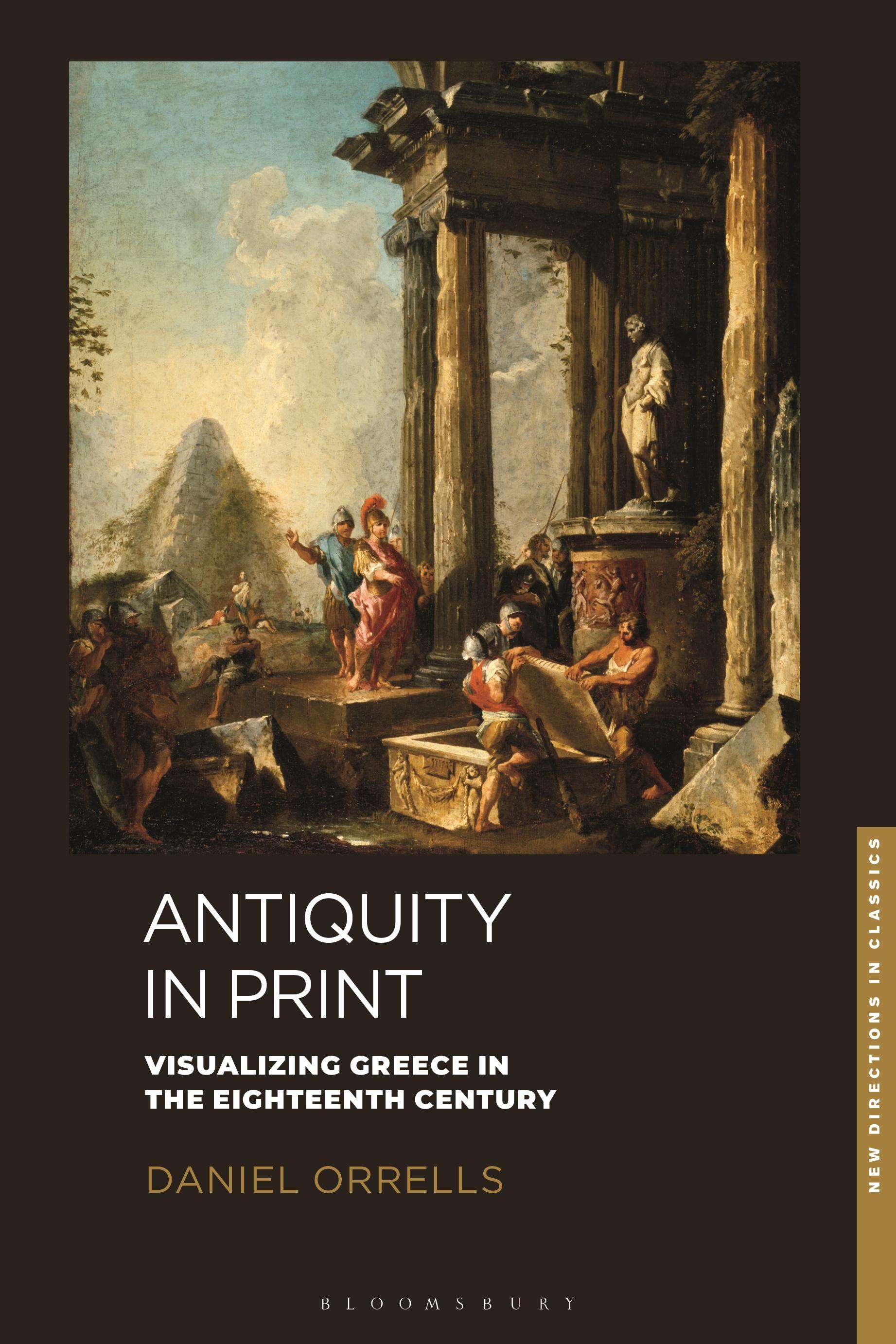
Daniel Orrells examines the ways in which the ancient world was visualized for Enlightenment readers, and reveals how antiquarian scholarship emerged as the principal technology for envisioning ancient Greek culture, at a time when very few people could travel to Greece which was still part of the Ottoman Empire. Offering a fresh account of the rise of antiquarianism in the 18th century, Orrells shows how this period of cultural progression was important for the invention of classical studies. In particular, the main focus of this book is on the visionary experimentalism of antiquarian book production, especially in relation to the contentious nature of ancient texts.
With the explosion of the Quarrel between the Ancients and the Moderns, eighteenth-century intellectuals, antiquarians and artists such as Giambattista Vico, Johann Joachim Winckelmann, the Comte de Caylus, James Stuart, Julien-David Leroy, Giovanni Battista Piranesi and Pierre-François Hugues d'Hancarville all became interested in how printed engravings of ancient art and archaeology could visualize a historical narrative. These figures theorized the relationship between ancient text and ancient material and visual culture - theorizations which would pave the way to foundational questions at the heart of the discipline of classical studies and neoclassical aesthetics.
With the explosion of the Quarrel between the Ancients and the Moderns, eighteenth-century intellectuals, antiquarians and artists such as Giambattista Vico, Johann Joachim Winckelmann, the Comte de Caylus, James Stuart, Julien-David Leroy, Giovanni Battista Piranesi and Pierre-François Hugues d'Hancarville all became interested in how printed engravings of ancient art and archaeology could visualize a historical narrative. These figures theorized the relationship between ancient text and ancient material and visual culture - theorizations which would pave the way to foundational questions at the heart of the discipline of classical studies and neoclassical aesthetics.
Zahle einfach mit Karte, Klarna, Apple Pay oder Google Pay. Nicht zufrieden? Du hast immer ein 14-tägiges Widerrufsrecht. Lies mehr in unseren AGB. Hast du Fragen, schreib uns eine E-Mail an hello@memmo.org.
Memmo macht das Lernen einfacher – wo auch immer du bist. Bei uns findest du deine Kursbücher und smarte Lerntools an einem Ort: Zusammenfassungen, Quizzes, Podcasts und Lernkarten. Und Ted, dein Lernbuddy, beantwortet alles, was du wissen möchtest. Über 50.000 Studierende lernen bereits hier – gemacht, damit du schneller lernst und weniger Stress hast.