
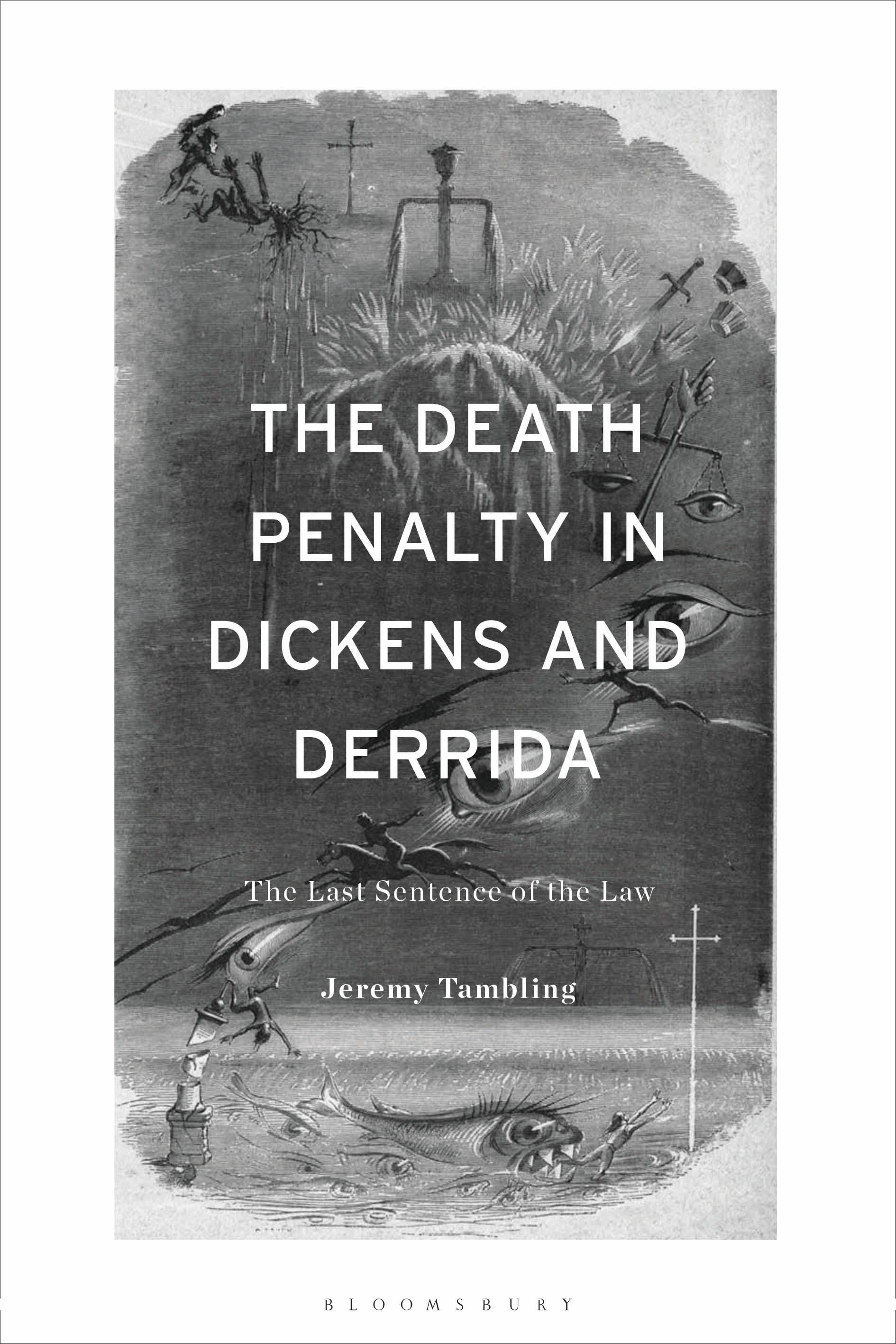
In the nineteenth century, Charles Dickens backed the cause of abolition of the death penalty and wrote comprehensively about it, in public letters and in his novels. At the end of the twentieth century, Jacques Derrida ran two years of seminars on the subject, which were published posthumously. What the novelist and the philosopher of deconstruction discussed independently, this book brings into comparison.
Tambling examines crime and punishment in Dickens's novels Barnaby Rudge, A Tale of Two Cities, Oliver Twist and Bleak House and explores those who influenced Dickens's work, including Hogarth, Fielding, Godwin and Edgar Allen Poe. This book also looks at those who influenced Derrida – Freud, Nietzsche, Foucault and Blanchot – and considers Derrida's study on terrorism and the USA as the only major democracy adhering to the death penalty.
A comprehensive study of punishment in Dickens, and furthering Derrida's insights by commenting on Shakespeare and blood, revenge, the French Revolution, and the enduring power of violence and its fascination, this book is a major contribution to literary criticism on Dickens and Derrida. Those interested in literature, criminology, law, gender, and psychoanalysis will find it an essential intervention in a topic still rousing intense argument.
Tambling examines crime and punishment in Dickens's novels Barnaby Rudge, A Tale of Two Cities, Oliver Twist and Bleak House and explores those who influenced Dickens's work, including Hogarth, Fielding, Godwin and Edgar Allen Poe. This book also looks at those who influenced Derrida – Freud, Nietzsche, Foucault and Blanchot – and considers Derrida's study on terrorism and the USA as the only major democracy adhering to the death penalty.
A comprehensive study of punishment in Dickens, and furthering Derrida's insights by commenting on Shakespeare and blood, revenge, the French Revolution, and the enduring power of violence and its fascination, this book is a major contribution to literary criticism on Dickens and Derrida. Those interested in literature, criminology, law, gender, and psychoanalysis will find it an essential intervention in a topic still rousing intense argument.
Zahle einfach mit Karte, Klarna, Apple Pay oder Google Pay. Nicht zufrieden? Du hast immer ein 14-tägiges Widerrufsrecht. Lies mehr in unseren AGB. Hast du Fragen, schreib uns eine E-Mail an hello@memmo.org.
Memmo macht das Lernen einfacher – wo auch immer du bist. Bei uns findest du deine Kursbücher und smarte Lerntools an einem Ort: Zusammenfassungen, Quizzes, Podcasts und Lernkarten. Und Ted, dein Lernbuddy, beantwortet alles, was du wissen möchtest. Über 50.000 Studierende lernen bereits hier – gemacht, damit du schneller lernst und weniger Stress hast.