
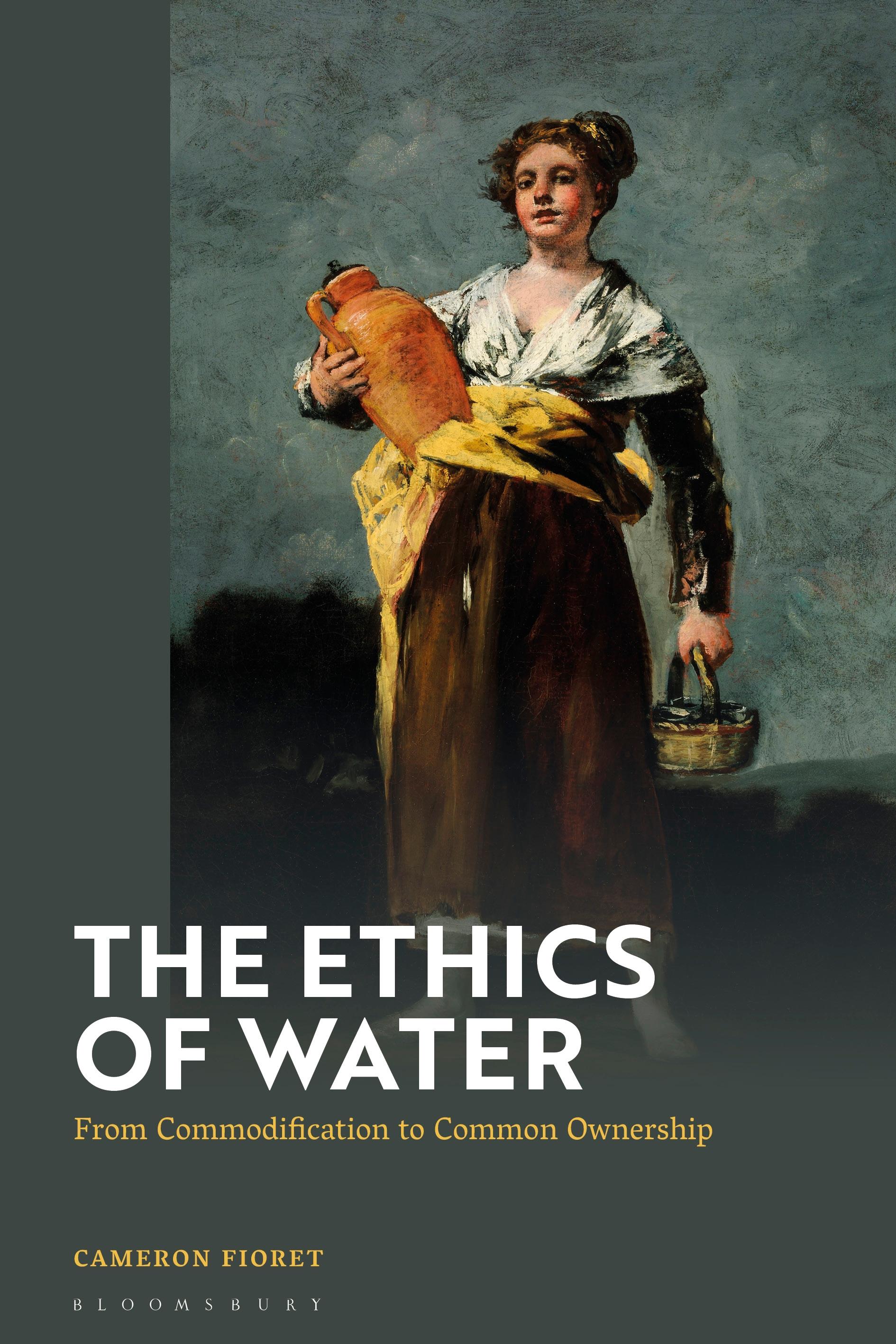
In this global approach to climate change and freshwater access, Cameron Fioret explores the harmful effects of water commodification. Making use of deliberative democratic theory, Fioret suggests tools that can change the balance of democratic decision-making power by rethinking the governance of water more broadly.
Five main case studies including Detroit, Cochabamba, and Kerala span four continents to convey the global and local scope of normative water issues. These examples draw on contemporary water justice movements to explore how anti-water-commodification struggles can utilize water recommoning practices to make water governance processes more deeply democratic. Highlighting the ethical and sociopolitical ramifications of water injustice, this study moves beyond the surface issue of distributional concerns. To this end, Fioret draws on research in democratic political theory and environmental philosophy to consider what right people have to water, the putative harms of privatizing and commodifying water, common ownership, and legal protections, alongside local and transnational political activism. In navigating these pressing issues, The Ethics of Water provides a searing analysis of water commodification and political domination today.
Five main case studies including Detroit, Cochabamba, and Kerala span four continents to convey the global and local scope of normative water issues. These examples draw on contemporary water justice movements to explore how anti-water-commodification struggles can utilize water recommoning practices to make water governance processes more deeply democratic. Highlighting the ethical and sociopolitical ramifications of water injustice, this study moves beyond the surface issue of distributional concerns. To this end, Fioret draws on research in democratic political theory and environmental philosophy to consider what right people have to water, the putative harms of privatizing and commodifying water, common ownership, and legal protections, alongside local and transnational political activism. In navigating these pressing issues, The Ethics of Water provides a searing analysis of water commodification and political domination today.
Zahle einfach mit Karte, Klarna, Apple Pay oder Google Pay. Nicht zufrieden? Du hast immer ein 14-tägiges Widerrufsrecht. Lies mehr in unseren AGB. Hast du Fragen, schreib uns eine E-Mail an hello@memmo.org.
Memmo macht das Lernen einfacher – wo auch immer du bist. Bei uns findest du deine Kursbücher und smarte Lerntools an einem Ort: Zusammenfassungen, Quizzes, Podcasts und Lernkarten. Und Ted, dein Lernbuddy, beantwortet alles, was du wissen möchtest. Über 50.000 Studierende lernen bereits hier – gemacht, damit du schneller lernst und weniger Stress hast.