
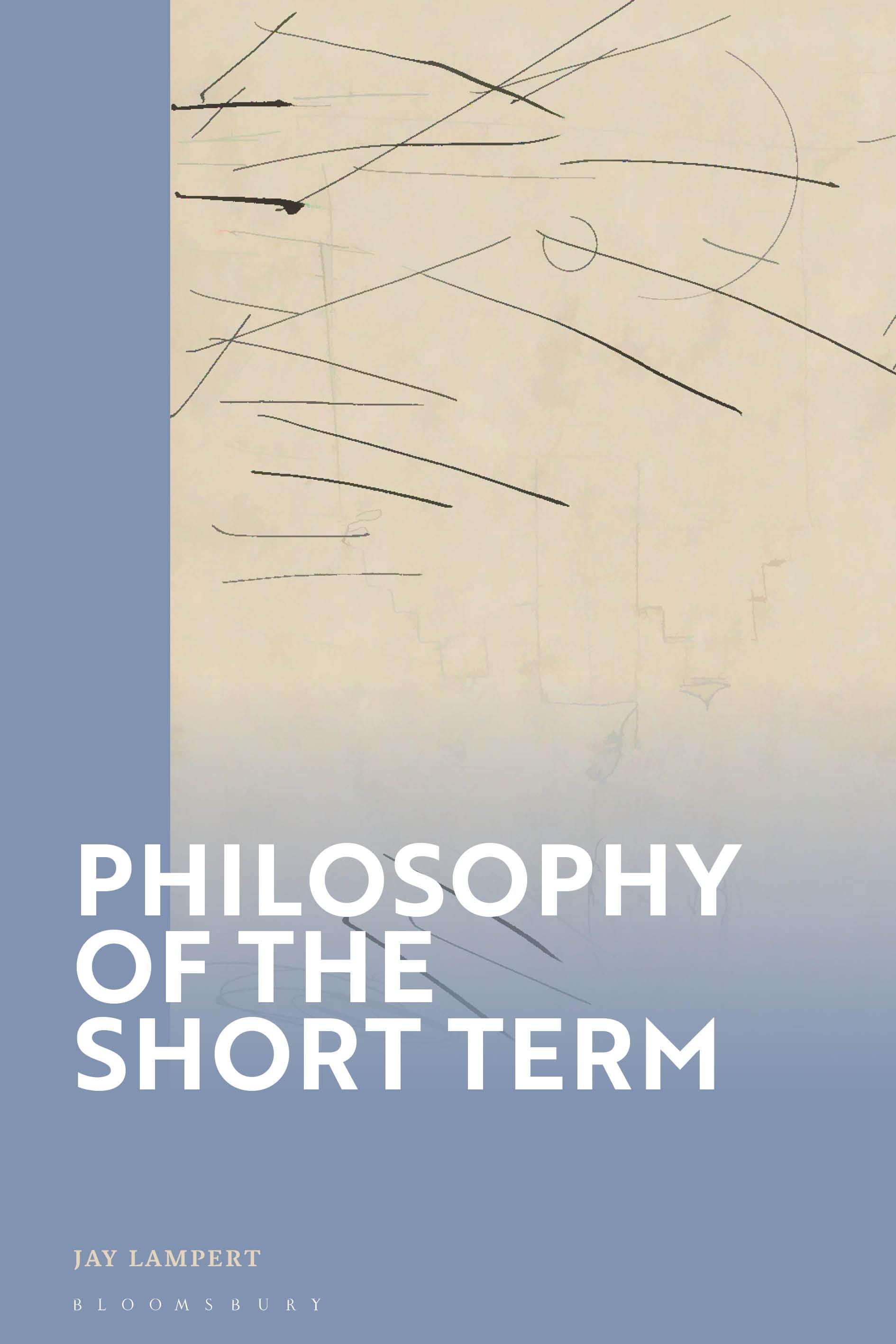
The concept of the short term involves a complex network of quantitative, qualitative, and operational ideas. It is essential everywhere from the ontology of time, to the science of memory, to the preservation of art, to emotional life, to the practice of ethics. But what does the idea of the short term mean? What makes a temporal term short? What makes a time segment terminate? Is the short term a quantitative idea, or a qualitative or functional idea? When is it a good idea to understand events as short term events, and when is it a good idea to make decisions based on the short term? What does it mean for the nature of time if some of it can be short?
Jay Lampert explores these questions in depth and makes use of the resources of short (as well as long) term processes in order to develop best temporal practices in ethical, aesthetic, epistemological, and metaphysical activities, both theoretical and practical. The methodology develops ideas based on the history of philosophy (from Plato to Hegel to Husserl to Deleuze), interdisciplinary studies (from cognitive science to poetics), and practical spheres where short term practices have been studied extensively (from short term psychotherapy to short term financial investments). Philosophy of the Short Term is the first book to deal systematically with the concept of the short term.
Jay Lampert explores these questions in depth and makes use of the resources of short (as well as long) term processes in order to develop best temporal practices in ethical, aesthetic, epistemological, and metaphysical activities, both theoretical and practical. The methodology develops ideas based on the history of philosophy (from Plato to Hegel to Husserl to Deleuze), interdisciplinary studies (from cognitive science to poetics), and practical spheres where short term practices have been studied extensively (from short term psychotherapy to short term financial investments). Philosophy of the Short Term is the first book to deal systematically with the concept of the short term.
Zahle einfach mit Karte, Klarna, Apple Pay oder Google Pay. Nicht zufrieden? Du hast immer ein 14-tägiges Widerrufsrecht. Lies mehr in unseren AGB. Hast du Fragen, schreib uns eine E-Mail an hello@memmo.org.
Memmo macht das Lernen einfacher – wo auch immer du bist. Bei uns findest du deine Kursbücher und smarte Lerntools an einem Ort: Zusammenfassungen, Quizzes, Podcasts und Lernkarten. Und Ted, dein Lernbuddy, beantwortet alles, was du wissen möchtest. Über 50.000 Studierende lernen bereits hier – gemacht, damit du schneller lernst und weniger Stress hast.