
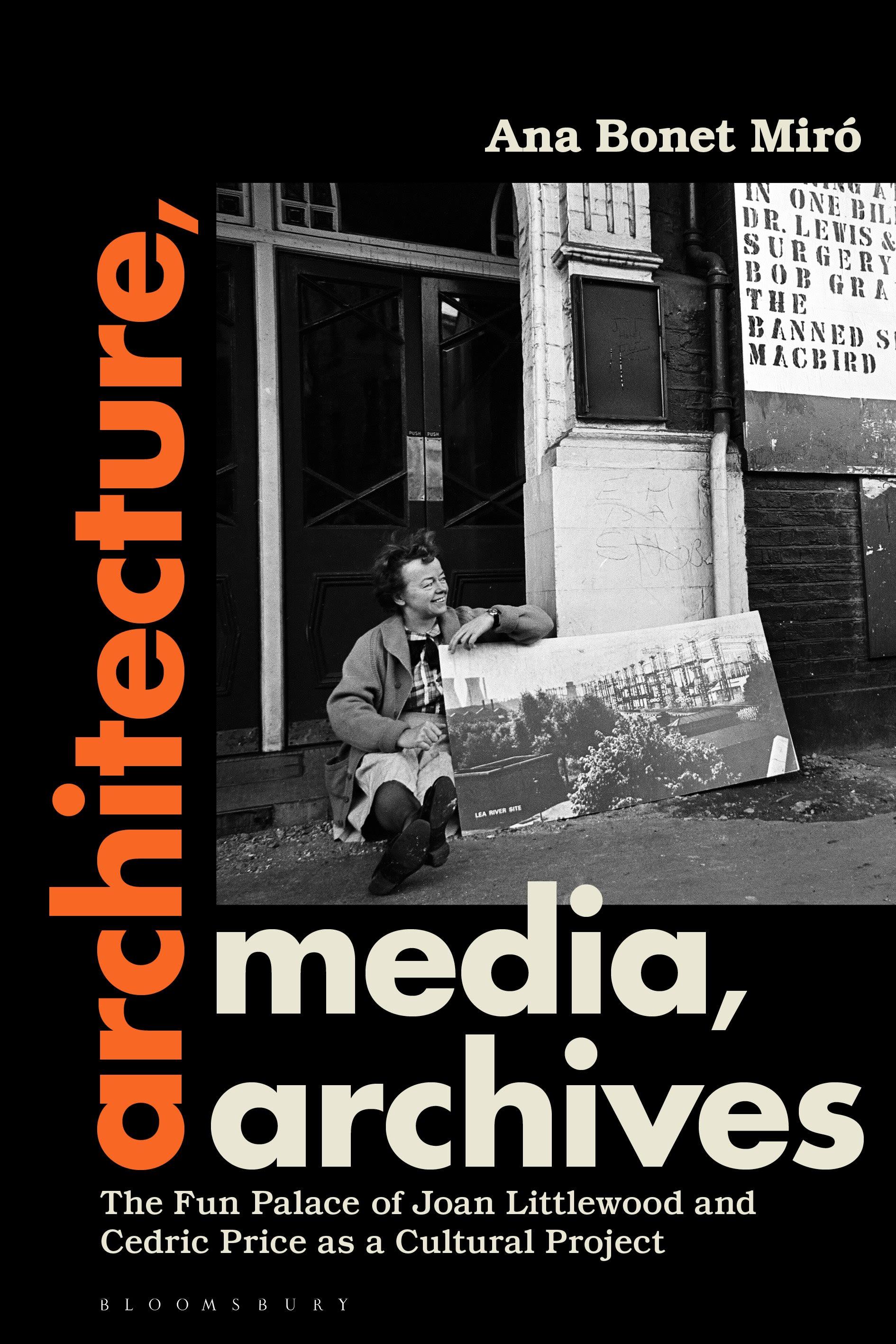
Over 60 years on from its inception, the celebrated Fun Palace civic project – developed in the 1960s by the radical theatre director Joan Littlewood and the architect Cedric Price – continues to capture the architectural imagination. Despite the building itself never being realized, much of the previous analysis of the Fun Palace has been devoted to Price and his drawings. The critical role that Littlewood played, however, remains largely unrecognized by architectural scholarship, and a whole area of the project's cultural agenda remains overlooked.
Architecture, Media, Archives is the first serious study of the complex relations between Littlewood and Price, reframing the Fun Palace as an extended media project and positioning Littlewood more clearly as co-designer.
Drawing on extensive archival material, the book considers how, due to a lack of institutional support, the aims of the Fun Palace – to transform the passive mass-audiences of post-war consumer society into active citizens, through forms of self-directed, pleasure-led and open exchange – were realized through different 'sites of information' throughout the 1960s. From broadsheets, pamphlets and journals to films and press news, the book addresses the conditions of production, circulation, storage and reception of these 'sites' and reveals how they not only recorded the transformation of the project, but also fundamentally enhanced and informed its meaning in specific ways.
The book also raises important questions about the agency of the Fun Palace archive in shaping the reception of the project in the decades since its inception, presenting its analysis through a novel 'Fun Palace Reception Index and Chart', fundamentally altering our view of the project itself and transforming the way in which we understand the technological and cultural production of the 1960s.
Architecture, Media, Archives is the first serious study of the complex relations between Littlewood and Price, reframing the Fun Palace as an extended media project and positioning Littlewood more clearly as co-designer.
Drawing on extensive archival material, the book considers how, due to a lack of institutional support, the aims of the Fun Palace – to transform the passive mass-audiences of post-war consumer society into active citizens, through forms of self-directed, pleasure-led and open exchange – were realized through different 'sites of information' throughout the 1960s. From broadsheets, pamphlets and journals to films and press news, the book addresses the conditions of production, circulation, storage and reception of these 'sites' and reveals how they not only recorded the transformation of the project, but also fundamentally enhanced and informed its meaning in specific ways.
The book also raises important questions about the agency of the Fun Palace archive in shaping the reception of the project in the decades since its inception, presenting its analysis through a novel 'Fun Palace Reception Index and Chart', fundamentally altering our view of the project itself and transforming the way in which we understand the technological and cultural production of the 1960s.
Zahle einfach mit Karte, Klarna, Apple Pay oder Google Pay. Nicht zufrieden? Du hast immer ein 14-tägiges Widerrufsrecht. Lies mehr in unseren AGB. Hast du Fragen, schreib uns eine E-Mail an hello@memmo.org.
Memmo macht das Lernen einfacher – wo auch immer du bist. Bei uns findest du deine Kursbücher und smarte Lerntools an einem Ort: Zusammenfassungen, Quizzes, Podcasts und Lernkarten. Und Ted, dein Lernbuddy, beantwortet alles, was du wissen möchtest. Über 50.000 Studierende lernen bereits hier – gemacht, damit du schneller lernst und weniger Stress hast.