
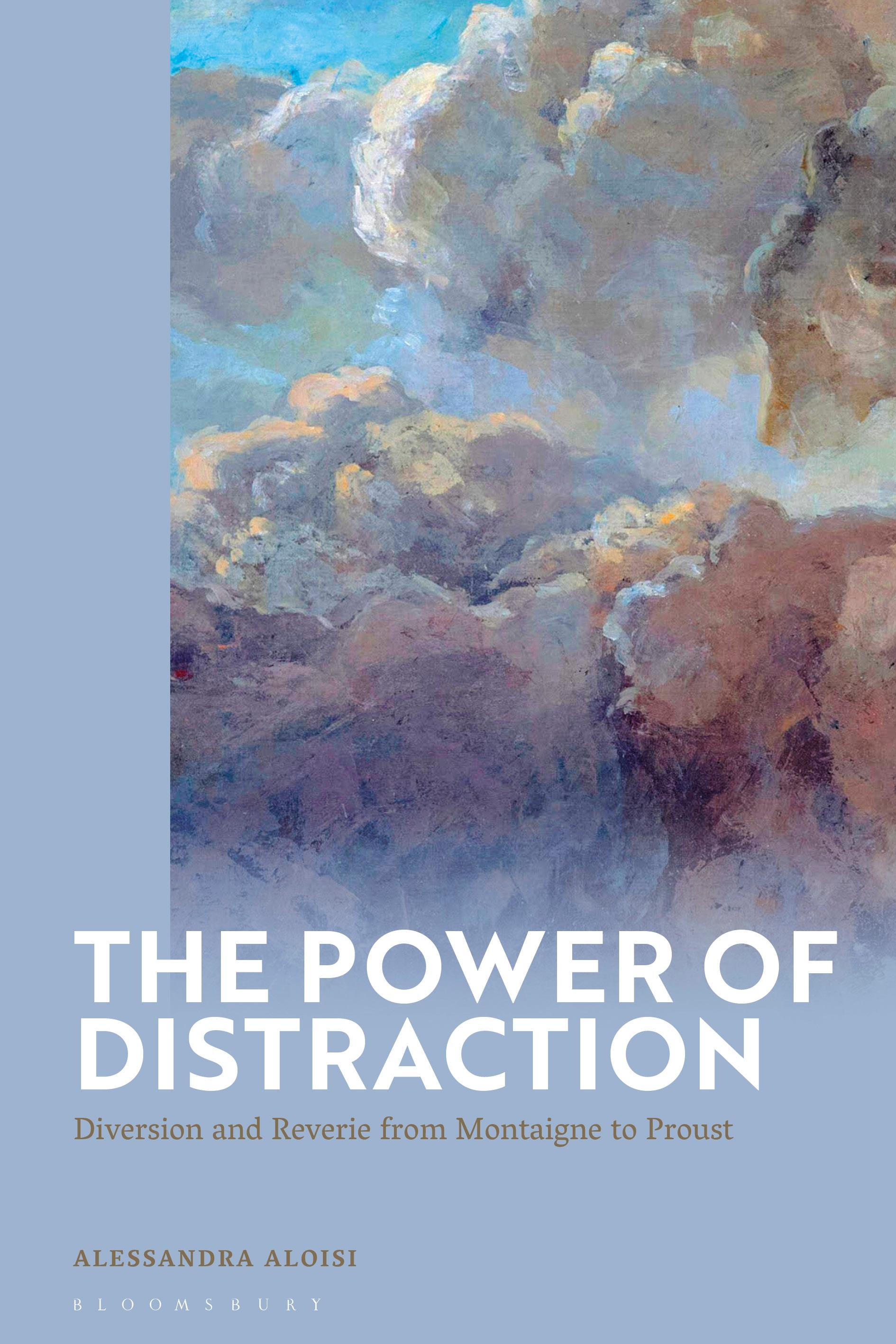
From Pascal to contemporary anxieties about attention, we have constantly been urged to avoid distraction if we want to live and work better. But Alessandra Aloisi argues that we are missing the point.Drawing on a broad range ofEuropean philosophy and literature, this book considers distraction not as an expression of human imperfection, but as a creative, subversive, and aesthetic capability.
In contrast to the traditional accounts, from Saint Augustine to Robert Burton, which either associated distraction with sin or considered it as a symptom of melancholy, Aloisi argues that it is often precisely when we stop thinking about something that inspiration finds us. Why else are artists described as having their heads in the clouds? This book demonstrates the serendipity of distraction through close readings of cultural and visual sources ranging from the mathematician Poincaré to the Netflix show, Black Mirror.
With inspiration from La Bruyère, Rousseau, Leopardi, Stendhal, Baudelaire, and others, Aloisi further examines the political value of distraction. After all, in an age of ubiquitous technology and 24/7 availability fighting for our attention, distraction provides what Bergson called a 'slight revolt' from the codes and behaviors that society dictates.
Combining philosophy, literature, art, and politics, The Power of Distraction encourages us to think differently about our attention and considers just how productive daydreams can be.
In contrast to the traditional accounts, from Saint Augustine to Robert Burton, which either associated distraction with sin or considered it as a symptom of melancholy, Aloisi argues that it is often precisely when we stop thinking about something that inspiration finds us. Why else are artists described as having their heads in the clouds? This book demonstrates the serendipity of distraction through close readings of cultural and visual sources ranging from the mathematician Poincaré to the Netflix show, Black Mirror.
With inspiration from La Bruyère, Rousseau, Leopardi, Stendhal, Baudelaire, and others, Aloisi further examines the political value of distraction. After all, in an age of ubiquitous technology and 24/7 availability fighting for our attention, distraction provides what Bergson called a 'slight revolt' from the codes and behaviors that society dictates.
Combining philosophy, literature, art, and politics, The Power of Distraction encourages us to think differently about our attention and considers just how productive daydreams can be.
Zahle einfach mit Karte, Klarna, Apple Pay oder Google Pay. Nicht zufrieden? Du hast immer ein 14-tägiges Widerrufsrecht. Lies mehr in unseren AGB. Hast du Fragen, schreib uns eine E-Mail an hello@memmo.org.
Memmo macht das Lernen einfacher – wo auch immer du bist. Bei uns findest du deine Kursbücher und smarte Lerntools an einem Ort: Zusammenfassungen, Quizzes, Podcasts und Lernkarten. Und Ted, dein Lernbuddy, beantwortet alles, was du wissen möchtest. Über 50.000 Studierende lernen bereits hier – gemacht, damit du schneller lernst und weniger Stress hast.