
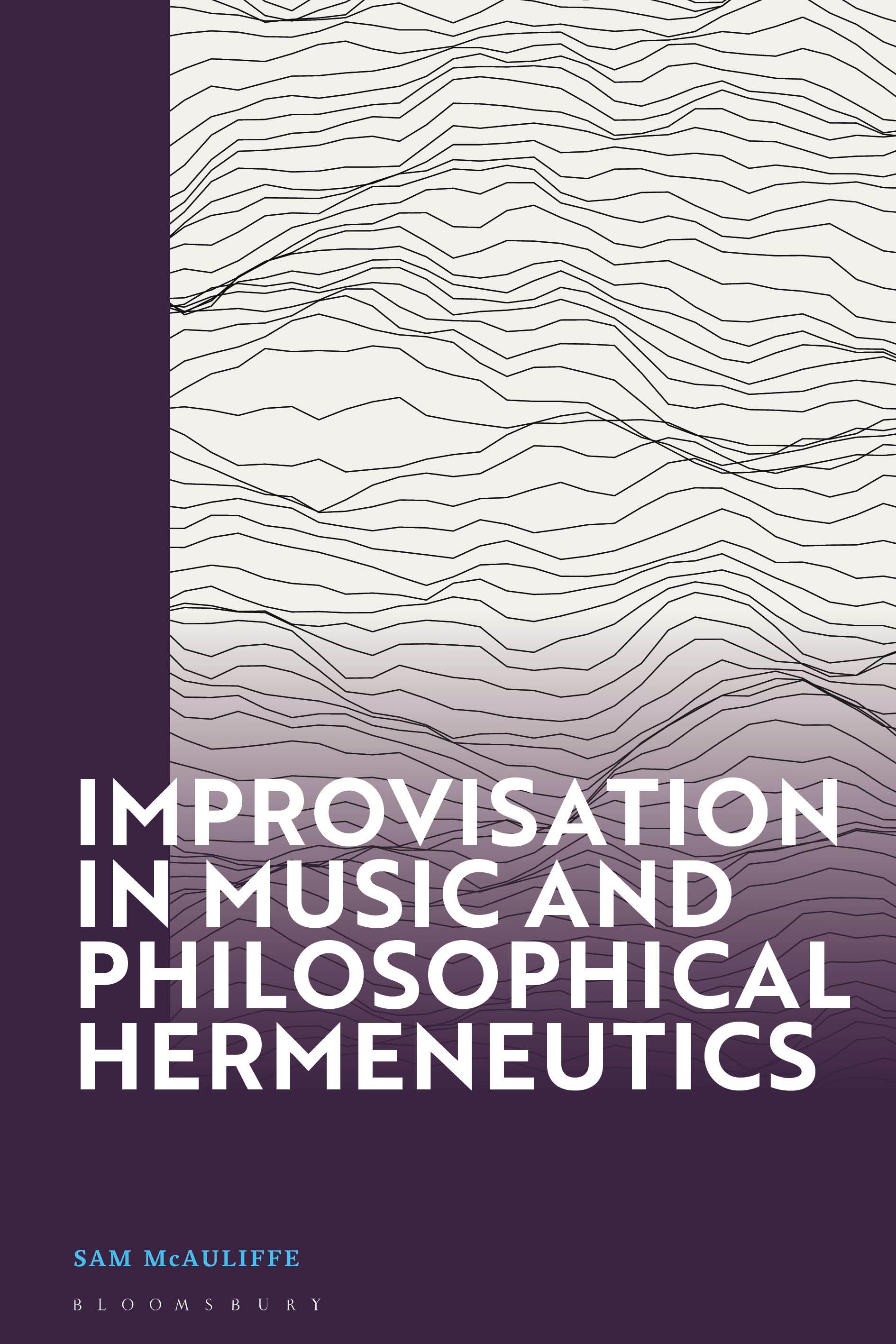
In the first book to examine the overlooked relationship between musical improvisation and philosophical hermeneutics, Sam McAuliffe asks: what exactly is improvisation? And how does it relate to our being-in-the-world?
Improvisation in Music and Philosophical Hermeneutics answers these questions by investigating the underlying structure of improvisation. McAuliffe argues that improvising is best understood as attending and responding to the situation in which one find itself and, as such, is essential to how we engage with the world. Working within the hermeneutic philosophical tradition – drawing primarily on the work of Martin Heidegger, Hans-Georg Gadamer, and Jeff Malpas – this book provides a rich and detailed account of the ways in which we are all already experienced improvisers.
Given the dominance of music in discussions of improvisation, Part I of this book uses improvised musical performance as a case study to uncover the ontological structure of improvisation: a structure that McAuliffe demonstrates is identical to the structure of hermeneutic engagement. Exploring this relationship between improvisation and hermeneutics, Part II offers a new reading of Gadamer's philosophical hermeneutics, examining the way in which Gadamer's accounts of truth and understanding, language, and ethics each possess an essentially improvisational character.
Working between philosophy and music theory, Improvisation in Music and Philosophical Hermeneutics unveils the hermeneutic character of musical performance, the musicality of hermeneutic engagement, and the universality of improvisation.
Improvisation in Music and Philosophical Hermeneutics answers these questions by investigating the underlying structure of improvisation. McAuliffe argues that improvising is best understood as attending and responding to the situation in which one find itself and, as such, is essential to how we engage with the world. Working within the hermeneutic philosophical tradition – drawing primarily on the work of Martin Heidegger, Hans-Georg Gadamer, and Jeff Malpas – this book provides a rich and detailed account of the ways in which we are all already experienced improvisers.
Given the dominance of music in discussions of improvisation, Part I of this book uses improvised musical performance as a case study to uncover the ontological structure of improvisation: a structure that McAuliffe demonstrates is identical to the structure of hermeneutic engagement. Exploring this relationship between improvisation and hermeneutics, Part II offers a new reading of Gadamer's philosophical hermeneutics, examining the way in which Gadamer's accounts of truth and understanding, language, and ethics each possess an essentially improvisational character.
Working between philosophy and music theory, Improvisation in Music and Philosophical Hermeneutics unveils the hermeneutic character of musical performance, the musicality of hermeneutic engagement, and the universality of improvisation.
Zahle einfach mit Karte, Klarna, Apple Pay oder Google Pay. Nicht zufrieden? Du hast immer ein 14-tägiges Widerrufsrecht. Lies mehr in unseren AGB. Hast du Fragen, schreib uns eine E-Mail an hello@memmo.org.
Memmo macht das Lernen einfacher – wo auch immer du bist. Bei uns findest du deine Kursbücher und smarte Lerntools an einem Ort: Zusammenfassungen, Quizzes, Podcasts und Lernkarten. Und Ted, dein Lernbuddy, beantwortet alles, was du wissen möchtest. Über 50.000 Studierende lernen bereits hier – gemacht, damit du schneller lernst und weniger Stress hast.