
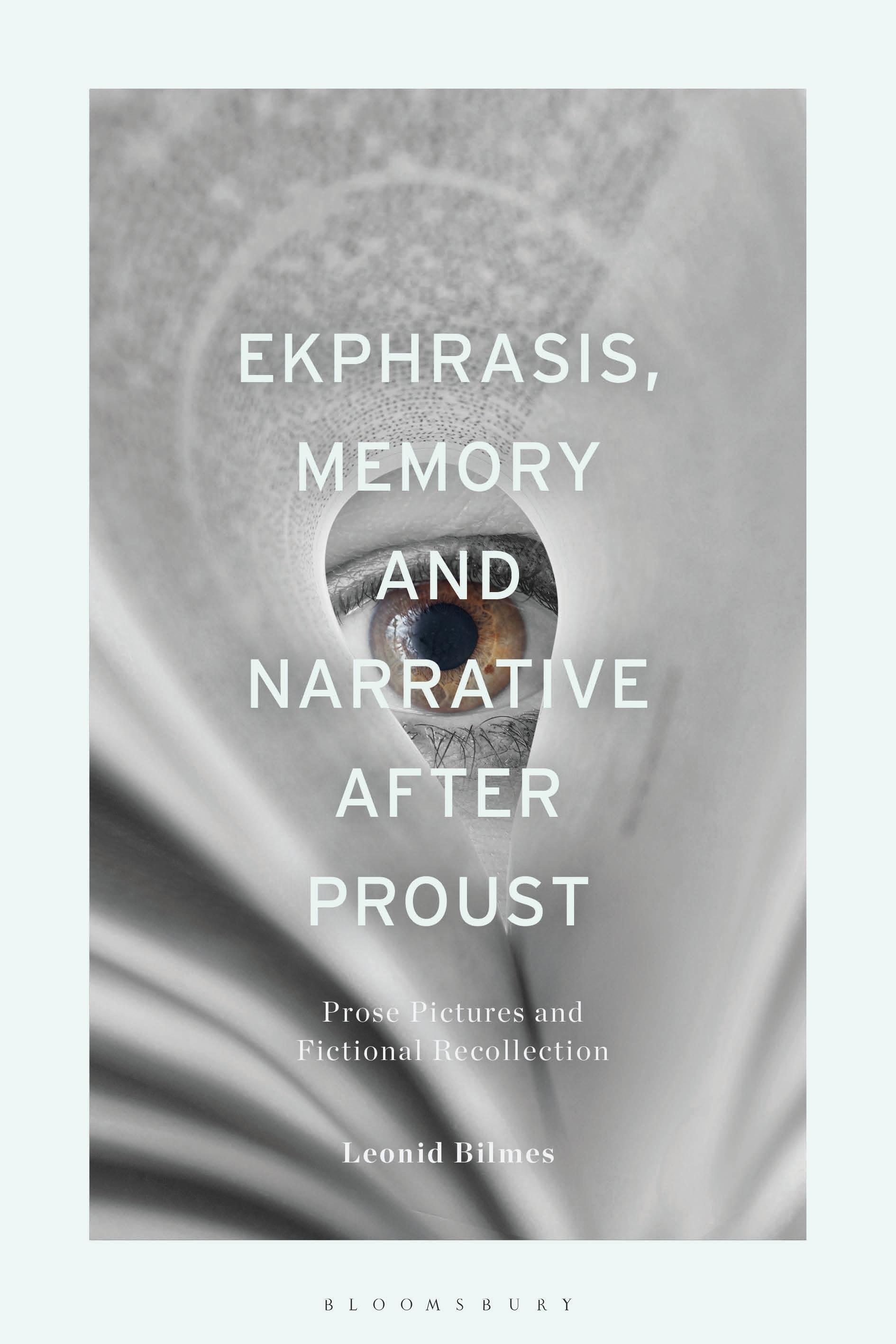
This book explores the relationship between ekphrasis and memory in the novel. Drawing on À la recherche du temps perdu, Leonid Bilmes considers how Vladimir Nabokov, W. G. Sebald, Ben Lerner, Ali Smith and Lydia Davis have employed and reshaped Proust's way of depicting the recollected past.
In Ada, Austerlitz, 10:04, How to Be Both and The End of the Story, memory images are variously transposed into intermedial descriptions that inform the narrator's story, just as they serve to shape the reader's own remembrance of each of these narratives. Ekphrasis in the novel after Proust, Bilmes argues, acts as a distinct site within the text where past and present, self and other, image and text, seeing and hearing, are ever on the brink of reconciliation.
The book surveys a wide field of critical inquiry, encompassing classical theorizations of ekphrasis, philosophical explorations of memory and visuality, as well as seminal studies of image-text relations by, among others, W. J. T. Mitchell, Jean-Luc Nancy and Liliane Louvel. Bilmes's compelling dialogue with theory and literature evinces the underexplored bond between ekphrasis and memory in the contemporary novel.
In Ada, Austerlitz, 10:04, How to Be Both and The End of the Story, memory images are variously transposed into intermedial descriptions that inform the narrator's story, just as they serve to shape the reader's own remembrance of each of these narratives. Ekphrasis in the novel after Proust, Bilmes argues, acts as a distinct site within the text where past and present, self and other, image and text, seeing and hearing, are ever on the brink of reconciliation.
The book surveys a wide field of critical inquiry, encompassing classical theorizations of ekphrasis, philosophical explorations of memory and visuality, as well as seminal studies of image-text relations by, among others, W. J. T. Mitchell, Jean-Luc Nancy and Liliane Louvel. Bilmes's compelling dialogue with theory and literature evinces the underexplored bond between ekphrasis and memory in the contemporary novel.
Zahle einfach mit Karte, Klarna, Apple Pay oder Google Pay. Nicht zufrieden? Du hast immer ein 14-tägiges Widerrufsrecht. Lies mehr in unseren AGB. Hast du Fragen, schreib uns eine E-Mail an hello@memmo.org.
Memmo macht das Lernen einfacher – wo auch immer du bist. Bei uns findest du deine Kursbücher und smarte Lerntools an einem Ort: Zusammenfassungen, Quizzes, Podcasts und Lernkarten. Und Ted, dein Lernbuddy, beantwortet alles, was du wissen möchtest. Über 50.000 Studierende lernen bereits hier – gemacht, damit du schneller lernst und weniger Stress hast.