
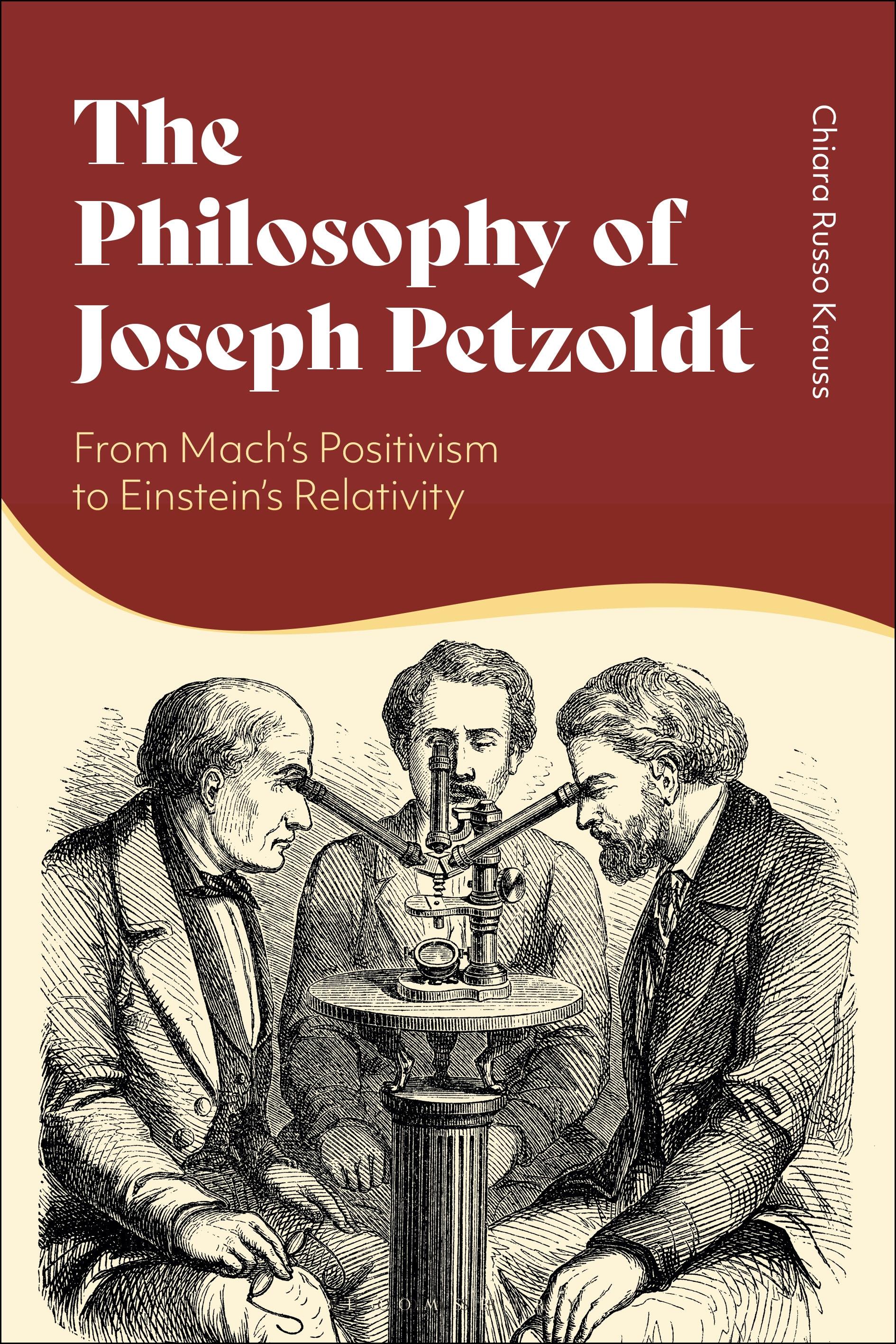
This volume is the first English resource to shed light on the philosophy of Joseph Petzoldt (1862-1929), the main pupil of Ernst Mach and founder of the Gesellschaft für wissenschaftliche Philosophie, later the association of Berlin logical positivists. A central figure in the early debate on the theory of relativity, his work was praised by Einstein himself.
Tracing the development of Petzoldt's ideas, starting from his early acceptance of materialism and Kantian agnosticism, Chiara Russo Krauss presents a comprehensive reconstruction of his philosophy in the context of the German milieu. She examines his attempt to develop a new philosophy following Gustav Fechner and the empiriocriticism of Richard Avenarius and Ernst Mach. In the final chapter, she sets out how Petzoldt proposed relativistic positivism as the official interpretation of Einstein's relativity.
By illuminating key elements of Petzoldt's work, this is a valuable case study for students and scholars of philosophy of science and late 19th-century and early 20th-century philosophy. It reveals the complex interplay of two different tendencies of the time: neo-Kantianism and its struggle to overcome the notion of thing-in-itself, as well as the need for an epistemological foundation for the new advances of science.
Tracing the development of Petzoldt's ideas, starting from his early acceptance of materialism and Kantian agnosticism, Chiara Russo Krauss presents a comprehensive reconstruction of his philosophy in the context of the German milieu. She examines his attempt to develop a new philosophy following Gustav Fechner and the empiriocriticism of Richard Avenarius and Ernst Mach. In the final chapter, she sets out how Petzoldt proposed relativistic positivism as the official interpretation of Einstein's relativity.
By illuminating key elements of Petzoldt's work, this is a valuable case study for students and scholars of philosophy of science and late 19th-century and early 20th-century philosophy. It reveals the complex interplay of two different tendencies of the time: neo-Kantianism and its struggle to overcome the notion of thing-in-itself, as well as the need for an epistemological foundation for the new advances of science.
Zahle einfach mit Karte, Klarna, Apple Pay oder Google Pay. Nicht zufrieden? Du hast immer ein 14-tägiges Widerrufsrecht. Lies mehr in unseren AGB. Hast du Fragen, schreib uns eine E-Mail an hello@memmo.org.
Memmo macht das Lernen einfacher – wo auch immer du bist. Bei uns findest du deine Kursbücher und smarte Lerntools an einem Ort: Zusammenfassungen, Quizzes, Podcasts und Lernkarten. Und Ted, dein Lernbuddy, beantwortet alles, was du wissen möchtest. Über 50.000 Studierende lernen bereits hier – gemacht, damit du schneller lernst und weniger Stress hast.