
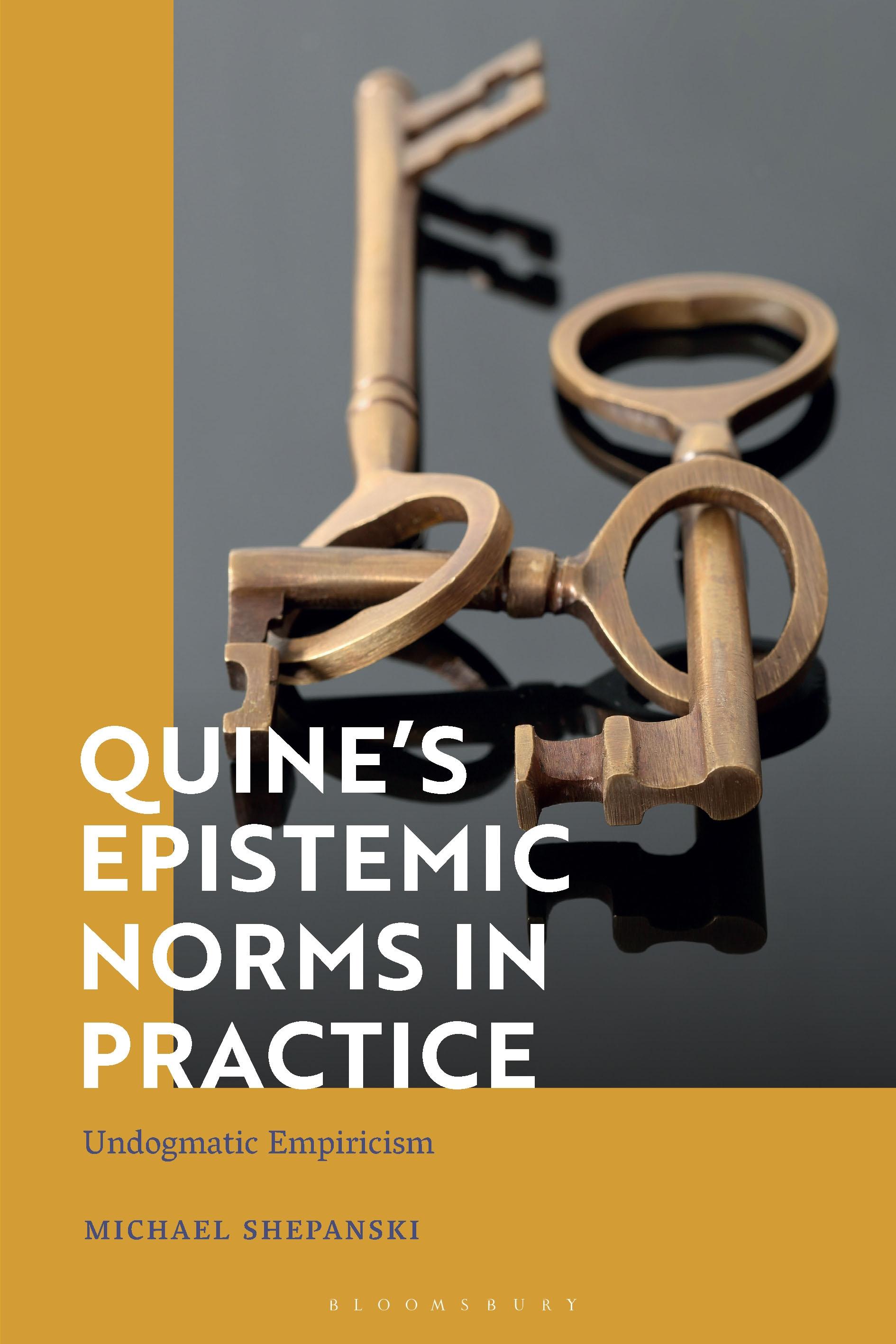
In this illuminating guide to the criteria of rational theorizing, Michael Shepanski identifies, defends and applies W. V. Quine's epistemic norms – the norms that best explain Quine's decisions to accept some theories and not others.
Parts I and II set out the doctrines of this epistemology, demonstrating their potential for philosophical application. Part III is a case study in which Shepanski develops a theory of the propositional attitudes by the method of formalizing inferences to behaviour. He presents critiques of popular alternative views, including foundationalism, the centrality of knowledge and Quine's own epistemological naturalism.
By reassessing Quine's normative epistemology, Shepanski advances our understanding of Quine's philosophy whilst providing a guide for our own theorizing.
Parts I and II set out the doctrines of this epistemology, demonstrating their potential for philosophical application. Part III is a case study in which Shepanski develops a theory of the propositional attitudes by the method of formalizing inferences to behaviour. He presents critiques of popular alternative views, including foundationalism, the centrality of knowledge and Quine's own epistemological naturalism.
By reassessing Quine's normative epistemology, Shepanski advances our understanding of Quine's philosophy whilst providing a guide for our own theorizing.
Zahle einfach mit Karte, Klarna, Apple Pay oder Google Pay. Nicht zufrieden? Du hast immer ein 14-tägiges Widerrufsrecht. Lies mehr in unseren AGB. Hast du Fragen, schreib uns eine E-Mail an hello@memmo.org.
Memmo macht das Lernen einfacher – wo auch immer du bist. Bei uns findest du deine Kursbücher und smarte Lerntools an einem Ort: Zusammenfassungen, Quizzes, Podcasts und Lernkarten. Und Ted, dein Lernbuddy, beantwortet alles, was du wissen möchtest. Über 50.000 Studierende lernen bereits hier – gemacht, damit du schneller lernst und weniger Stress hast.