
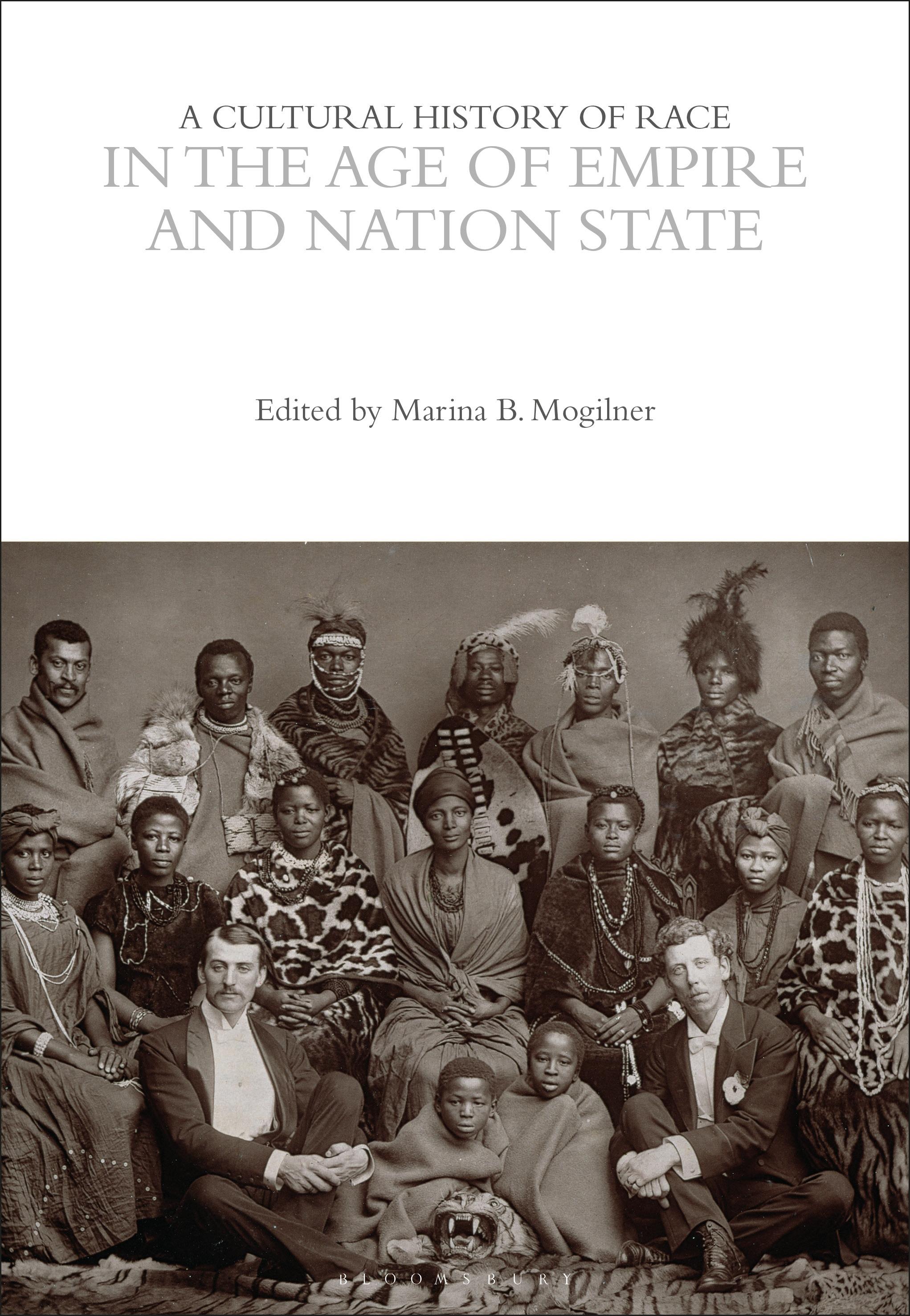
This volume covers the cultural history of race in 'the long 19th century' – the age of empire and nation-state, a transformative period during which a modern world had been forged and complex and hierarchical imperial formations were challenged by the emerging national norm. The concept of race emerged as a dominant epistemology in the context of the conflicting entanglement of empire and nation as two alternative but quite compatible forms of social imaginary. It penetrated all spheres of life under the novel conditions of the emerging mass culture and mass society and with the sanction of anthropocentric and positivistic science. Allegedly primeval and parasocial, 'race' was seen as a uniquely stable constant in a society in flux amid transforming institutions, economies, and political regimes. But contrary to this perception, there was nothing stable or natural about 'race.' The spread of racializing social and political imagination only reinforced the need for constant renegotiation and readjustment of racial boundaries.
Therefore, avoiding any structuralist simplifications, this volume looks at specific imperial, nationalizing, and hybrid contexts framing the semantics and politics of race in the course of the long 19th century. In different parts of the globalizing world, various actors were applying their own notions of 'race' to others and to themselves, embracing it simultaneously as a language of othering and personal subjectivity. Consequently, the cultural history of race as told in this volume unfolds on many levels, in multiple loci, and in different genres, thus reflecting the qualities of race as an omnipresent and all-embracing discourse of the time
Therefore, avoiding any structuralist simplifications, this volume looks at specific imperial, nationalizing, and hybrid contexts framing the semantics and politics of race in the course of the long 19th century. In different parts of the globalizing world, various actors were applying their own notions of 'race' to others and to themselves, embracing it simultaneously as a language of othering and personal subjectivity. Consequently, the cultural history of race as told in this volume unfolds on many levels, in multiple loci, and in different genres, thus reflecting the qualities of race as an omnipresent and all-embracing discourse of the time
Zahle einfach mit Karte, Klarna, Apple Pay oder Google Pay. Nicht zufrieden? Du hast immer ein 14-tägiges Widerrufsrecht. Lies mehr in unseren AGB. Hast du Fragen, schreib uns eine E-Mail an hello@memmo.org.
Memmo macht das Lernen einfacher – wo auch immer du bist. Bei uns findest du deine Kursbücher und smarte Lerntools an einem Ort: Zusammenfassungen, Quizzes, Podcasts und Lernkarten. Und Ted, dein Lernbuddy, beantwortet alles, was du wissen möchtest. Über 50.000 Studierende lernen bereits hier – gemacht, damit du schneller lernst und weniger Stress hast.